
22 August 2026
Dropped Kerbs In Swindon: The Vehicle Crossing Licence Explained
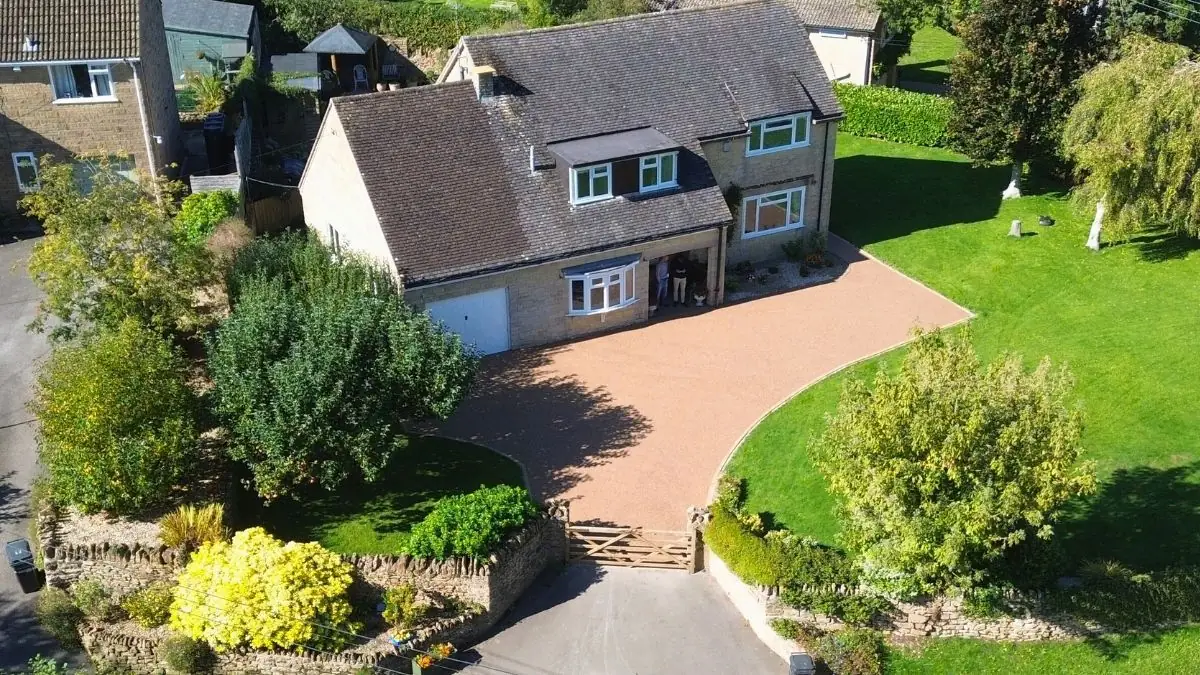
Most people in Swindon start the driveway conversation at the wrong end. They pick a colour, get a couple of quotes, settle on a start date - and then discover that the car cannot actually get onto the finished surface, because there is still a full-height kerb and a strip of pavement between the road and their new front garden. The kerb is not a detail you sort out afterwards. It is a separate licence, from a separate department, with its own fee, its own minimum dimensions and its own list of people allowed to do the work. Swindon Borough Council publishes exactly what it charges, what dimensions it expects and who is allowed to do the work, and the applications that go smoothly are almost always the ones where the homeowner read that before spending anything. Here is the whole thing, in the order it actually happens.
The Kerb And The Driveway Are Two Different Jobs
The confusion is understandable. From where you are standing it all looks like one project: turn the front garden into somewhere to park. Legally it is two.
Everything from your boundary inwards is yours. That is the driveway - the excavation, the sub-base, the surface, the edges - and for a permeable surface such as a resin bound driveway it usually needs no permission at all. Everything from your boundary outwards belongs to the highway authority, which in this town is Swindon Borough Council. Lowering the kerb, rebuilding the footway to take a vehicle, adjusting the levels where the two meet: that is work on the public highway, and you need a licence before anyone touches it.
Which means two clocks running at once, and they do not run at the same speed. A driveway can be booked, built and finished inside a fortnight. A vehicle crossing licence involves an application, a site assessment and a decision. Start the licence first. It is the single piece of advice that saves the most grief, and it costs nothing to act on.
What Swindon Borough Council Charges
£203 for a residential vehicle crossing licence. £304 if the property is commercial. Both non-refundable.
That last word is the one that catches people out. If the council assesses your frontage and says no, the money has gone. Which is not the council being awkward - the assessment is the work, and it happens whichever way the answer falls. It does mean the sensible order is to satisfy yourself the frontage qualifies, and then pay.

What the fee does not include is the construction. The licence gives you permission; forming the crossing is a separate cost from a licensed contractor, priced on the width of the opening, what the footway is built of and whether any statutory services run beneath it. Treat the two as separate lines in your budget, because they are. Full current details sit on Swindon Borough Council’s vehicle crossing licence page, which is the only place worth trusting on fees - they change.
Once granted, the licence is not open-ended either. The work has to be completed within twelve months, after which you reapply. Given how many Swindon driveways get delayed a season by a wet autumn, that is worth diarising.
Five Metres And Two And A Half
The driveway has to be at least 5 metres deep, measured from the back edge of the pavement to the property, and at least 2.5 metres wide. Two numbers, and between them they settle most applications before anything else gets looked at. You can check both yourself in about ninety seconds with a tape.
The logic is about the pavement rather than about you: a car has to sit entirely on private ground, with nothing overhanging the footway where people walk, push buggies or use a wheelchair. Five metres is roughly the length of a family car plus the clearance to shut the gate behind it.

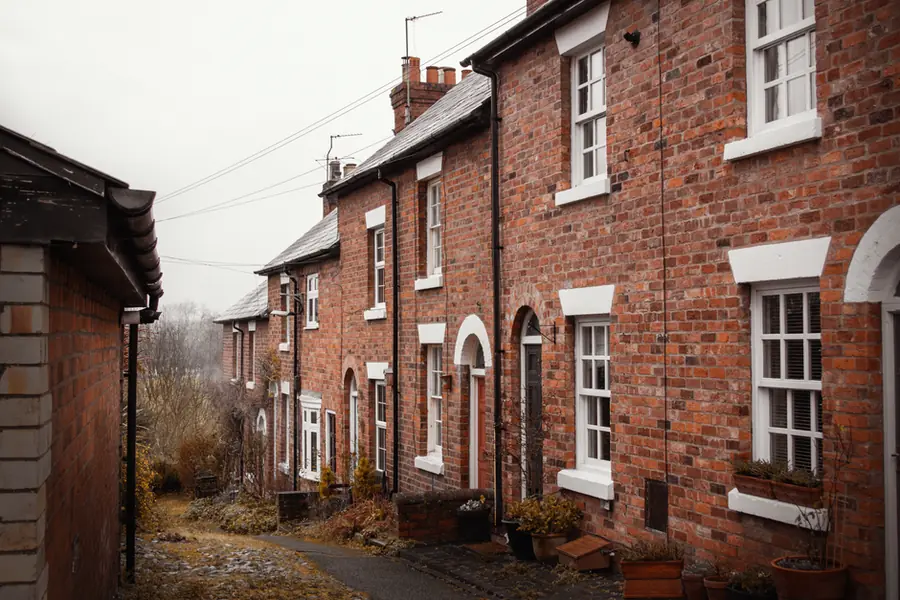
Swindon’s housing makes this a real dividing line rather than a formality. The interwar and postwar estates - Pinehurst, Park North, Walcot, much of Rodbourne - often have front gardens sitting right on the edge of five metres, and a shallow bay window or a projecting porch can eat the difference. The larger postwar and modern estates north of the railway tend to clear it comfortably. Terraces that open straight onto the footway do not clear it at all, and no amount of good intent changes that.
If you are within a few centimetres either way, measure again from the correct point. It is the back of the pavement, not the kerb face, and on a wide verge those are not the same thing at all.
The Council Cares What Your Driveway Is Made Of
Swindon Borough Council’s standards for a vehicle crossing specify what the driveway can be surfaced in - porous asphalt, porous concrete blocks, or concrete or clay block permeable paving - and require suitable drainage where the driveway meets the highway boundary. For a gravel drive, the first metre in from the highway has to be a bound, hard-standing material, for the obvious reason that loose stone migrates onto the road under tyres.
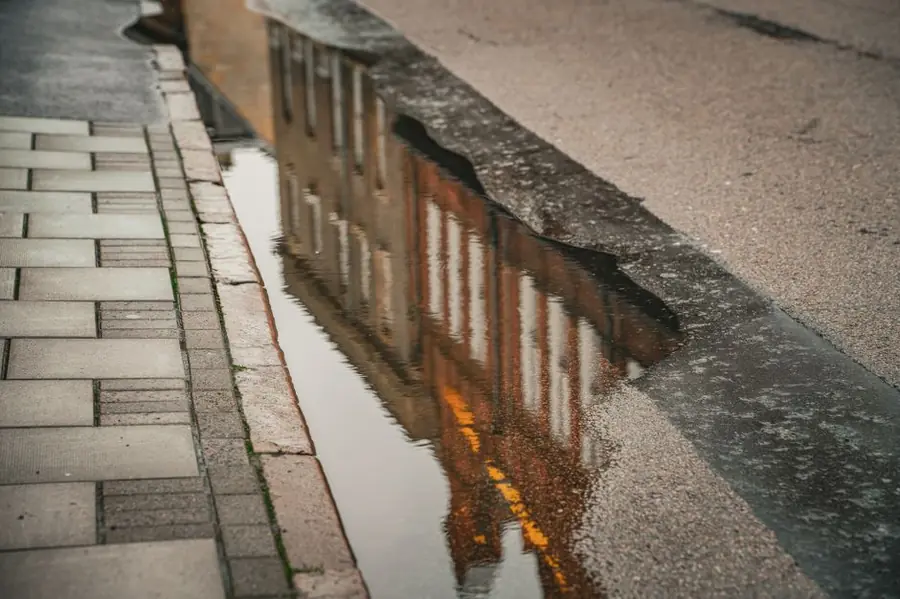
Underneath all of that sits one principle: your driveway must not push its water onto the public road. A sealed, falling-to-the-front surface turns every downpour into runoff crossing the footway and into the gully, and on a street where several houses have done the same thing that adds up quickly.
A permeable surface answers two questions at once here. A properly built resin bound surface takes water down through the surface into the sub-base rather than shedding it forwards, so the drainage question at the boundary answers itself, and the same permeability is what keeps the driveway itself outside planning control - the position set out in the Planning Portal’s guidance on paving a front garden. On Swindon’s heavy clay the sub-base has to be built to take that water properly, which is a longer conversation and one we go through in our guide to planning permission for Swindon resin driveways.
Not Just Anyone Can Cut The Kerb
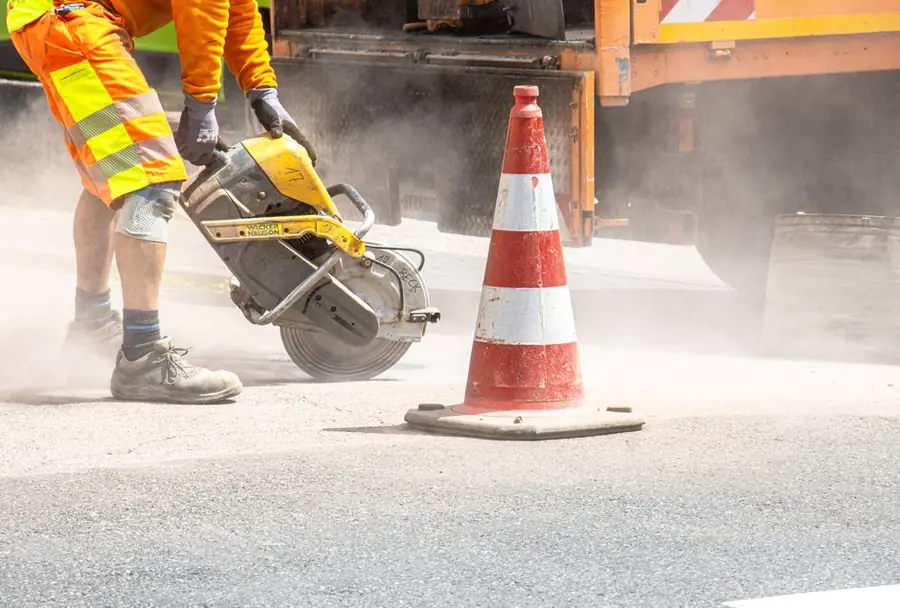
You cannot form your own crossing, and neither can a general builder or most driveway firms. Digging into a public highway is regulated work.
The contractor has to hold HAUC qualifications - the street works accreditation that covers anyone opening up a road or footway - and a Section 171 licence permitting excavation of the highway. Swindon Borough Council maintains a list of approved contractors who meet both, and using one from that list is the straightforward route.
That is no reflection on driveway installers who are not on it. Most are not, and there is no reason they should be. Resin surfacing and street works are different trades with different tickets. What works is a licensed contractor forming the crossing while your driveway installer builds everything from the boundary in, with each knowing the other exists so the levels meet properly at the join.
Be fussy about that join. A crossing built to one level and a driveway built to another leaves a lip that scrapes bumpers for the next fifteen years.
When The Answer Is No
The council can refuse, and its published grounds are all about road safety rather than how the frontage looks. Knowing them is how you avoid a £203 lesson.
Refusals cluster around visibility and space: a frontage too close to a bend or a junction, poor sightlines when pulling out, insufficient room for the vehicle to stand clear of the footway, street furniture in the way, or a slope too steep to form a safe crossing. Street furniture is the quiet one - a lamp column, a telecoms cabinet, a mature street tree or a drainage gully sitting exactly where your crossing would go is a genuine obstacle, and moving any of them is a project of its own with a cost to match.
The full criteria are set out in the council’s vehicle crossing licence policy document, which is worth ten minutes of reading if there is anything unusual about your frontage. Corner plots, houses on the inside of a bend and anything fronting a classified road are the three situations where reading it first pays for itself.
And if the answer is no, the front garden is not wasted. Resin paths, a proper hard standing for bins and bikes, a reworked frontage that stops looking like a failed parking space - all of it is still on the table, none of it needs a licence.
Getting The Order Right
Measure the frontage first: 5 metres deep, 2.5 metres wide, from the back of the pavement. Check whether anything unusual applies - conservation area, classified road, flats, street furniture in the way. Apply for the licence and pay the fee. While the application is being assessed, get driveway quotes, so you know your surface, your budget and your installer, and so whoever you choose can talk to the licensed contractor about levels. Once the licence is granted, book the crossing and the driveway close together, remembering the twelve-month deadline.
Done in that order, the two jobs land within days of each other and you drive onto a finished surface. Done backwards - driveway first, licence second - you get a beautiful parking space you cannot reach, and possibly a refusal telling you it was never going to work.
If you are at the start of this in Swindon and want the driveway side specified properly before you commit to the licence, get in touch for a free site visit. We will measure the frontage with you, tell you honestly whether it meets the council’s dimensions, and quote the surfacing in writing so you know both halves of the cost before you spend anything.
Frequently Asked Questions
How much does a dropped kerb cost in Swindon?
Swindon Borough Council charges £203 for a residential vehicle crossing licence and £304 for a commercial one, and the fee is non-refundable whether or not the application succeeds. That is the licence only. The physical kerb and footway work is priced separately by whichever licensed contractor you appoint, and that cost varies with the width of the crossing, the depth of the footway and whether any statutory services sit under it. Budget for the licence fee and the construction cost as two distinct items.
How big does my driveway have to be to get a dropped kerb in Swindon?
Swindon Borough Council sets a minimum of 5 metres measured from the back edge of the pavement to the property, and a minimum of 2.5 metres across. Those figures exist so a parked car sits fully off the highway rather than overhanging the footway. If your front garden is shallower than 5 metres, the application is likely to be turned down no matter how well the rest of the plan reads, so measure before you pay the fee.
Can my driveway installer cut the kerb for me?
Only if they hold the right credentials. Work on the public highway in Swindon has to be carried out by a contractor with HAUC qualifications and a Section 171 licence to excavate the highway, and the council publishes a list of approved firms. Plenty of good driveway installers do not hold that licence, which is normal - they build the driveway and a licensed contractor forms the crossing. Ask early rather than assuming.
Do I need planning permission as well as the vehicle crossing licence?
Sometimes. Swindon Borough Council flags several situations where planning permission is needed on top of the licence, including properties divided into flats, conservation areas where a structure over a metre high is affected, work needing structural changes, and access onto A, B or C class roads. A standard house on a residential estate road usually needs the licence alone. If you are on a classified road or in Old Town or the Railway Village, check the planning position before you apply.