
20 May 2026
Why Groundwork And Drainage Matter For Resin Driveways In Swindon
If you’ve had a quote for a resin driveway in Swindon and noticed that most of the work happens before any resin gets anywhere near your garden, that’s not a coincidence. Swindon sits on a band of heavy clay that doesn’t drain well on its own, and roughly a third of all UK home insurance claims relating to subsidence are linked to clay soils reacting to changes in moisture. A resin driveway laid on the wrong base can crack, sink or pond water within a couple of winters. Get the groundwork right, though, and you’re looking at a surface that should comfortably last 20-25 years. This post covers what actually happens under your new driveway, why it matters more here than in areas with sandier soil, and what to ask your installer before they start digging.
Why Swindon’s Clay Soil Makes Drainage Non-Negotiable
Most of Swindon, from the older streets around Old Town and the Railway Village through to newer estates like Wichelstowe and Tadpole Garden Village, sits on London Clay or similar heavy clay subsoils. Clay holds water. When it’s saturated, it becomes soft and shifts; when it dries out in a hot summer, it shrinks and cracks. Either way, anything built directly on top of it without proper preparation will move with it.
That’s the main reason resin bound surfacing has become so popular here - not just for the look, but because a properly installed resin driveway is permeable, letting rainwater pass through the surface into a free-draining sub-base rather than sitting on top of clay and finding the lowest point in your garden (which is often your back door). If you’re weighing up driveway options and want a free site assessment that actually looks at your ground conditions, that’s the page to start from.
What Goes On Before The Resin Goes Down
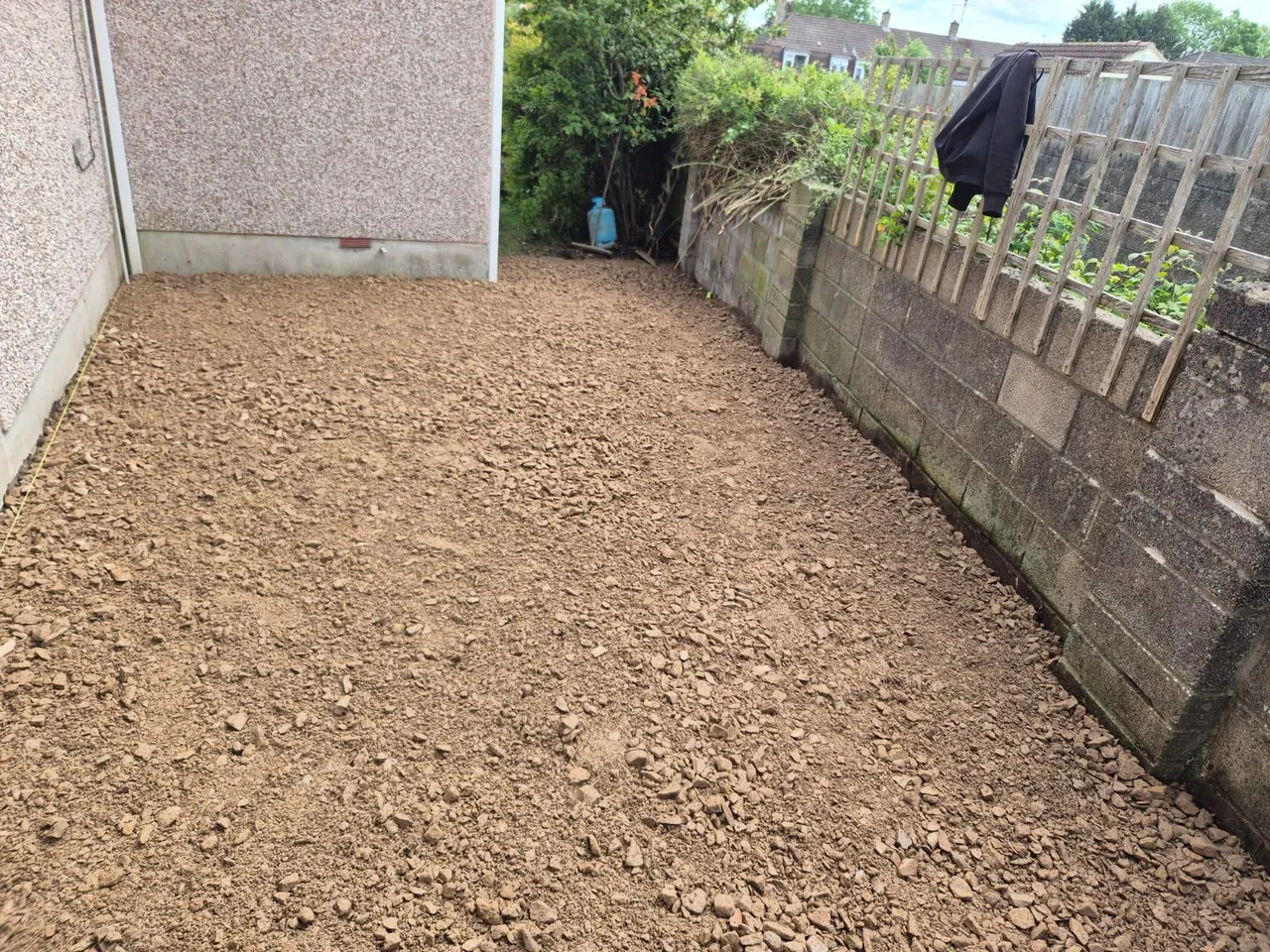
A resin driveway is really three layers: the ground, the sub-base, and the resin bound surface on top. The sub-base is doing most of the structural and drainage work, so it’s worth understanding what should happen here.
Excavation And Depth
The existing surface, whether that’s old concrete, tarmac, grass or bare soil, gets dug out to a depth that allows for a new compacted stone sub-base, typically 100-150mm for a domestic driveway, though heavier clay or areas that will take regular vehicle weight sometimes need more. This stone layer - usually MOT Type 3, which is designed to be permeable - gets laid in stages and compacted with a wacker plate or roller between each layer. Skipping the compaction stage, or laying it all in one go, is one of the most common reasons resin driveways fail early.
Falls And Run-Off
Even a permeable surface needs somewhere for excess water to go in a heavy downpour. A good installer will build in a slight fall, often just 1:60 to 1:80, directing water away from the house and toward a soakaway, existing drain, or a permeable area like a border or lawn. On a flat plot this might mean adding a few extra millimetres of stone at one end rather than the other - small on paper, but it’s the difference between a driveway that sheds water and one that holds puddles by the back door after a downpour.
SuDS Rules And Why Permeable Surfacing Makes Life Easier
Since 2008, paving over a front garden with a non-permeable surface (like solid concrete or standard block paving without permeable jointing) has required planning permission in England if the water can’t drain away naturally - this is the Sustainable Drainage Systems, or SuDS, requirement. Resin bound surfacing on a properly built permeable sub-base is classed as permeable, so most residential resin driveways in Swindon don’t need an application at all.
This isn’t just a box-ticking exercise. Swindon Borough Council has flagged surface water flooding as a risk in several parts of the town, particularly around older drainage networks that weren’t designed for the amount of hard surfacing that’s gone in over the last few decades. A permeable driveway that’s actually built to permeable standards - not just labelled as such - genuinely takes pressure off that system, one garden at a time.
How Swindon’s Weather Affects Installation Timing
Resin needs to cure in dry conditions and within a fairly specific temperature range, generally above around 5-8°C depending on the product. Swindon’s climate is fairly typical for the South West/Wiltshire border - average annual rainfall sits around 700-750mm, with the wettest months usually November through January. Most installers will avoid booking resin work during prolonged wet spells in late autumn and winter, not because the finished surface can’t handle rain (it can, that’s the point), but because the resin itself needs a dry window to go off properly during installation.
In practice, this means spring through early autumn tends to be the busiest period for resin driveway installations in Swindon, and booking a few weeks ahead in summer is sensible if you have a date in mind.
Keeping Drainage Working Over Time
A permeable resin driveway doesn’t need much maintenance, but the surface can lose some of its permeability over years as fine debris, moss or algae builds up in the pores - especially under trees or in shaded, north-facing driveways that stay damp longer. A occasional stiff brush and a rinse with a hose, or a gentle pressure wash every couple of years, keeps water moving through the surface as intended rather than running off the top.
If you’re noticing standing water on an existing resin driveway that didn’t used to pond, it’s worth getting it looked at - sometimes it’s just surface debris, but occasionally it points to settlement in the sub-base underneath, which is exactly the kind of thing good groundwork is meant to prevent in the first place.
Thinking about a new driveway and want the groundwork done properly the first time? Get in touch for a free quote and we’ll come out and take a proper look at your ground conditions before we talk numbers.
Frequently Asked Questions
Do I need planning permission for a permeable driveway in Swindon?
Usually not. Resin bound surfacing is permeable, so it meets Sustainable Drainage System (SuDS) requirements for front gardens, which is the main trigger for needing planning permission when you pave over a garden. If your property is in a conservation area, it's worth checking with Swindon Borough Council first, but most standard residential resin driveways go ahead without any application.
How deep does the sub-base need to be for a resin driveway?
It depends on the existing ground and how the driveway will be used, but a typical residential sub-base in Swindon is laid to a depth of 100-150mm of compacted MOT Type 3 stone, sometimes more on clay-heavy plots or where vehicles will be parked regularly. The right depth is one that's been compacted in layers and tested before resin goes anywhere near it.
Can resin be laid directly onto soil or grass?
No. Resin bound surfacing needs a stable, well-compacted base underneath it, whether that's a new permeable sub-base, or sound existing concrete, tarmac or block paving. Laying resin straight onto soil, turf or loose hardcore will lead to cracking, sinking and drainage problems within a year or two.
How long does sub-base preparation take compared to laying the resin?
On most Swindon driveways, groundwork takes up the bulk of the job - often a full day or two - while the resin itself can be mixed and laid in a matter of hours once the base is ready. If a driveway feels like it's taking longer than expected, it's usually because the groundwork is being done properly.