
27 August 2026
Ducting, Cables And Covers: What To Sort Before A Swindon Driveway Is Laid
Most of the money in a resin driveway is spent on things nobody ever sees again. Excavation, geotextile, sub-base, edge restraints - by the time the mixer arrives, the majority of the job is already underground and permanently out of reach. That is fine for the parts that never change. It is a problem for the parts that do: the charger you buy two years from now, the lights you decide you want next summer, the stopcock that turns out to be under the new surface. Cutting a resin bound drive open afterwards is doable, but the repair is always visible, and a 20 metre run of plastic duct laid while the trenches are open costs less than a takeaway. This is a list of what to think about in the two weeks before installation, in the order it usually needs deciding.
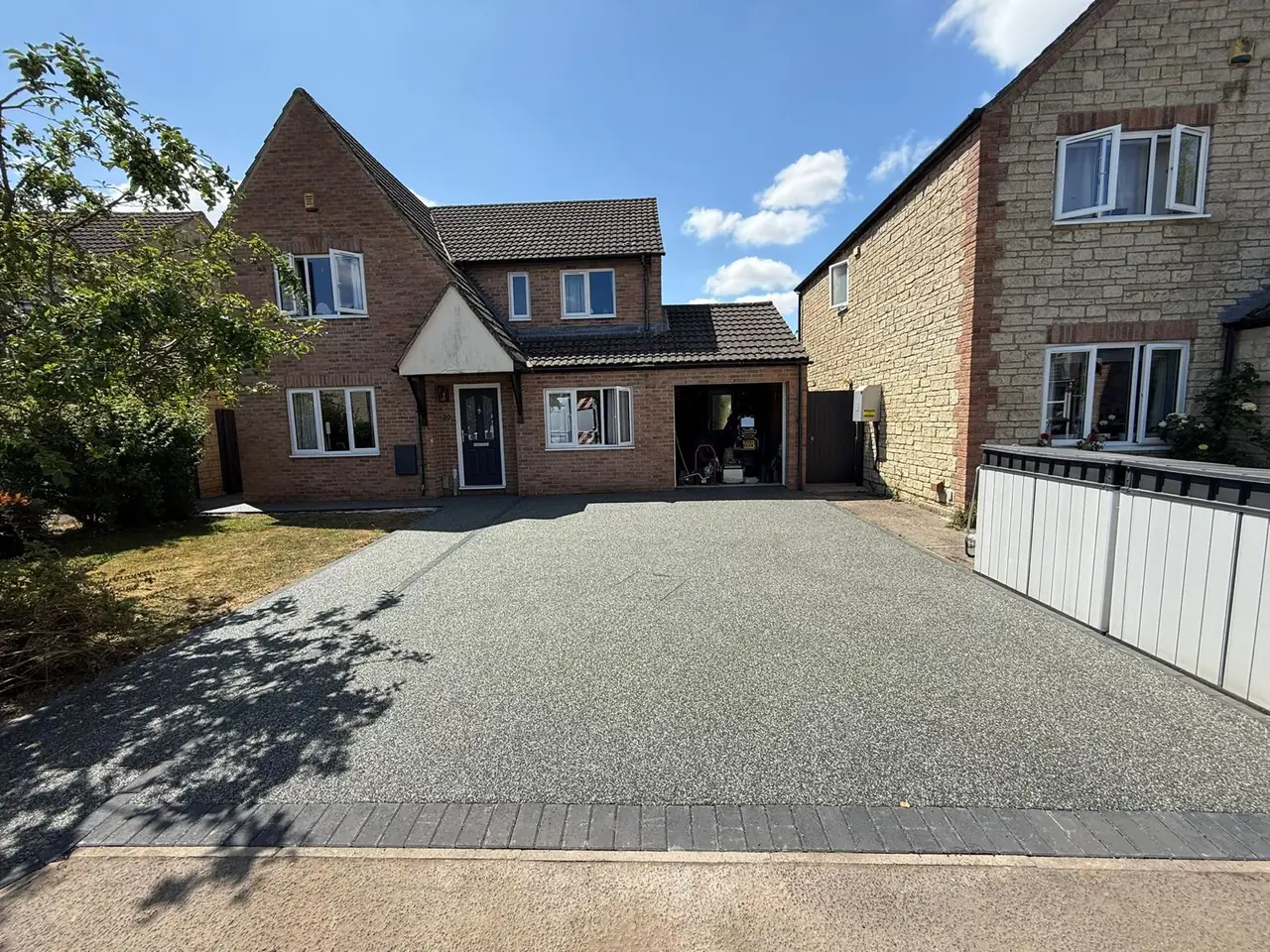
Find Out What Is Already Down There
Before deciding what to add, establish what you are digging into. Swindon’s housing spans about 180 years and the record-keeping varies wildly across it, which is why two houses on the same street can throw up completely different surprises when the topsoil comes off.
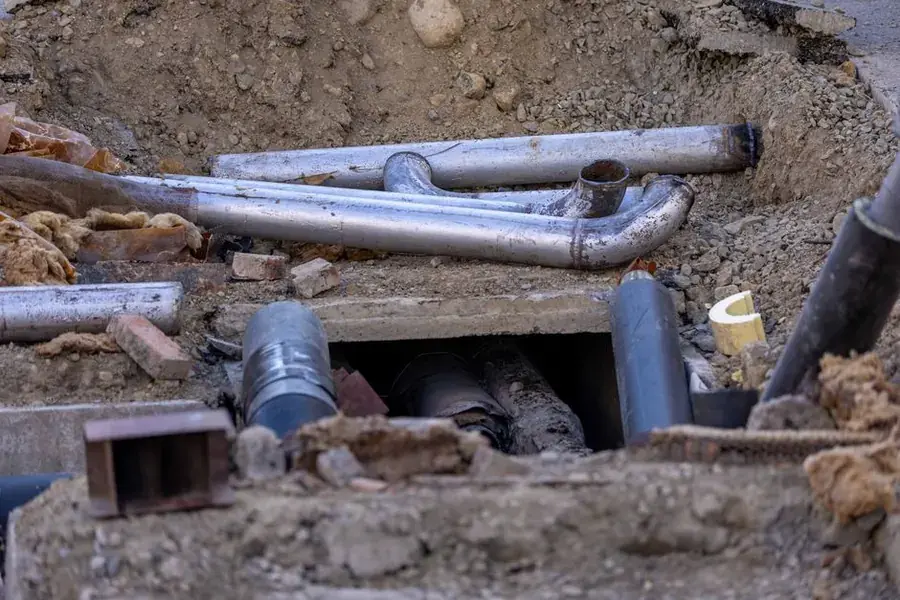
The railway village terraces and the older Old Town streets have services that have been added, moved and abandoned repeatedly since Victorian times, and it is entirely normal to find a lead water main, a redundant clay drain and a gas service all within the same two metres. The post-war estates - Park North, Walcot, Penhill - tend to be more orderly but often have shallow-buried supplies where ground levels were altered later. The newer estates at Abbey Meads, Priory Vale, Wichelstowe and Badbury Park are the best documented and the most congested, because everything from fibre to a surface water lateral was installed to a plan within the last twenty-five years.
Free asset searches exist and are worth using. LinesearchbeforeUdig lets anyone check a location against the records of the major pipeline and cable operators at no cost, and the HSE’s guidance in HSG47, Avoiding danger from underground services, is the standard your installer should be working to with a cable avoidance tool before a machine goes anywhere near the ground. Ask whether they scan. Most good firms do it automatically and will happily tell you what they found.
The EV Cable Route Is The One People Regret
This is the one that gets raised six months too late, usually by phone, usually apologetically.

You do not need to buy a charge point now. You need to decide where a car would plug in and get a duct between there and the consumer unit while the ground is open. That usually means a 50mm or 63mm twinwall duct laid at about 450mm in the sub-base with a draw cord threaded through it and yellow or black warning tape a spade’s depth above it, ends capped and their positions photographed and measured off two fixed points before anything is backfilled. Take the photograph. Nobody remembers where the duct end is two years later, and finding it involves digging holes in a surface you paid to have laid perfectly flat.
Worth knowing before you budget: the government’s household electric vehicle chargepoint grant is now limited to renters and flat owners, at 75 percent of the cost up to £500. Homeowners with their own off-street parking - which is most people reading this - no longer qualify, so the installation cost falls entirely on you. That is another argument for ducting early: the electrician’s price drops considerably when there is already a clear route rather than a trench to dig across a finished drive.
If a second car is even a possibility, run two ducts. The marginal cost while the first one is going in is almost nothing.
Lighting Needs Deciding Before The Sub-Base Is Compacted
Lighting is what people think about the first evening after the drive is finished, standing at the window looking at a large dark rectangle. By then the decision has already been made for them.

There are two approaches and they need different preparation. Wall-mounted lights on the house and on any boundary walls are the simpler option - cabling runs above ground level along the wall face and the drive is barely involved, beyond perhaps one crossing to a far-side pier. In-ground uplighters and edge markers set into the surface itself are the more striking option and much the more demanding: each fitting needs a sleeve set at the right level in the sub-base before the resin goes down, and the position cannot be adjusted afterwards by even 100mm.
Whichever you choose, the cable crossings need to be in place first. Any electrical work outdoors falls under Part P of the Building Regulations and should be done by a registered electrician who will certify it, so bring them into the conversation before the groundworks start rather than after. A useful compromise if you have not decided: run a spare duct to the far corner of the drive and cap it. It costs very little and keeps every option open, including the gate motor or the outbuilding supply you have not thought of yet.
Covers, Chambers And The Things That Must Stay Reachable
Every drive has at least one chamber or cover on it somewhere. How an installer deals with them tells you a good deal about how they deal with everything else, because it is the sort of detail that is easy to bodge and nobody notices until it matters.
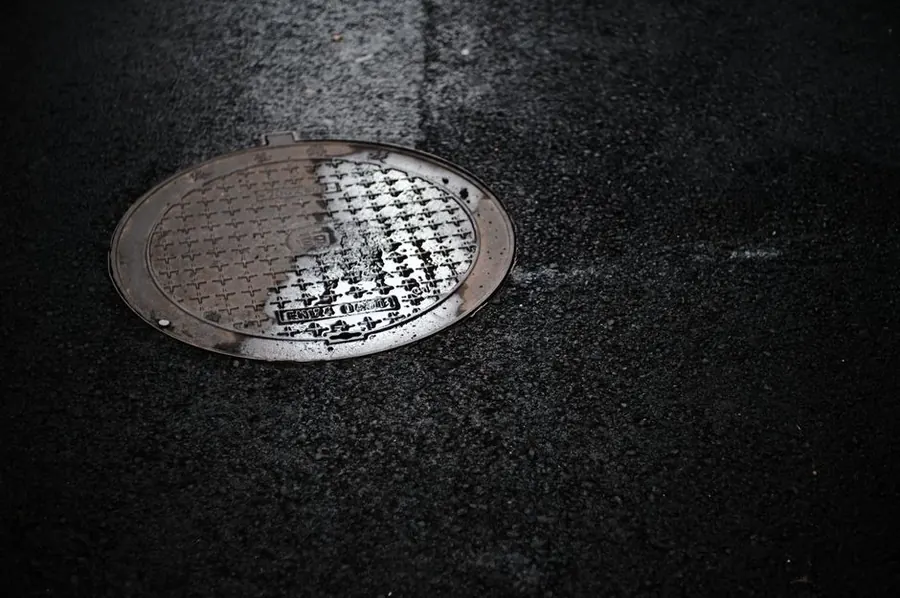
Manholes, rodding eyes, water meter chambers, stopcocks and gas boxes all have to remain accessible. The right answer for a manhole in the middle of a resin drive is a recessed cover tray - a shallow steel tray that replaces the old cast iron lid and gets filled with the same resin bound material, so the pattern of the drive runs across it with only a thin frame visible. Done well it nearly disappears. The wrong answer, which does still get done, is surfacing straight over the top and leaving the homeowner to find it with an angle grinder the first time something blocks.
Levels matter here more than anything else. A recessed tray has to be set so its filled surface finishes flush with the surrounding drive, which means the chamber frame usually needs adjusting up or down before surfacing. That is a job for the groundworks stage, not something to be resolved on the day the mixer turns up.
One point specific to Swindon: drainage responsibility changed in 2011, when most private sewers transferred to the water companies. Thames Water covers this area, and chambers serving more than one property are very likely theirs rather than yours. Know which is which before anyone starts, particularly on the terraces where a single shared run can pass under four front gardens.
Where The Roof Water Goes
Downpipes. Least interesting item on the list, most callbacks by a distance.

A house roof sheds a great deal of water into a small number of pipes, and if one of those pipes currently discharges onto a gully that is about to be buried, that needs solving before the drive exists, not after. The usual answer is to connect the downpipe into a proper drainage run beneath the new construction and take it to a soakaway, keeping the roof water separate from whatever the drive surface itself is doing. Concentrated roof water dumped onto the top of a permeable surface will find the limit of that surface’s infiltration rate faster than rainfall ever does.
The same logic applies to any garden run-off arriving from a lawn or a slope above the drive, and to the overflow from a water butt. Map the water before the trenches close. It is a ten minute walk round the house in the rain with a notepad and it prevents the single most common post-installation complaint, which is a wet patch that appears in exactly the same place after every heavy shower.
The Small Stuff Worth A Duct
A handful of minor items cost almost nothing to allow for and are genuinely awkward to add afterwards.

An outside tap on the far side of the drive, for washing a car where the drain can take it. A supply for an electric gate motor, which needs power at the pier and usually a duct across the entrance for the second leaf. A cable to a garage or garden room, even one that does not exist yet. Irrigation to a border that will otherwise be cut off from the house side. A doorbell or camera at the gate, which increasingly needs power rather than just a battery.
None of these are expensive decisions at trench stage. All of them are irritating decisions afterwards. The rule of thumb worth adopting: if a service might ever need to cross the driveway, put a capped duct in now and photograph both ends. The cost is a few pounds a metre against a repair that will always be slightly visible.
Get It On The Quote And On A Drawing
Verbal agreement about ducting is worth nothing three weeks later when a different crew is on site.

Before you sign anything, get the services element written into the quote as its own line: how many ducts, what diameter, from where to where, at what depth, capped and corded, plus which chambers are being fitted with recessed trays and which downpipes are being connected. A sketch on the back of the quote with measurements off the house corners is enough - it does not need to be a drawing anyone would frame. What it needs is to exist, so that on the day the ground is open there is no debate about what was agreed.
Then ask for a photograph of the ducts in the trench before backfill, with a tape in shot. Any installer who has done this before will have taken it anyway. It is the same instinct behind checking a written specification for sub-base depth, which we cover in the guide to choosing a resin driveway installer in Swindon, and it comes from the same place: the parts of a driveway you cannot inspect afterwards are exactly the parts worth documenting while you can.
Planning a resin bound driveway and not sure what needs to go underneath it? Book a free site visit and we will walk the plot with you before anything gets dug.
Frequently Asked Questions
Can you dig up part of a resin driveway later?
You can, and a competent installer will make a clean repair, but it will never be invisible. A resin bound surface is trowelled out as one continuous piece and cures as one, so a patch cut into it afterwards is a new batch of stone and binder butted against a two-year-old one. The stone will have weathered slightly and the join line stays visible in low sun. That is the whole argument for running spare ducting before the surface goes down - a length of 63mm duct costs a couple of pounds a metre and saves cutting the drive open in five years.
Do I need to run a duct for an EV charger before laying a driveway?
If there is any chance of an electric car in the household, yes. The charger itself can wait, but the route from the consumer unit to wherever the car will park cannot easily be added later without either cutting the surface or clipping cable around the outside of the house. A 50mm or 63mm twinwall duct with a draw cord in it, laid at around 450mm depth in the sub-base with warning tape above it, is cheap while the trenches are already open and expensive once they are closed.
What happens to a manhole cover under a resin driveway?
It gets replaced with a recessed tray, not surfaced over. A recessed cover is a shallow steel tray that sits in place of the old cast iron lid and is filled with the same resin bound material as the drive, so the surface reads as continuous with only a thin frame line visible. The chamber underneath stays fully accessible, which matters because it is not yours to bury - the water company and any future drainage engineer both need to get into it.
Who is responsible for the drains under a Swindon driveway?
Since the 2011 transfer of private sewers, most shared drainage beyond the boundary of a property is the responsibility of the water and sewerage company - Thames Water across Swindon - while the pipework serving only your own house up to that point remains yours. In practice, before any excavation starts you want to know which chambers on the plot are which, because burying or damaging a public sewer chamber is a far bigger problem than a soil pipe you own outright.