
29 July 2026
Can You Lay A Resin Driveway Yourself? The Truth About DIY Resin Kits
There’s a certain appeal to doing your own driveway. The resin kits are out there, the videos make it look straightforward, and the material cost looks a fraction of a professional quote. So can you actually lay a resin driveway yourself? The honest answer is: you can, but for a full driveway you probably shouldn’t - and the reasons have very little to do with the resin itself. Having put right our share of DIY resin jobs that didn’t last across Swindon, we think it’s worth being straight about where DIY works, where it goes wrong, and where the real costs hide. This isn’t a sales pitch to scare you off; it’s the stuff the kit boxes don’t mention.
What DIY Resin Kits Actually Are
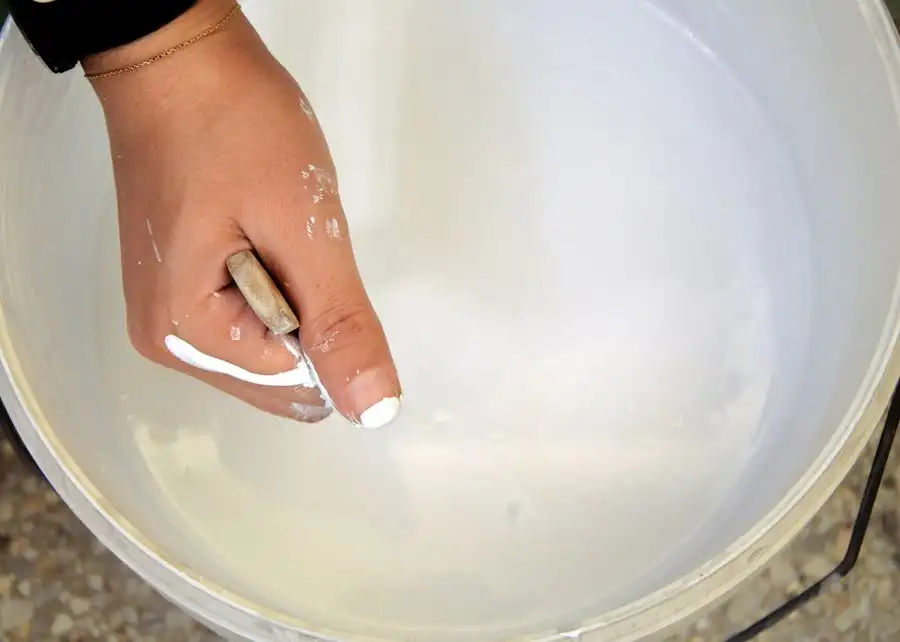
DIY resin bound kits are sold online and through some builders’ merchants, and they contain what a professional uses: bagged, kiln-dried aggregate and the two-part resin that binds it. Mix the two, pour, trowel, done - at least in theory.
The kits are usually priced per square metre for the surface material only, typically £40-£70. That’s the number that makes DIY look tempting next to a professional quote. But it’s worth being clear about what that price does and doesn’t cover. It’s the resin and stone that go on top. It is not the sub-base, the excavation, the tools, the waste removal, or any of the preparation that actually determines whether the finished surface lasts. The resin is the easy, visible bit. The hard, invisible bit underneath is where a driveway is won or lost, and no kit includes it.
The Part That Actually Matters: The Sub-Base
Here’s the thing we’d most want a DIYer to understand before spending a penny: a resin surface is only as good as what’s under it, and on Swindon’s ground that’s a real skill.
A resin bound driveway is a 15-18mm layer sitting on a base. If that base is too thin, poorly compacted, or the wrong material, the surface above will crack, sink or lift no matter how perfectly the resin was mixed. Swindon sits on shrink-swell clay that moves with the seasons, and managing that movement takes a properly excavated, correctly specified, well-compacted permeable sub-base - usually 100-150mm of open-graded stone laid to the right falls. Getting that wrong is the single most common reason resin driveways fail, and it’s the part DIYers almost always underestimate.
Digging out an old driveway, disposing of the spoil, and building a sub-base by hand is hard, heavy, skilled work. It’s not what the kit videos linger on, because it’s not the satisfying part - but it’s the part that decides whether you’re still happy with the driveway in five years. We go into why the base matters so much in our resin driveway repair guide.
Where DIY Resin Jobs Go Wrong
Even with a decent base, laying the resin itself has traps that catch first-timers, and most of them come down to time and consistency.
Resin has a short working life once it’s mixed - often 10-15 minutes before it starts to go off. Across a whole driveway that means mixing batch after batch against the clock, keeping the ratios identical every time, and trowelling each section to a smooth, even finish and blending it into the last before either starts curing. Get the ratio wrong and the surface stays tacky or goes brittle. Mix too slowly and you’re trowelling half-cured resin, which leaves ridges and patchy texture. Lay it in the rain or below about 5°C and the cure fails - and Swindon’s weather doesn’t always cooperate.
The results of these mistakes are the jobs we get called to fix: uneven, rippled surfaces, patches that never fully hardened, colour differences between batches, loose stone coming away, and edges that have crumbled. Fixing a botched resin surface often means lifting it and starting again, because you can’t cleanly patch over a cure that went wrong.
The Hidden Costs Of DIY
The kit price is only the visible tip. Add up what a DIY driveway really needs and the gap to a professional quote narrows fast.
Beyond the resin and aggregate, you’re looking at excavation and a skip or grab lorry for the old surface and spoil, the stone for a proper sub-base, a plate compactor and forced-action mixer to hire, edge restraints, trowels and tools, and a good chunk of your own time across several days of heavy work. None of that is in the kit. And the biggest hidden cost is the one nobody budgets for: the cost of it going wrong. A failed DIY surface doesn’t just waste the kit money - it often has to be dug up and redone properly, so you pay twice.
Set against a professional job at £100-£300 per square metre that includes all the groundwork, the right equipment, and a workmanship guarantee, the DIY saving is usually far smaller than the sticker price suggests - and it comes with all the risk on your shoulders. Our resin driveway cost guide breaks down what’s actually in a professional price.
When DIY Resin Does Make Sense
None of this means resin kits are useless - they have a place, just not on a full driveway.
For a small, simple, low-traffic area on a sound existing base, DIY resin can genuinely save money and be a satisfying weekend job. A shed or bin-store base, a short garden path over existing concrete, a small patio patch, or a step - anything modest, flat, and not carrying vehicles, where an existing solid surface means you can skip the groundwork. On those jobs the working time is manageable, the area is small enough to keep consistent, and a mistake isn’t catastrophic.
The line is roughly this: if the job needs excavation, a new sub-base, or has to take a car, it’s professional territory - especially on clay. If it’s a small area over a sound base with no vehicle load, DIY is a reasonable option. Be honest with yourself about which one you’ve got before ordering a kit.
Our Honest Take
We install resin for a living, so of course we’d say hire a professional - but we genuinely mean it for driveways, and we’d say it even if we didn’t do the work. The resin is the easy part. Everything that makes a driveway last is in the preparation and the pace, and both take experience you don’t get from a first attempt. On Swindon’s clay especially, a cut-corner base is a slow-motion failure you won’t see coming until the cracks arrive.
If you’re weighing up a DIY kit for a driveway, the most useful thing you can do first is get a proper quote to compare against - not just on price, but on what’s actually included underneath. Get in touch for a free site visit and we’ll assess the ground, explain exactly what your driveway needs, and give you a clear, no-obligation figure so you can make the call with the full picture in front of you.
Frequently Asked Questions
Can you lay a resin driveway yourself?
Technically yes - DIY resin bound kits are sold, and a competent, fit person can lay a small area like a shed base or a short path. But a full driveway is a different matter. The hard parts aren't the resin itself; they're the sub-base preparation, getting the mix ratios and timing right, and trowelling a large area to an even finish before it cures. On Swindon's clay ground, poor sub-base work is the main cause of resin driveways failing, and that's the bit DIYers most often get wrong. For a driveway, professional installation is almost always the better call.
How much does a DIY resin driveway kit cost?
DIY resin bound kits typically cost £40-£70 per square metre for the resin and aggregate alone. That sounds cheaper than professional installation at £100-£300 per square metre, but the kit price doesn't include the sub-base, excavation, muck-away, tools, or your time - and it doesn't include putting things right if it goes wrong. Once you add proper groundwork and equipment hire, the real DIY cost is much closer to professional prices, without the guarantee.
Why do DIY resin driveways fail?
The most common reasons are an inadequate sub-base, wrong resin-to-aggregate ratios, laying in the wrong weather, and trowelling too slowly so the mix starts curing before it's finished. Resin has a short working time once mixed, and a driveway is a large area to cover evenly against the clock. On clay ground like Swindon's, a sub-base that's too thin or poorly compacted causes cracking and movement within a few years. These are exactly the areas where experience matters most.
Is it cheaper to lay a resin driveway yourself?
It looks cheaper on the kit price alone, but rarely works out that way for a full driveway. Once you factor in excavation, a proper permeable sub-base, tool and mixer hire, waste removal, and the risk of a failed surface that needs redoing, the saving shrinks fast. A DIY job that fails costs more than doing it professionally once. For small, simple areas DIY can save money; for a driveway on Swindon's clay, professional installation usually offers better value overall.