
5 September 2026
Driveway Lighting And Power In Swindon: Plan The Cables Before The Stone Goes Down
The lighting question almost always arrives too late. People decide on the aggregate, agree the border, book the dates, and then somewhere around the time the sub-base is being compacted somebody says “should we have a light down the side?” By then the answer has already been made for you by the ground.
It is worth thinking about earlier than that in Swindon specifically, because of how much of the year you use a driveway in the dark. Mid-December sunset here is a little after four in the afternoon, which means for a couple of months either side of Christmas most people arrive home, unload shopping and find the front door without any natural light at all. A surface that looks superb in July photographs is a black rectangle by half past four in January unless something was planned for it.
Watch: why the cable run has to be agreed before the sub-base is compacted.
Why Cables Have To Be Decided Before The Sub-Base
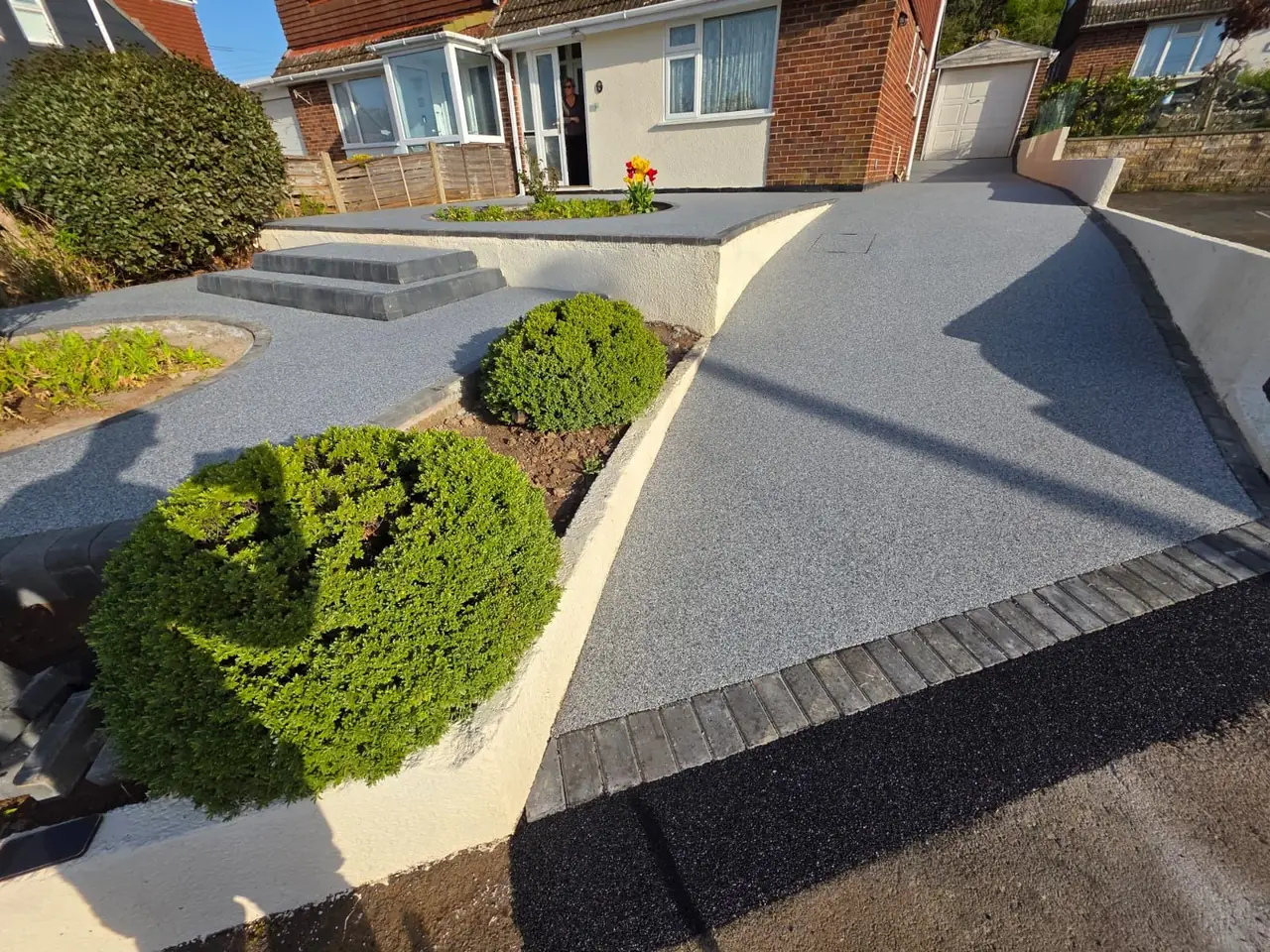
A resin bound driveway is built in layers, and the order those layers go down is fixed. Excavate to formation, lay and compact the open-graded stone sub-base, set the edge restraints, then mix and trowel the resin and aggregate. Anything that needs to sit under the surface has to be in place before the stone is compacted, because once that base is rolled it is a structural element and you do not want to be trenching through it.
That gives you a window of roughly a day. Before it, ducting costs very little. After it, every route becomes a matter of cutting, digging and making good.
The making good is the real issue with resin specifically. Resin bound stone is a continuous trowelled surface, not a set of units you can lift and relay. A repair patch is a genuine repair - a new batch mixed to match, keyed into the cut edge - and while a good one is not obvious, it is never invisible either. Aggregate batches vary very slightly, and a patch laid three years later has cured under different conditions to the surface around it. Block paving forgives an afterthought. Resin does not, which is exactly why the planning has to happen up front.
What People Actually Fit On A Swindon Driveway

There is a gap between what appears on Pinterest and what people genuinely ask for once they have thought about it.
Wall mounted lights either side of the front door or on the corner of the house are the workhorse. They need no ducting under the drive at all if the cable runs through the wall, they light the useful area, and they are the cheapest thing on this list by a distance. For a lot of houses this is honestly the whole answer.
Recessed ground lights set into the surface are the ones that make a drive look designed rather than lit. They are usually placed along one edge, around a turning circle, or picking out a border of contrasting aggregate. They want to be sparse. Six well spaced fittings look considered, twenty look like a runway.
Bollard lights along a path or the boundary suit longer frontages and the deeper plots you find in Wroughton, Highworth and Blunsdon. Low level step lights matter on anything with a change in level. An outdoor socket near the parking space earns its keep for a jet wash, a mower or a car vacuum. And increasingly the driveway build is the moment people run a supply for a future garden room or workshop at the back, because the trench is open anyway.
Ducting, Depth And The Warning Tape
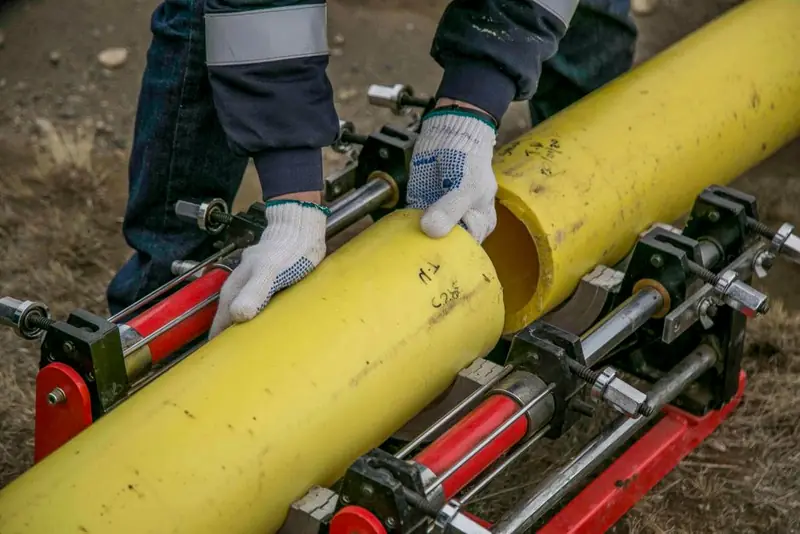
The principle is simple: cables go in ducts, ducts go deep enough, and something warns the next person with a spade.
BS 7671 does not set a hard buried depth, so what the industry works to is convention with a decent margin. At least 450mm of cover in a garden or planted area, and 600mm or more anywhere a vehicle drives, which on a driveway means effectively all of it. Deeper is not automatically better - you want the cable below the reach of routine digging and below the frost affected zone, not down in the water table.
The cable itself should either be steel wire armoured or run inside a proper duct, laid on a bed of sand or fine material so no sharp stone bears on it, and covered with yellow warning tape before backfilling. That tape is the bit people skip and the bit that pays for itself in ten years’ time when someone puts a fence post in.
Draw cords are the other cheap habit worth insisting on. A length of nylon cord left in an empty duct means a future cable can be pulled through without opening anything. Ducting a spare route to the far corner of the plot costs very little while the ground is open, and it is the single most useful thing you can do for a driveway you have not fully decided about yet. The same logic applies to everything else that lives under a resin surface - drainage, service runs, ducting for the future - which we cover in more detail in our guide to what goes under a resin driveway and how services are handled.
Recessed Ground Lights Set Into Resin Bound Stone
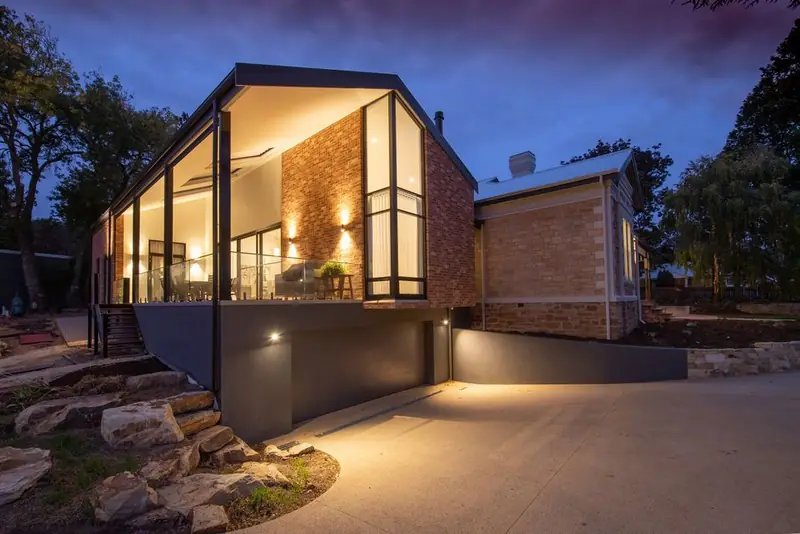
This is where resin has a genuine advantage over paving, and it comes down to how the two surfaces meet a fitting.
With slabs or blocks, a light means cutting units around a circular rim and living with the joint lines. Resin bound stone is poured and trowelled, so it closes tight against the rim of the fitting and finishes flush. Done properly it looks like the light was always part of the surface rather than something inserted into it.
Two details decide whether it works. The first is the load rating. A fitting sitting where a car wheel can cross it needs to be rated for vehicle loading, quoted by manufacturers in tonnes or kilonewtons, and it needs a solid bed beneath it rather than being perched on loose stone. Fittings on a border where nothing drives can be lighter and cheaper, which is one argument for keeping them to the edges.
The second is the height. The rim has to sit exactly at finished surface level, which is set before the resin is laid and is very hard to adjust afterwards. A millimetre or two proud and it catches a shovel every winter. Sunk low and it becomes a dish that holds water and grit. This is fiddly work and it is worth agreeing at quotation stage who is responsible for setting those levels - the electrician or the driveway team - because “I assumed they were doing it” is how fittings end up wrong.
EV Charging Changes The Arithmetic
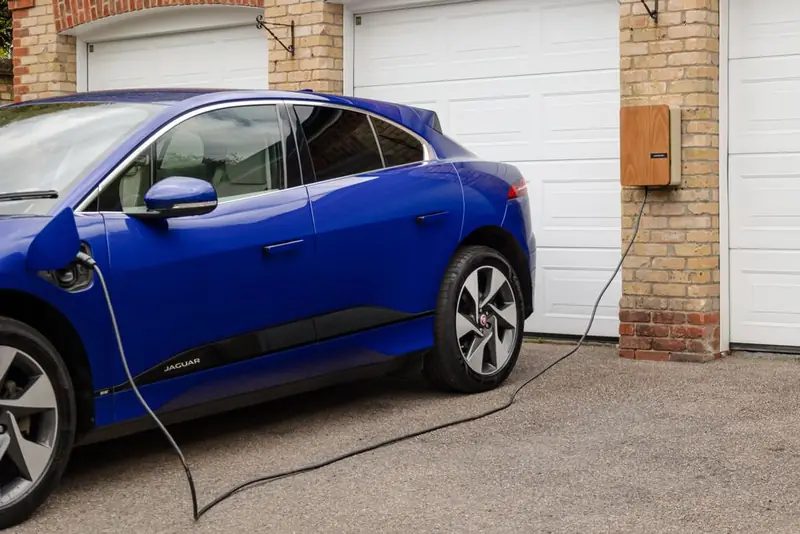
Even households with no electric car on the horizon are increasingly running a duct for one, and it is hard to argue with. The charge point needs a dedicated circuit from the consumer unit, and the expensive part is almost never the unit on the wall. It is getting a supply from the meter to the parking space.
Where the meter is at the front of the house and the car parks in front of it, the run is short. Where the meter sits in a hallway cupboard and the parking is round the back - common on the older estates and on any house where a rear garage came later - the cable has to travel, and if the route crosses the driveway it wants to be ducted now.
Position matters more than people expect. The charging socket on a car is not in the same place on every model, and cable lengths are finite. Work out which way the car will sit on the finished drive before deciding where the point goes on the wall, rather than discovering afterwards that the lead only reaches if you reverse in.
Where there is any prospect of a future charger, run the duct even without the cable. Empty duct with a draw cord in it is cheap. Cutting a channel through cured resin to add one later is not.
Weather, IP Ratings And A Wiltshire Winter

Swindon sits on the drier side of the country, well under the UK average of roughly 1,150mm of rain a year. That offers no comfort at all to a light fitting. What kills outdoor lighting is not total rainfall. It is repeated wetting and drying, frost, and standing water sitting against a seal.
The rating to look for is the IP number. A wall light under a soffit can reasonably be IP44 or IP54. Anything exposed on an open wall wants IP65. Anything recessed into the ground needs IP67 as a minimum, because a ground fitting will at some point be sitting in a puddle, and IP67 is the rating that covers temporary immersion.
Resin bound surfacing helps here more than most surfaces do, because it is permeable. Rain passes through the surface into the open-graded stone below rather than running across it and pooling, so ground fittings on a well built resin drive spend far less time underwater than the same fittings set into impermeable concrete. That advantage disappears entirely if the sub-base was skimped and the water has nowhere to go, which is a good reminder that lighting reliability is partly a groundworks question.
Two other habits worth having. Buy fittings whose LED module or lamp can be replaced rather than sealed units that become landfill when one fails. A sealed ground light in a resin surface is a miserable thing to have to dig out. And keep the drive swept around the fittings; a rim packed with leaf mulch traps moisture against the seal all winter.
Part P, Certificates And Who Signs It Off

Outdoor electrical work at a home falls under the Building Regulations, and it is worth knowing which bits are notifiable so you can ask the right question.
In England, running a new circuit from the consumer unit is notifiable work under Approved Document P on electrical safety. That covers a dedicated EV charger circuit and usually covers a proper garden lighting circuit too. It either goes through building control or - far more commonly - is carried out by an electrician registered with a competent person scheme who self certifies it and notifies the council on your behalf.
Adding a light or a socket onto an existing suitable circuit outdoors is a different matter. The 2013 revision reduced the range of notifiable work, and as Electrical Safety First’s explanation of Part P sets out, some outdoor additions came out of scope. Not notifiable is not the same as not regulated: the work still has to comply with BS 7671, including 30mA RCD protection on outdoor circuits.
Whichever category the work falls into, you should end up holding paper. An Electrical Installation Certificate or a Minor Works Certificate, plus a Building Regulations compliance certificate for notifiable work. Keep them with the deeds. A buyer’s solicitor will ask, and an EV charger with no certificate is a genuine snag on a sale.
Planning permission is rarely an issue for domestic lighting. The Planning Portal’s guidance on external lighting confirms light itself is not usually subject to planning control, but it does flag nuisance - beams pointed at a neighbour’s windows, or sensors triggered by every passing car, can end up as a civil complaint. Listed buildings and conservation areas are the exception, which matters around Old Town and the Railway Village.
Getting It On The Drawing Before You Get A Quote
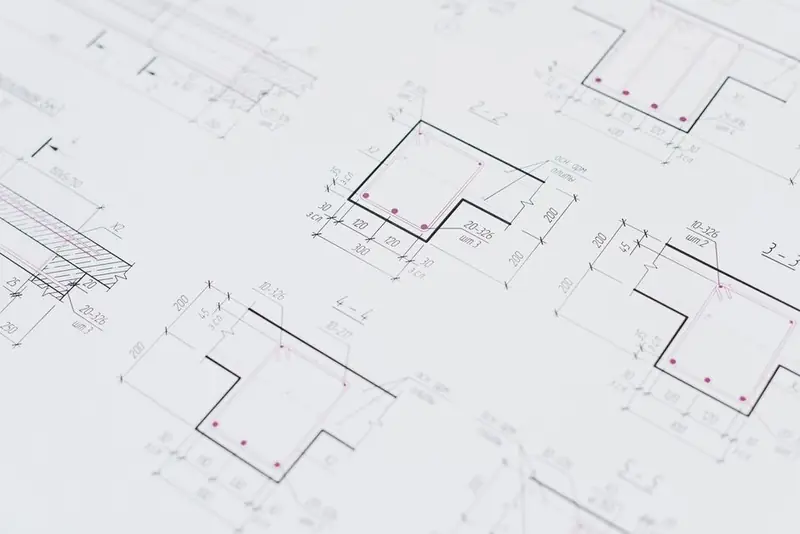
None of this needs a lighting designer. It needs a sketch and one conversation before anybody books a date.
Mark on a rough plan where the car will actually sit, where people walk from the parked car to the door, where the bins live, and any step or level change. Those four things dictate almost every fitting position worth having. Then decide what goes in now and what merely gets a duct. Be honest with yourself that the duct is the important half of that decision.
Ask the driveway installer directly whether the price includes laying ducting you supply or specify, and ask when the electrician needs to attend, because there are usually two visits: one to lay ducts and set fitting heights before the surface, and one to terminate and commission afterwards. Sequencing those two visits around a 24 hour foot traffic cure and a 48 to 72 hour vehicle cure is straightforward if it is planned and a nuisance if it is not.
The Swindon households happiest with their lighting a year on are rarely the ones who fitted the most of it. They are the ones who ran two spare ducts and kept their options open.
If you are working out what to put under your surface before it goes down, talk to us about your Swindon driveway and we will go through the routes with you on site.
Frequently Asked Questions
Can you put lights into a resin bound driveway?
Yes, and it is one of the surfaces that takes them best, because resin bound stone is trowelled around a fitting rather than cut to fit like a slab. Drive-over ground lights are set into the sub-base at the right height with their ducting run first, then the resin is laid up to the rim. The important part is that the fitting has to be positioned and wired before the surface goes down. Retrofitting means cutting into finished resin.
How deep should cables be buried under a driveway in Swindon?
There is no fixed legal depth in BS 7671, but the accepted practice is at least 450mm in a garden and 600mm or more under anything a vehicle drives on. Cables should be in ducting or armoured, sat on a bed of sand or fine material, with yellow warning tape laid above them so anyone digging in future finds the tape before the cable.
Do I need building regulations approval for outdoor driveway lighting?
In England, running a brand new circuit from the consumer unit is notifiable work under Part P, so it either goes through building control or is done by an electrician registered with a competent person scheme who certifies it. Adding a light or socket to an existing suitable circuit outdoors has not been notifiable since the 2013 changes, but it still has to comply with BS 7671. Either way you should be handed a certificate.
Is it cheaper to install driveway lighting during the build?
Considerably. While the excavation is open, adding ducting is mostly the cost of the duct and a little labour. Once the resin has cured, the same run means cutting the surface, digging, making good and colour matching a patch that will never be invisible. Ducting a route you might never use is one of the cheapest forms of insurance on the whole job.