
10 August 2026
How Thick Should A Resin Driveway Be? Depth, Sub-Base And Why It Matters
“How thick is a resin driveway?” sounds like a simple question, and people usually expect a single number. The honest answer has two parts, and the part most homeowners focus on is the less important one. The resin surface you see and walk on is only about 15-18mm thick - roughly the depth of a pound coin standing on edge. What actually decides whether your driveway lasts 20-25 years or cracks up in three is the sub-base underneath, which is several times thicker and does all the real work. Understanding both layers, and why the one you can’t see matters most, is the best way to judge a quote and avoid a driveway that fails early - especially on Swindon’s clay ground, where depth and compaction are everything.
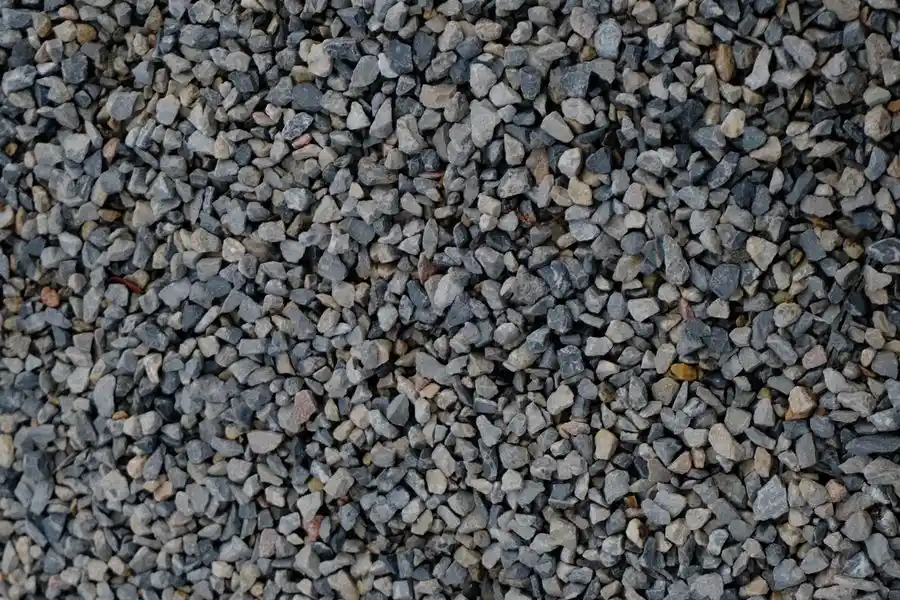
The Surface: 15-18mm Of Resin And Stone
Let’s start with the layer people mean when they ask about thickness - the resin bound wearing surface itself.
For a residential driveway, this is typically laid at 15-18mm. That’s the trowelled layer of natural aggregate mixed with resin that gives you the finished, smooth, permeable surface. It’s laid in one pass, hand-trowelled to an even depth across the whole area. For lighter-duty pedestrian surfaces - garden paths and patios that never take a vehicle - 12-15mm is often enough. For heavy-duty or commercial surfaces carrying regular vehicle traffic, it can go up to 18-24mm.
The depth here matters for wear and durability. Lay a driveway surface much below 15mm and it’ll wear through and start shedding stone sooner, particularly where tyres turn. But here’s the crucial point: even a perfectly laid 18mm surface will crack and fail if what’s underneath it isn’t right. The surface has no structural strength of its own - it’s a wearing layer, not a load-bearing one. Which brings us to the part that actually counts.
The Sub-Base: Where Driveways Are Won Or Lost
If you take one thing from this article, make it this: the sub-base is what determines whether a resin driveway lasts, and it’s far thicker and far more important than the resin on top.
A resin bound driveway is a thin surface sitting on a foundation. That foundation - the sub-base - is typically 100-150mm of compacted, open-graded (permeable) aggregate for a residential driveway, laid over a properly prepared formation. It’s the sub-base that carries the weight of vehicles, spreads the load, and stays stable as the ground beneath moves. The resin surface just follows whatever the sub-base does. If the sub-base is solid and level, the surface stays solid and level. If the sub-base moves, so does the surface - and it cracks.
That’s why depth matters so much down here. Too thin, and the sub-base can’t spread loads or absorb ground movement properly. The right depth, correctly compacted, gives the resin surface a stable base that keeps it intact for its full 20-25 year life. This is the layer that separates a proper installation from a cheap one, and it’s completely invisible once the job’s done - which is exactly why some installers skimp on it.
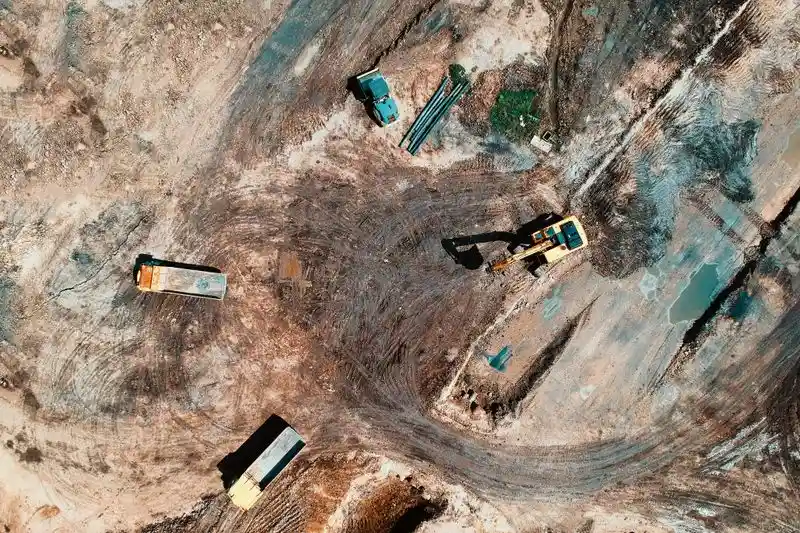
Why Swindon’s Clay Raises The Stakes
Depth and compaction matter everywhere, but on Swindon’s ground they matter more, and it’s worth understanding why.
Much of Swindon sits on heavy clay, which is a “shrink-swell” soil - it expands when wet and contracts when dry, moving with the seasons. That movement is constantly trying to push up into whatever’s laid on top. A properly built sub-base of the right depth absorbs and manages that movement, so it never reaches the surface. A sub-base that’s too shallow, or not compacted properly, can’t - and the seasonal clay movement transfers straight up into the resin, cracking it.
This is why a spec that might just about get away with being thin on stable chalk or gravel will fail on Swindon clay. The same installer cutting the same corner gets a worse result here. It’s also why a good local installer will often specify the deeper end of the range and take compaction seriously on clay plots. If your driveway has cracked before on clay, a too-thin base is very often the reason - we cover this in our resin driveway repair guide.
Compaction Matters As Much As Depth
Depth is only half the equation. A sub-base laid to the right thickness but not compacted properly is nearly as bad as one that’s too thin, and it’s a corner that’s easy to cut because you can’t see it afterwards.
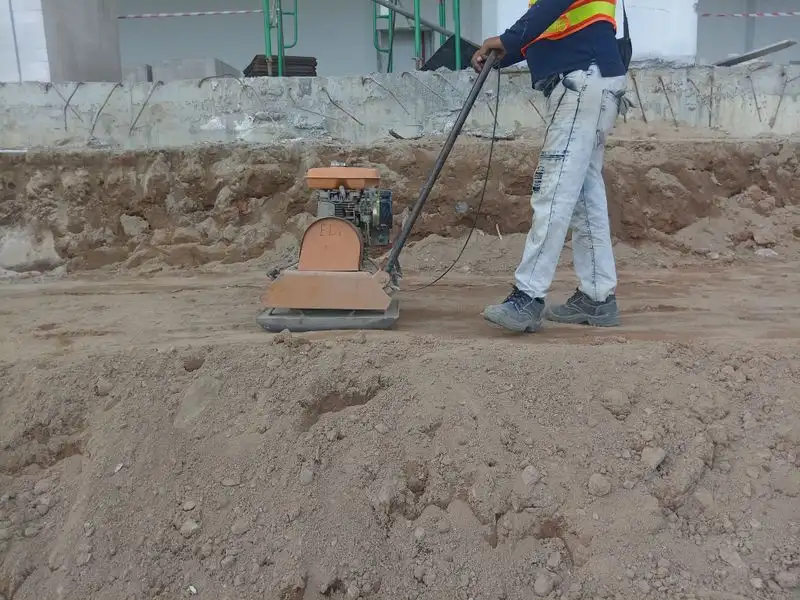
Compaction is the process of mechanically consolidating the sub-base stone in layers so there are no voids and the material locks together into a stable mass. It’s done with a plate compactor or roller, building the sub-base up in layers rather than dumping it all at once and pressing the top. A poorly compacted sub-base settles unevenly under load after installation, and when it settles, the surface above dips and cracks. Done properly, compaction is what turns loose stone into a solid, load-bearing foundation.
So when you’re assessing an installer, it’s not just “how deep is the sub-base” but “how is it compacted, and in how many layers.” A vague answer, or a plan to lay a thick layer in one go and run a plate over the top, is a warning sign.
Total Build-Up: What The Full Depth Looks Like
Putting the layers together, it helps to picture the whole build-up from the ground up, because it explains why a resin driveway involves more excavation than people expect.
From the bottom: the existing ground is excavated to the right formation level and any soft spots are dealt with. A permeable sub-base of 100-150mm of compacted open-graded stone goes in, built up and compacted in layers. Edge restraints are set to contain the surface. Then the 15-18mm resin bound surface is trowelled on top. So the total dig-out for a proper residential resin driveway is typically around 120-170mm - the surface is a small fraction of that.
That’s why “can you just lay it over the top?” only works when there’s already a sound, stable base to build on. It’s also why excavation, muck-away and sub-base stone make up a big chunk of a proper quote. If a price looks suspiciously low, the depth of the build-up is very often where the saving has been made - and it’s the worst place to save. Our resin driveway cost guide breaks down what a proper price includes.
How To Check You’re Getting The Right Depth
Because the important layers are invisible once finished, the time to check depth is before and during installation, not after. A few straightforward questions and observations tell you a lot.
Ask any installer, up front, what surface depth and what sub-base depth they’re quoting, and how the sub-base will be compacted. A confident, specific answer - “18mm surface over 150mm of compacted Type 3 in two layers,” for instance - is a good sign. Vagueness, or reluctance to talk about the base at all, is not. During the work, a proper job involves visible excavation and sub-base building, not just a surface skimmed over the existing ground. And a reputable installer will happily put the specification in writing.
None of this requires you to be an expert - it just requires knowing that the sub-base is where quality lives, and asking about it. That single line of questioning filters out a lot of the corner-cutting. Our guide to choosing a resin driveway installer covers the wider checklist.
The Bottom Line On Thickness
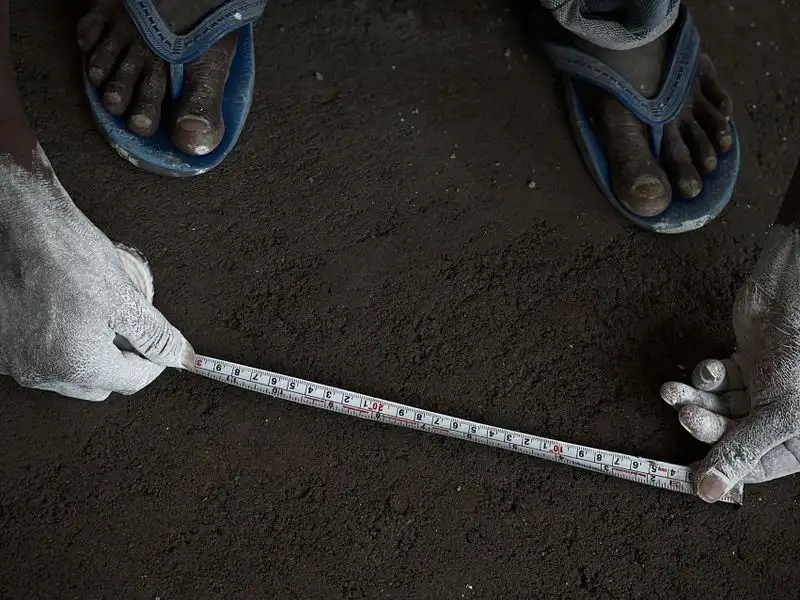
So, how thick should a resin driveway be? The surface is 15-18mm for a residential driveway, but the number that actually matters is the sub-base beneath it - typically 100-150mm of properly compacted, permeable stone, and often the deeper end of that on Swindon’s clay. The resin you see is a wearing layer with no structural strength; the foundation you don’t see is what holds everything together for two decades.
If you remember nothing else, remember that a resin driveway is only as good as what’s under it, and depth plus compaction of the sub-base is where a lasting job is separated from a failing one. For an honest assessment of your ground and the right build-up for your driveway, get in touch for a free site visit - we’ll explain exactly what depth your driveway needs and put the specification in writing.
Frequently Asked Questions
How thick should a resin driveway surface be?
The resin bound wearing surface itself is typically 15-18mm thick for a residential driveway, laid in a single trowelled layer. For pedestrian-only areas like paths and patios, 12-15mm is common, while heavy-duty or commercial surfaces may go to 18-24mm. But the surface depth is only part of the story - what really determines how long a driveway lasts is the depth and quality of the sub-base underneath it, which is far thicker than the resin layer.
How deep should the sub-base be for a resin driveway?
For a residential resin driveway, the sub-base is usually 100-150mm of compacted, open-graded (permeable) aggregate, laid over a suitable formation. On Swindon's clay ground, which moves seasonally, the deeper end of that range - and correct compaction - matters more than on stable ground. Driveways taking heavier vehicles need more. A sub-base that's too thin or poorly compacted is the single most common reason resin driveways fail early, regardless of how good the resin surface is.
Why does resin driveway depth matter so much?
Because a resin surface is only 15-18mm thick, it has no structural strength of its own - it relies entirely on the sub-base beneath to carry loads and stay stable. If the sub-base is too shallow or badly compacted, the ground movement and vehicle loading transfer straight into the surface, causing cracking, sinking and unevenness. On clay ground like Swindon's, getting the depth and compaction right is what separates a driveway that lasts 20-25 years from one that fails in a few.
Can you lay resin too thin?
Yes, and it's a common corner-cut. Laying the resin surface below about 15mm for a driveway, or skimping on the sub-base depth to save cost, both lead to early failure. A too-thin surface wears through and loses stone faster; a too-thin or poorly compacted sub-base lets the ground move and cracks the surface above. If a quote seems unusually cheap, thin layers are often where the saving is being made - and it's exactly where it shouldn't be.