
8 October 2026
Resin Driveways In Calne And Melksham: Five Things That Decide The Quote
Calne and Melksham sit about ten miles apart on opposite sides of Chippenham, and they get mentioned together on our enquiry sheet more often than you’d guess. Both are in Wiltshire Council’s patch. Both have grown a lot since the war. The ground under them couldn’t be less alike. Calne is mostly built on a band of Coral Rag, a hard coral and oolitic limestone, while Melksham spreads across Oxford Clay in the broad valley of the Bristol Avon. That one fact can move a resin driveway quote by several hundred pounds before anyone has talked about colours. Calne also lived through a sudden reshaping when the Harris bacon factory closed in 1983, and at that point it employed more than 2,000 people in a town of about 10,000. What follows is how we actually build a price in these two towns, lever by lever.
Resin Driveways In Calne And Melksham Start With The Same Council
The paperwork is the easy bit. Calne and Melksham both come under Wiltshire Council, the unitary authority, so planning questions, the highway outside your gate and drainage approvals all end up with the same body in Trowbridge. Calne Town Council and Melksham Town Council are worth knowing for plenty of things, but a driveway isn’t one of them. Swindon Borough Council doesn’t come into it either, although its pages tend to pop up first if you search from a Swindon-based firm’s website.
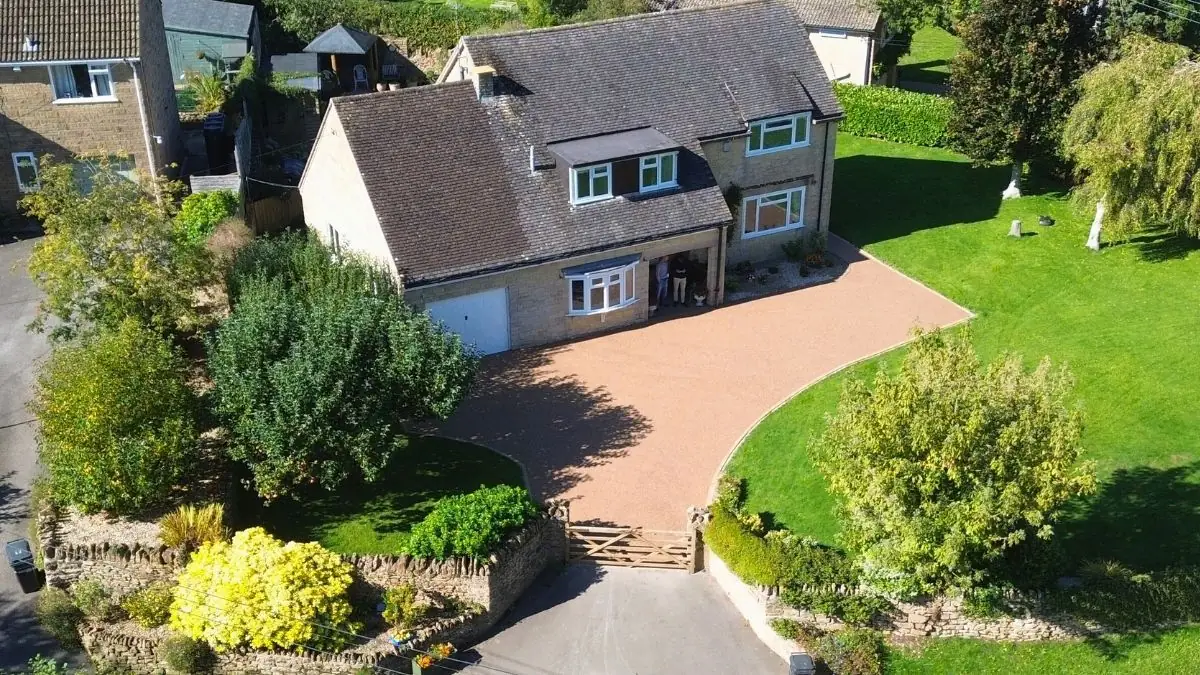
We’re based in Swindon, so Calne is roughly half an hour down the A3102 and Melksham a bit further on past Chippenham. The drive doesn’t change the price. The five things below do. If you want a feel for typical figures before reading on, our resin driveway cost guide has the general numbers, and the Calne page shows how we work in the town.
Lever One: Rag Or Clay Under The Topsoil
Calne’s older centre mostly sits on Coral Rag. Wiltshire Council’s own community history notes on Calne describe the band running north-east to south-west, west of the chalk downs, and mention the oolitic Calne Freestone once quarried for building. Lift an old drive on that ground and there’s usually broken limestone a spade or two down. It drains, it compacts well and it doesn’t swell. The standard dig is normally enough.
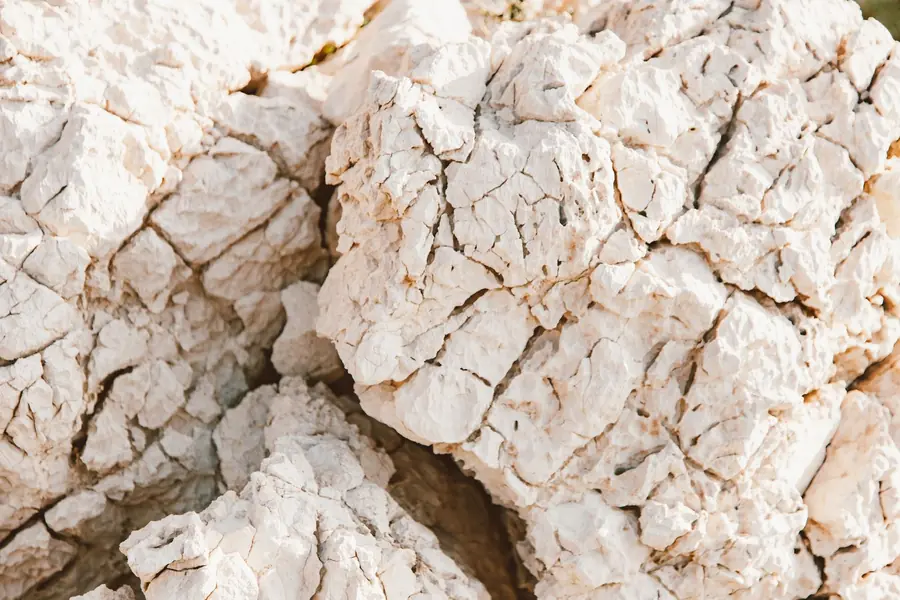
That isn’t true across the whole town. Go down into the valleys of the Marden and the Abberd Brook, or out towards Derry Hill, and the limestone gives way to clay - Kimmeridge Clay to the east, Oxford Clay at the western edge. Some of the newer housing on the town’s fringes sits on exactly that sort of ground. Clay holds water through the winter and shrinks back in a dry summer, so a thin base laid on it will rock and settle over a few seasons.
Melksham is clay nearly everywhere. The parish is Oxford Clay with Kellaways beds, topped by alluvium close to the river and patches of terrace gravel on the slightly higher ground. In the jobs we see there, a deeper excavation, a heavy-duty geotextile and sometimes a capping layer under the open-graded stone are the norm, not the extra. That’s the single biggest reason a Melksham quote can come in above a Calne quote for a drive of the same size.
Lever Two: Where The Rain Ends Up
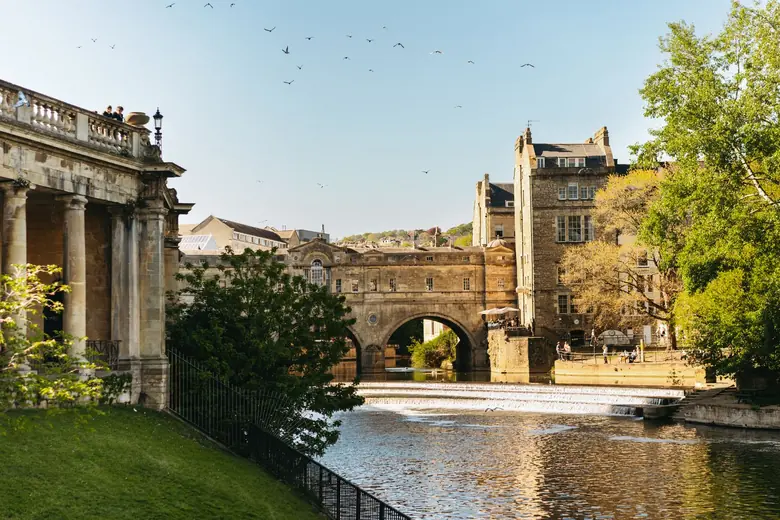
The Bristol Avon runs right past Melksham’s town centre on its way to Bath. Mills were built there because of it, and the low, level land beside it is the reason part of the town is mapped as a flood zone. If your house is in the streets running down towards the river, look up your postcode on the Environment Agency’s flood map for planning before the levels for the new drive get set.
Resin bound surfaces help here because they’re permeable. Rain passes through the resin and stone, sits in the open-graded base and soaks away gradually. On Oxford Clay that soakage can be slow, so the base is often sized as storage, with a small outfall into a border or soakaway on your own land. It costs a bit more in stone and digging. Worth it, though, because it keeps your drive inside the front garden permeability rules and stops it adding to what runs off onto the road.
Calne has its own water to deal with, mostly on a smaller scale. The Marden runs west through the town and picks up the Abberd Brook in the middle of it, and plots on the slopes above can push a surprising amount of water downhill after heavy rain. Where a drive falls towards the house rather than away from it, we add a channel drain at the threshold. It turns up on a fair few of the Calne quotes we write, and we’d rather explain it than leave it out.
Lever Three: How Old The House Is
The age of a property tells us what’s likely to be buried in the front garden, and both towns have a lot of different decades living side by side.
Calne: council estates, the Harris years and the new edges
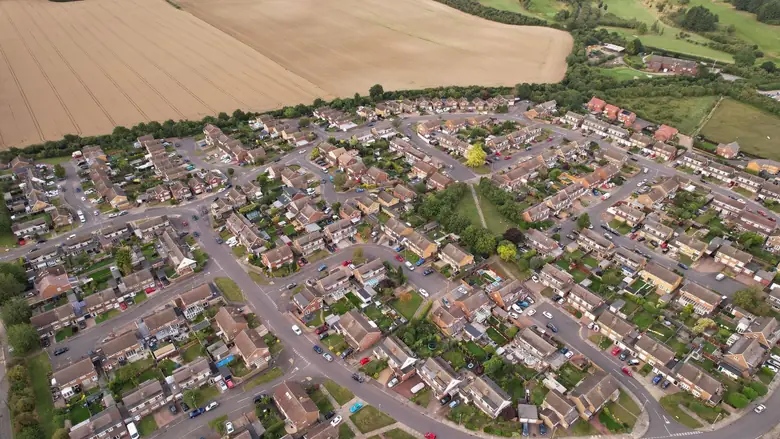
Between roughly 1920 and 1970, Calne Borough Council built around 1,700 homes, which is a lot for a town that size. Those houses tend to have narrow frontages, original concrete paths and, quite often, a bay window close to the boundary that restricts how a car can sit. Old clay drains and shallow gas runs are common. Taking up 1950s concrete is slow, heavy work and it shows up in the muck-away line.
Then there’s everything that came after the Harris factory closed. The site in the middle of town was cleared and rebuilt as shops, housing and a library around Phelps Parade, where a bronze statue of two pigs now marks what used to be there. Further out, developments such as Redrow’s Marden Farm and the streets towards Rookery Park are much newer, usually with a block-paved or tarmac drive the builder put in and a sub-base that ranges from decent to non-existent.
Melksham: from Roundponds to the east side
Melksham’s council housing goes back further than most towns its size - an estate of 48 houses at Roundponds was built in 1916. Over a thousand more houses went up in the twenty years to the mid-1960s, and private estates kept spreading through the 1970s and 80s. To the south, Bowerhill and Berryfield grew up on and around the former RAF Melksham land.
The big recent growth has been on the east side, off Eastern Way, and more is planned at Blackmore Farm. Newer houses there generally come with level plots and wider frontages, which makes a resin bound drive straightforward to build. The catch is the management company. Some estates have covenants on front gardens or shared surfaces, so read your transfer deed before ripping out a builder’s drive.
Lever Four: Walls, Railings And The Conservation Line
Both towns have a conservation area, and they’re not small. Calne’s was adopted in February 2000 and takes in the Green, the church and much of the old centre. Melksham’s was first designated in 1981 and has since been reviewed; it covers the historic core around St Michael’s and Canon Square, where a lot of the older buildings are in Bath stone.
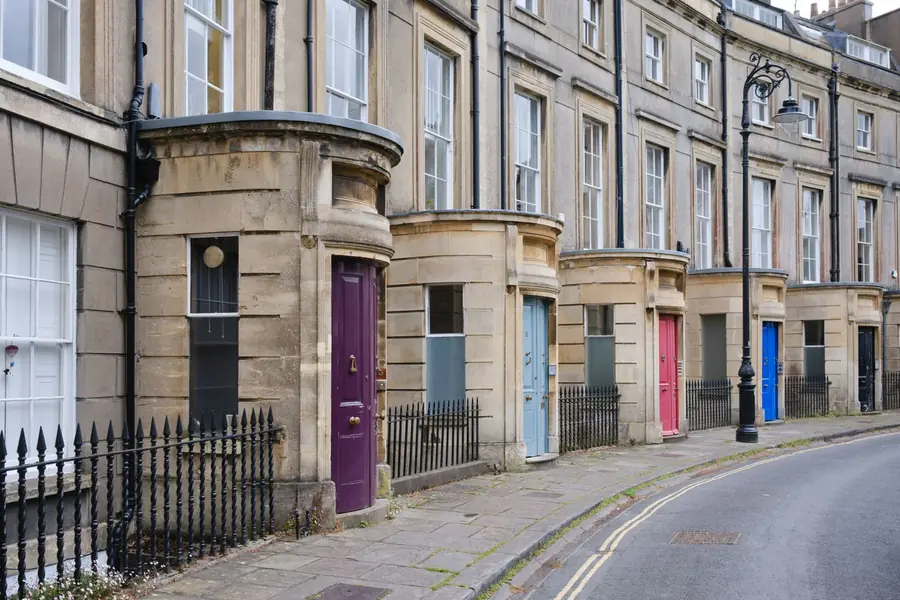
A conservation area doesn’t stop you having a resin driveway. The front garden rules for permeable surfaces still apply in the normal way, and plenty of homes inside both boundaries already park off the road. Where it bites is the front boundary itself. Knocking down a low stone wall, removing railings or widening a gateway between stone piers can need consent, and on a listed building almost anything near the frontage does. That’s planning time and, sometimes, a stonemason’s bill on top of the driveway price.
Colour matters more on these streets, too. Bath stone and Calne’s limestone frontages look better against a warm buff or honey blend than against a cold grey. Our past jobs in older Wiltshire streets tend to settle on the paler, warmer mixes, and we’d steer you that way before any conservation officer has to.
Lever Five: Getting The Car From The Road To The Drive
A lot of homes in both towns were never built with a vehicle access. Turning a front garden into a parking space then needs a dropped kerb, and that goes through Wiltshire Council’s highways team as a vehicle crossing licence under the Highways Act. You need it approved before any work on the footway starts, and the council sets the specification for the crossing itself. There’s nothing to stop us laying the drive behind a kerb that hasn’t been dropped yet, but you can’t legally drive over the pavement onto it until the crossing is done.
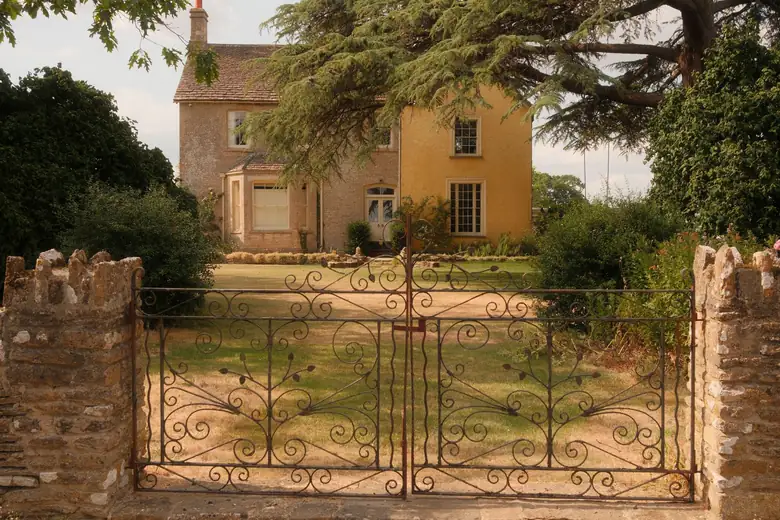
Main roads add a step. A new access onto a classified road - the A4 through Calne, or the A365 that runs through Melksham towards Devizes - normally needs planning permission as well as the highways licence. Visibility splays, the distance from junctions and whether a car can turn round on the drive rather than reversing out all come into it. Devizes works to the same Wiltshire rulebook, and our post on what moves the price of a resin driveway in Devizes walks through how that plays out on a hillier town.
Budget for the crossing as its own job. Width, the depth of services under the footway and whether a street light or tree is in the way all change the cost, and it’s often a four-figure number by itself.
Resin Driveway Prices In Calne And Melksham, Put Together
Put the five levers together and you get something like this for this corner of Wiltshire. These are guide ranges, not prices, because nobody can price a driveway properly until they’ve seen what’s under it.
| Driveway | Typical size | Guide range (supply and lay, old surface removed) |
|---|---|---|
| Single car, standard dig | around 25 m² | £3,000 to £4,300 |
| Two cars, firm ground (much of central Calne) | around 40 m² | £4,600 to £6,800 |
| Two cars, clay or river ground (much of Melksham) | around 40 m² | £5,200 to £7,600 |
| Larger frontage or in-and-out drive | 60 m² plus | £7,500 and up |
Add the dropped kerb if you need one, any work to walls or gate piers, and a channel drain where the drive falls towards the house. Take off a little where an existing concrete or tarmac base is sound enough to keep, which is more common on 1990s and newer Melksham estates than on Calne’s older council streets.
The surest way to get a number you can hold us to is a site visit. We’ll dig a test hole, look at the levels and give you a written, VAT-inclusive quote that spells out the base depth.
Book a free site visit for a resin driveway in Calne or Melksham
Frequently Asked Questions
Is a resin driveway cheaper in Calne than in Melksham?
Not as a rule, but the ground does tilt things. A lot of central Calne sits on Coral Rag limestone, which tends to give a firm formation once the topsoil and old surface are off, so the dig can stay at a standard depth. Much of Melksham is Oxford Clay or soft river ground, where we often go deeper and lay a heavier membrane. On two drives of the same size, that can put a few hundred pounds between them. The house, the access and the kerb usually matter as much as the town.
Who do I apply to for a dropped kerb in Calne or Melksham?
Wiltshire Council, in both towns. The footway and verge belong to the highway authority, and you need its licence before anyone cuts the kerb or crosses the pavement with a new access. If your house fronts an A-road, such as the A4 through Calne or the A365 through Melksham, you will normally need planning permission for the access as well. Town councils in Calne and Melksham are not the ones that grant either.
Can I have a resin driveway in the Calne or Melksham conservation area?
Usually, yes. Calne's conservation area takes in the older streets around the Green and the town centre, and Melksham's covers the historic core around the church and Canon Square. Being inside one doesn't stop you laying a permeable surface in a front garden, but anything that changes walls, railings, gate piers or the look of a frontage gets more scrutiny, and listed buildings bring their own consent. Check with Wiltshire Council's planning team before you take down a front wall.
My house in Melksham is near the river. Does a resin driveway make flooding worse?
A properly built resin bound driveway shouldn't. The resin and stone surface lets rain straight through into an open-graded stone base, which holds it and releases it into the ground slowly, instead of sending it down the drive into the road. Where the clay underneath won't take water, we design the base to store it and let it out through a controlled outfall. That's a better result than the concrete or tarmac most older Melksham drives are made of, which shed every drop.