
6 October 2026
Resin Driveways In Devizes: What Moves The Price, From The Greensand Edge To The Market Place
Most people asking about a resin driveway in Devizes start with one question: what will it cost? In this town, where the house sits matters more than how big the drive is. Devizes is a town of 16,834 people (2021 census) built on the edge of a sandstone ridge, with a canal dropping 237 feet past its western side and around 500 listed buildings packed into the middle. A 40 square metre drive can be a straightforward three-day job on one street and a week of digging, walling and paperwork two roads away. This post goes through the things that move a Devizes quote up or down, in the order we check them on a site visit.
Resin Driveways In Devizes: The Numbers First
Here is what we tend to quote around the town. These cover lifting the old surface, digging out, a compacted permeable base, edging and the resin layer itself.
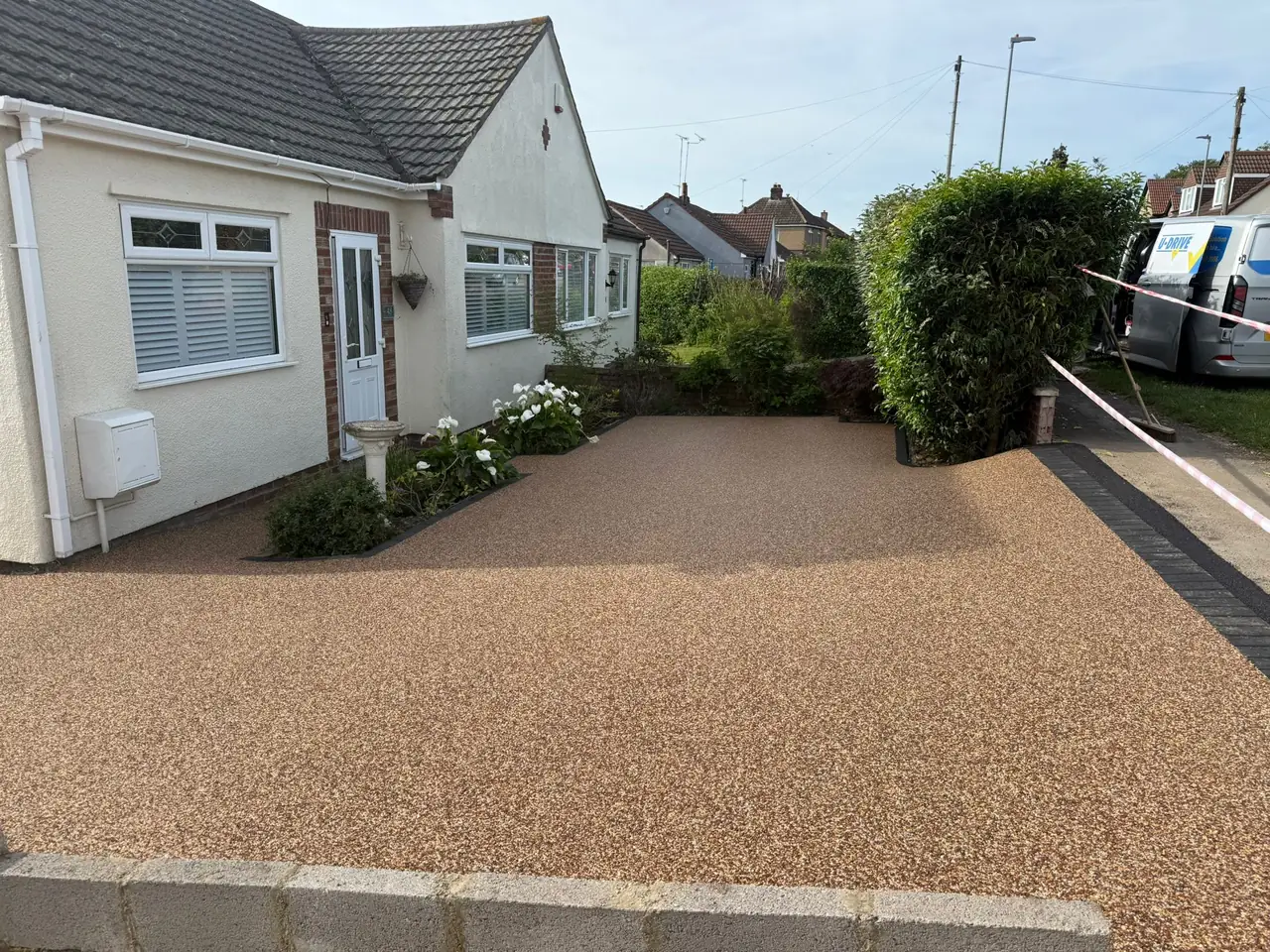
- A single-car frontage of 20 to 25 square metres on one of the estates in Roundway or Southbroom: about £3,500 to £4,500.
- A two-car drive of 40 to 50 square metres on a level plot: around £5,000 to £7,000.
- A period house near the centre with a sloping frontage, a wall to take down or rebuild and barrow-only access: £7,500 to £10,000 or more.
- Larger drives on the edges of town or in the villages: anything up to about £12,000, sometimes beyond.
Those ranges are wide on purpose. The resin bound driveway on top costs much the same whatever the address, so the gap comes from what is underneath and around it. Our Devizes area page has the villages we cover, and the sections below explain the four things that shift a price here.
Sand Over Clay: Why We Dig A Test Hole In Devizes
The old town sits on the Upper Greensand, a band of fine sand with harder layers in it. Under that is the Gault, a blue-grey clay that was once dug around Devizes for brick making. The point where one meets the other runs as a steep edge around the town. The British Geological Survey’s explanation of the Devizes geological sheet says landslide-affected ground is common along the face of that greensand scarp near the town, and that slumped material often hides the top of the Gault below it.
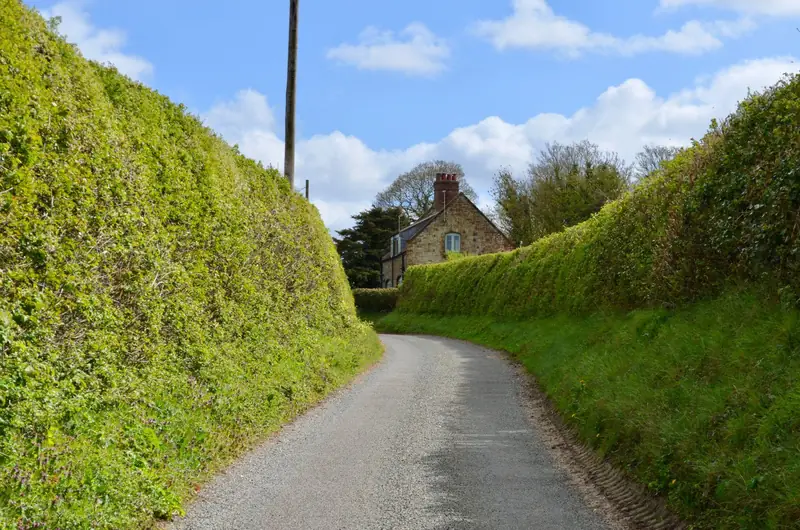
For a driveway, that difference is the whole story. Greensand drains freely and holds its shape once it is compacted. A drive built on it rarely needs more than the standard depth of dig. Clay is another matter. It goes soft and greasy in a wet winter and shrinks in a dry summer, and slipped clay below the scarp can be loose and mixed up for a good way down. On that ground we dig deeper, lay a geotextile to stop the base sinking into the clay, and put in more stone, and every extra tonne of muck taken away goes on the bill.
You can’t tell which you have by looking at the lawn. So we dig a small hole at the site visit, usually near where the cars will turn, and price from what comes out of it.
The Hill The Canal Had To Climb
You can see how much the land drops at Caen Hill, just west of the centre. The Kennet and Avon Canal climbs 237 feet there through 29 locks in about two miles, and sixteen of them run straight up the hillside in one flight. The Canal & River Trust’s guide to Caen Hill Locks covers the history. John Rennie’s engineers finished the flight in 1810 to get boats over the same greensand step that every builder in Devizes has had to deal with since.
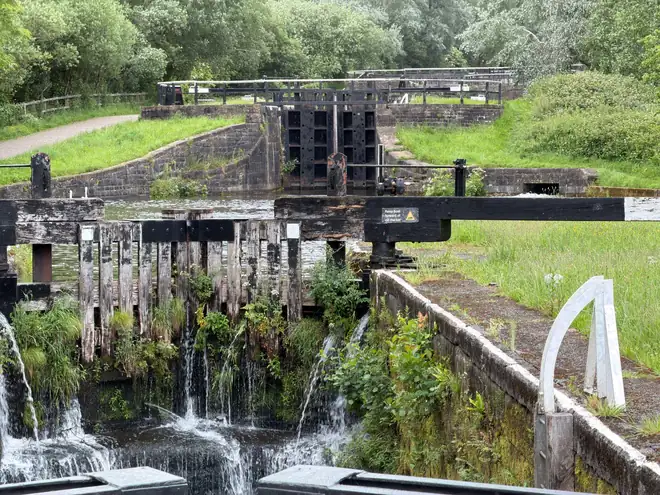
The same drop shows up on plenty of frontages on the roads running down off the ridge. A sloping drive is not a problem for resin in itself. It is mixed on site and trowelled out as one continuous layer, so there is no bedding sand to wash downhill. What costs money is everything that makes a slope work:
- A drainage channel across the bottom so that rain from a heavy storm doesn’t run onto the pavement.
- Firmer edging, because on a slope the edges are holding the whole surface in place.
- Sometimes a short retaining wall or a step, where the fall from the door to the road is too steep for one run.
- A slightly slower lay, with a stiffer mix on the steepest stretch so it doesn’t sag before it sets.
We have a separate guide on laying resin on a sloping drive if yours drops sharply towards the road.
Inside The Conservation Area, Around The Market Place
The wide, sloping Market Place, with the Market Cross that James Wyatt designed when it was rebuilt in 1814, sits at the top of a centre full of Georgian frontages, with the listed houses of Long Street a short walk away. The town centre is a conservation area, and Wiltshire Council’s planning documents put the number of listed buildings in Devizes at over 500, which is a lot for a town this size.
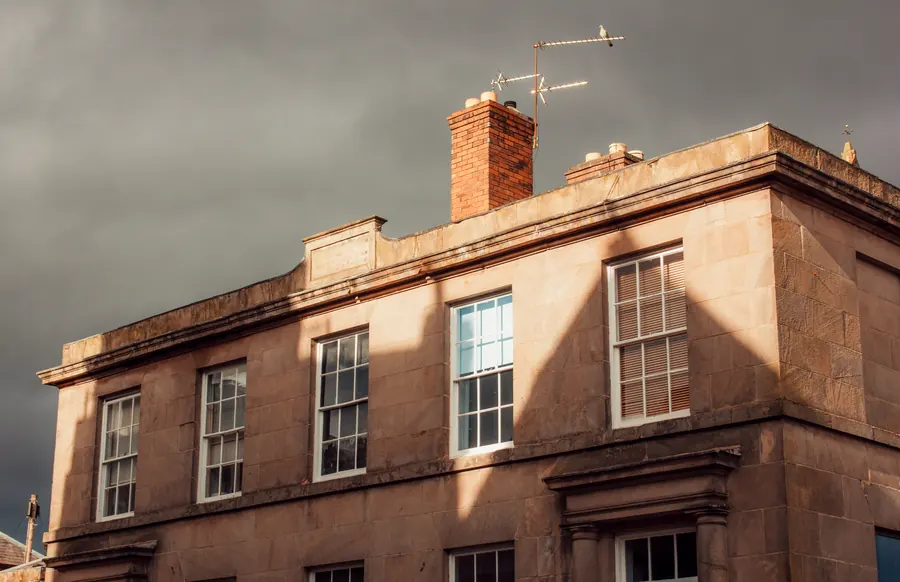
Being in a conservation area does not stop you having a resin drive. A permeable surface in front of a house still counts as permitted development there. What changes is everything around the drive. Taking down a front wall more than a metre high next to the road needs planning permission inside the conservation area. If the house is listed, the boundary walls, railings and old gate piers are usually covered by the listing too, and touching them can need listed building consent.
Waiting on that paperwork is what stretches a job in the middle of Devizes. The setting also changes what sort of drive suits the house. On a Georgian front in brick or stone, a natural buff or honey aggregate with a plain edge looks right. Bright colours and patterns don’t. We will tell you if we think a conservation officer is likely to object before you spend money on drawings.
Older Villas: Walls, Gate Piers And Tiled Paths
Outside the core, the roads leading out of town are lined with Victorian and Edwardian houses set back behind front gardens. Those plots usually have room for a car, so they make good candidates for a drive. They also come with things a 1990s house doesn’t have.
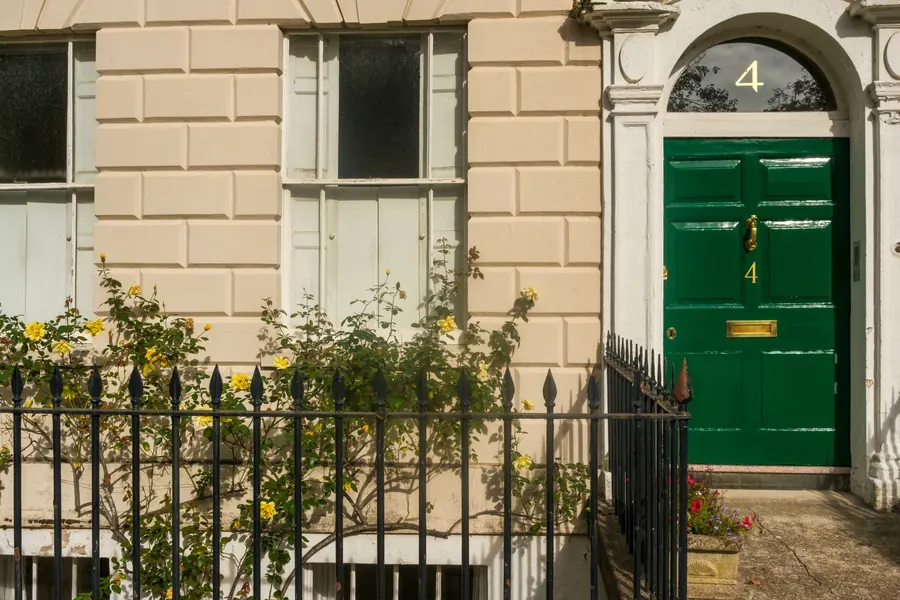
The front wall is often the first thing to deal with. Making the opening wide enough for a car can mean taking down a section, rebuilding the pier ends and rehanging or replacing gates. Some of these houses still have an original encaustic tiled path to the door. We can work around one and keep it, which most owners want once they know it is possible. Old clay drains and cellar lights under the front garden turn up too, and they have to be found before the digger goes anywhere near them.
None of it is unusual. It just adds a day or two of labour and some materials. On a villa frontage the drive itself might be £4,000 and the wall, gates and drainage work around it another £2,000 to £3,000.
Roundway, Southbroom And The Old Barracks Land
A lot of Devizes is newer than it looks from the Market Place. Roundway was its own parish until May 2017, when it merged into the town, and the estates there and in Southbroom, Wick and Hartmoor make up much of the housing. Further out, the Le Marchant Barracks, built in 1878 and used as the regimental depot until 1959, has been redeveloped as housing, with the old buildings turned into flats and new homes built around them.
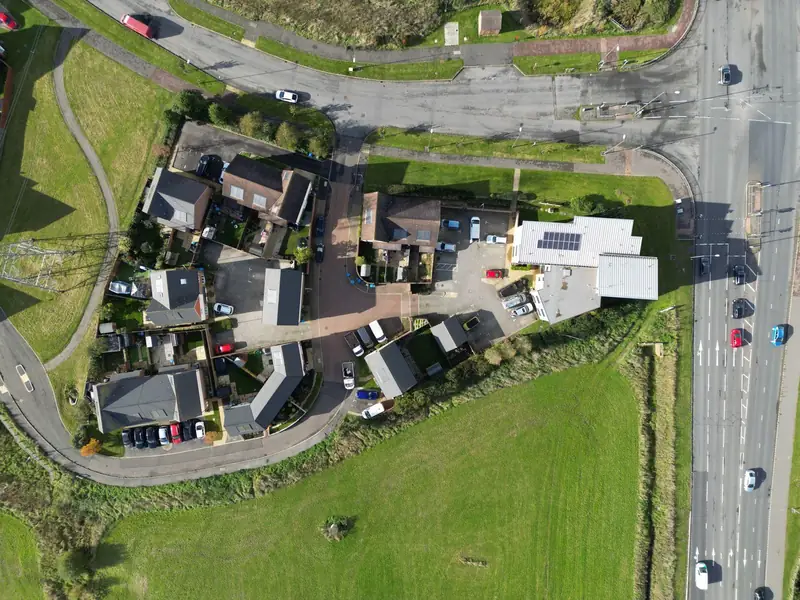
These are the cheapest Devizes drives to resurface. Plots are mostly level, a dumper can reach them and the existing tarmac or block paving lifts out easily. On newer homes, watch the ground the builder left behind. Service trenches and backfill under the front garden settle for a few years, and developer block paving laid over a thin base often shows it with dips by the garage. We dig those soft spots out and rebuild them rather than covering them up.
If you are comparing quotes from more than one nearby town, our post on resin driveways in Marlborough looks at a town on the far side of the downs, where the ground is clay-with-flints and river gravel rather than greensand.
Kerbs, Rainwater And The Paperwork For A Resin Driveway In Devizes
Devizes is under Wiltshire Council, which handles both planning and highways. Swindon Borough Council’s rules don’t apply here, even though plenty of Devizes people work in Swindon. If your house has no vehicle crossing, or the existing one is too narrow, you need a section 184 licence from Wiltshire Council before the kerb can be lowered. The fee has been around £300 in recent schedules and is reviewed each April, and building the crossing is priced on top. Get it approved before you book the driveway.
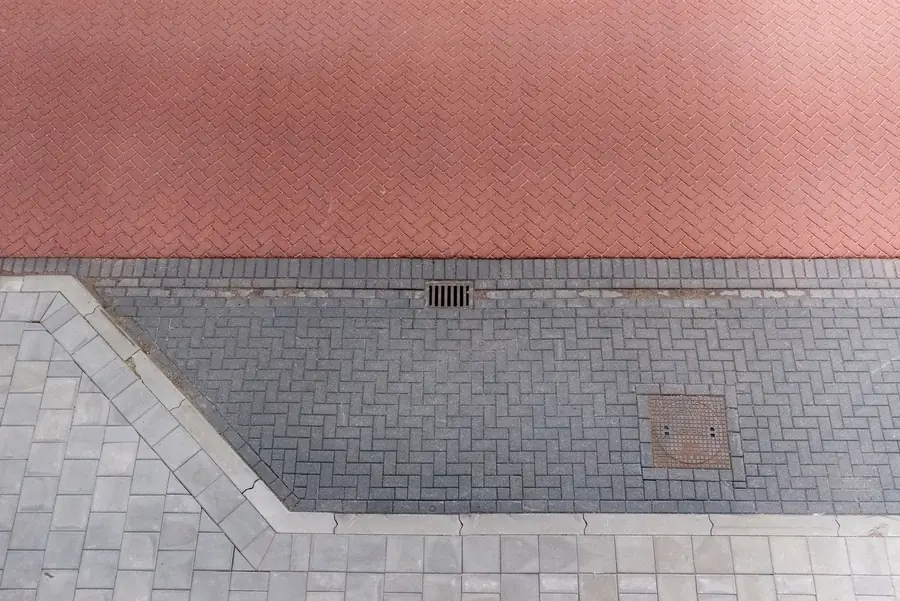
Rainwater is the other rule to know. Covering more than five square metres of front garden with a surface that sends water onto the road needs planning permission. A permeable surface, or one that drains to a lawn or soakaway on your own land, doesn’t. The government’s guidance on permeable surfacing of front gardens sets out what counts. A resin bound drive over an open-graded stone base lets rain soak straight through, so it meets the rule without anything extra. That only works if the base underneath is open-graded too. Resin laid over old tarmac is not permeable, whatever the brochure says.
On greensand that water soaks away quickly. On the Gault it can’t, so we may add a channel or a small soakaway sized for the clay. That goes in the quote from the start rather than turning up as an extra halfway through the job.
The quickest way to find out which of these things apply to your house is to let us look. A site visit is free and takes about twenty minutes. We measure the drive, check the fall, dig a test hole and look at the boundary, then send a written quote with the base depth and any kerb or wall work listed separately.
Book a free resin driveway quote in Devizes
Frequently Asked Questions
How much does a resin driveway cost in Devizes?
Most of the Devizes driveways we price fall somewhere between £3,500 and £12,000. A single-car frontage on one of the Roundway or Southbroom estates, with the old surface lifted, usually sits near the bottom of that range. A two-car drive on a period house with a slope, a wall to rebuild or soft clay underneath climbs towards the top. Size, the depth of dig and access for a dumper decide most of the difference.
Is the ground in Devizes good for a resin driveway?
It varies from street to street. The higher ground is Upper Greensand, which is sandy and drains well. Below the greensand edge the Gault clay comes up, and the British Geological Survey maps landslipped ground along that scarp. On sand we can often build a normal-depth base. On clay or slipped ground we dig deeper and use a geotextile, which costs more. A test hole at the site visit tells us which one you have.
Do I need planning permission for a resin driveway in the Devizes conservation area?
Not for the surface on its own, as long as it is permeable and the house is not listed. A resin bound drive on a properly built open base meets the rule for front gardens. Permission is needed if you take down a front wall more than a metre high beside the road inside the conservation area, and listed building consent may be needed for work affecting a listed house or its boundary. Devizes has around 500 listed buildings, so it is worth checking the listing before you book anything.
Who approves a dropped kerb in Devizes?
Wiltshire Council. It is the highway authority for the town and issues vehicle crossing licences under section 184 of the Highways Act 1980. The fee has been around £300 in its recent published schedules and is reviewed every April, and the construction work is charged on top. Apply and get approval before the driveway is booked, because a drive with no legal way onto the road is a problem when you come to sell.