
31 August 2026
Resin Driveways And Tree Roots In Swindon: What To Know
Stand at the top of Kingshill and look back across Old Town and you’re looking at one of the leafiest housing areas in Wiltshire - Edwardian villas behind mature limes, Victorian terraces with cherry and rowan crammed into pocket front gardens, and the big beeches around Town Gardens shading whole streets. Lovely to live under. Less lovely, homeowners assume, for the driveway. One of the questions we hear most often at site visits is some version of: “Will the tree wreck it?” It’s a fair question with a genuinely interesting answer, because in Swindon the tree damages your driveway in two completely different ways - one obvious, one hidden in the clay - and resin bound surfacing happens to cope with both better than almost anything else you could lay. Here’s how it all works, including the council rules that protect more of Swindon’s trees than most people realise.
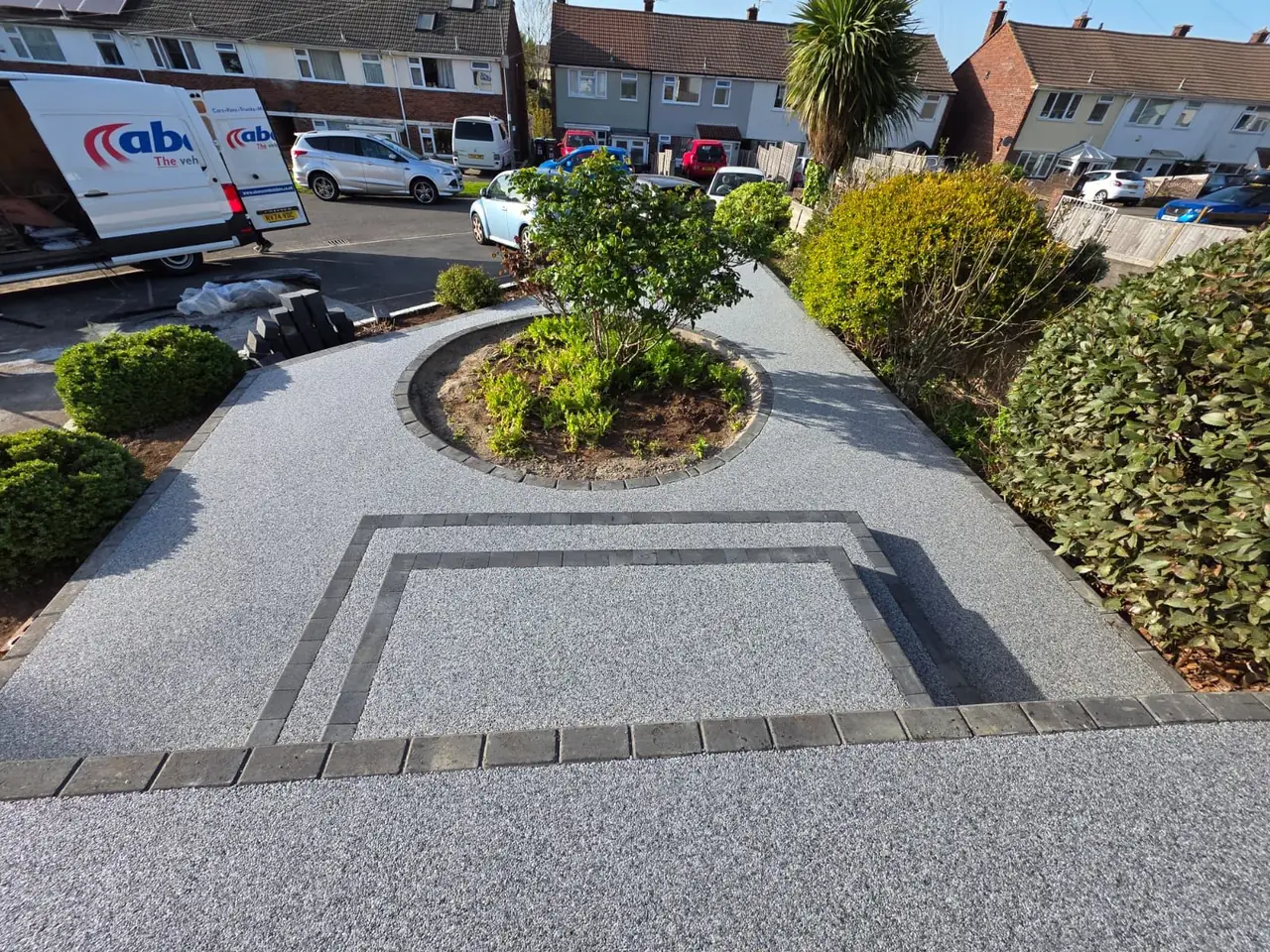
Where Swindon’s Trees And Driveways Collide
Not every part of town has this problem. The railway-era terraces near the centre were built tight to the pavement with barely a windowsill of frontage, and the newest estates out at Wichelstowe and Badbury Park have street trees still young enough to be held up by stakes. The friction happens in between: the tree-lined avenues of Old Town and Kingshill, the garden-suburb streets of Pinehurst - laid out in the 1920s with planting as part of the plan - and the leafier corners of Lawn and Walcot, where sixty- and eighty-year-old trees now stand a few metres from where people want to park.
That’s precisely the housing where driveway upgrades are most in demand, and it’s why the tree question comes up so often when we’re asked to price a resin bound driveway. Based on the site visits we make on the older side of town, something like one job in three has at least one substantial tree - the homeowner’s or a neighbour’s - close enough to the proposed drive to affect how we’d build it. The tree is almost never a reason not to proceed. It is very often a reason to build differently.
How A Root Actually Lifts A Driveway
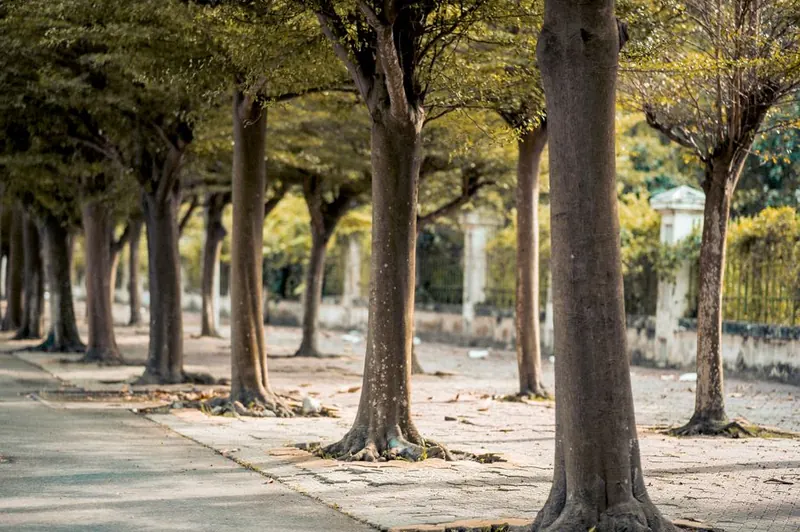
Start with the damage everyone pictures: the pavement slab tilted like a shipwreck by the root underneath. The mechanics are simple. A tree’s structural roots run shallow - most live in the top 600mm of soil, and the big radial ones often shallower still - and they thicken every year, the same way the trunk does. A root that slid harmlessly under your drive as a finger-width runner in 2010 is a wrist-thick beam today, and it isn’t going to stop.
What happens next depends entirely on what’s above it. A concrete slab has no answer at all: it bridges the root until the stress finds a weak point, then cracks, and the crack is permanent and grows. Block paving telegraphs the root faithfully upward, producing that rolling speed-bump you see on tree-lined pavements everywhere, with joints opening around it for weeds. Tarmac bulges, then splits at the bulge.
The root doesn’t even need to touch the surface to cause trouble. Roots exploring beneath a sub-base can open voids and disturb compaction, so the surface settles unevenly around the root rather than lifting over it. Either way, rigid surfaces record every millimetre of what’s happening below. That’s the obvious threat. On Swindon’s ground, it’s the smaller one.
The Clay Double Act: Roots Don’t Just Push, They Drink
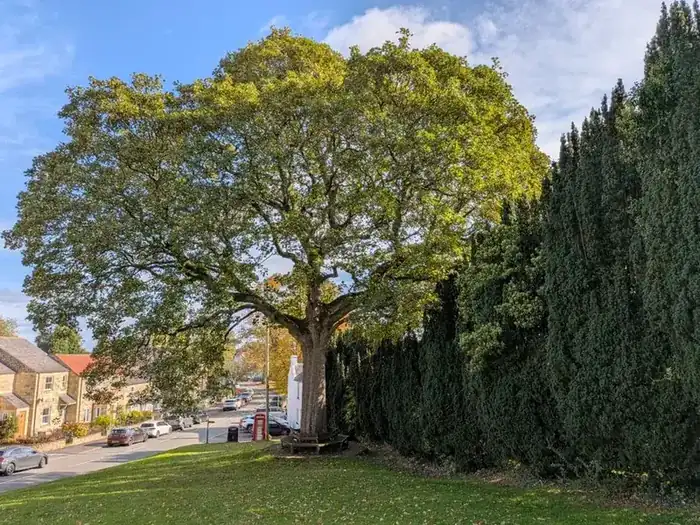
Swindon’s ground is mostly shrink-swell clay, and we’ve covered what that clay does to driveways on its own. Add a big tree and the effect sharpens dramatically, because a mature tree is a moisture pump. A large oak or willow can draw hundreds of litres of water from the ground on a hot day, and on clay that water loss has a physical consequence: the clay shrinks, and the ground surface within reach of the roots drops.
So the tree attacks from both directions at once. In a dry summer its roots dewater the clay and the ground under the drive settles - most aggressively in the zone closest to the tree, so the settlement is uneven, which is the worst kind. In a wet winter the clay rehydrates and swells back. The driveway rides an annual wave, steepest near the trunk, gentler further away, repeated every single year.
The RHS guidance on trees near buildings is blunt about where this matters most: shrinkable clay soils carry the real risk, and the thirstiest species - willow, poplar, eucalyptus - are the ones to worry about. It’s the same mechanism behind most UK subsidence claims. Your house is defended by deep foundations; your driveway sits right in the movement zone with no such protection. Which is exactly why the choice of surface matters so much.
Why Resin Bound Copes Better Than Rigid Surfaces
A resin bound surface has three properties that suit tree-adjacent ground, and they’re worth understanding individually rather than taking on faith.
It flexes. Not dramatically - it’s a stone surface, not a rubber mat - but the resin binder gives the 15-20mm wearing layer enough elasticity to absorb the gradual seasonal movement that cracks a rigid slab. Laid over a properly built flexible base, the whole construction moves a little with the clay instead of fighting it and losing.
It’s permeable, and the tree benefits as much as you do. Rain passes straight through the surface into the ground beneath, which keeps moisture reaching the root zone instead of sealing it off. That matters twice over: a sealed surface over roots pushes them outward in search of water - often towards your drains - while a permeable one reduces the moisture starvation that drives the worst clay shrinkage in the first place. The drive and the tree stop competing.
It has no joints. There’s no unit-by-unit pattern to telegraph movement, no mortar lines to open, nowhere for a lifted edge to catch a toe. Gradual change spreads across a continuous surface rather than concentrating at a seam.
One honest caveat: none of this makes resin root-proof. A major root thickening directly under the drive will eventually make itself known through any surface. The difference is how the story unfolds - later, more gently, and with the option of a localised repair rather than a slab replacement.
Protected Trees: TPOs And Conservation Areas In Swindon
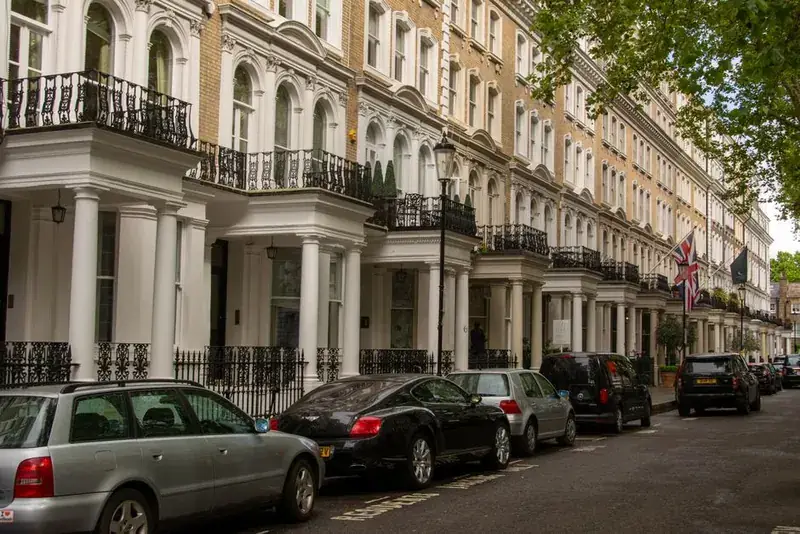
Before any spade goes near a tree, there’s a legal question to settle, and in Swindon it catches people out. The borough has more than 400 Tree Preservation Orders protecting thousands of individual trees, groups and woodlands, and Swindon Borough Council’s protected trees page includes an online map for checking any address. On top of that, every tree standing in one of the borough’s conservation areas - and Old Town has some of the most tree-heavy streets in them - is automatically protected once its stem passes 75mm in diameter measured at 1.5m up. That’s not a big tree. That’s most trees.
Protection doesn’t just mean you can’t fell it. Wilful damage is an offence, and excavating through the root system of a protected tree counts. The government guidance on TPOs and conservation area trees sets out the regime in full, but the practical rule is simple: if a protected tree stands near your planned driveway, the council needs to be satisfied before roots are disturbed, and works in a conservation area need six weeks’ written notice even where no TPO exists.
None of this is a dead end for your driveway - councils deal with these applications routinely, and a design that avoids root damage usually sails through. It just belongs at the start of the project, not as a discovery halfway through the dig.
Designing A New Drive Around An Existing Tree
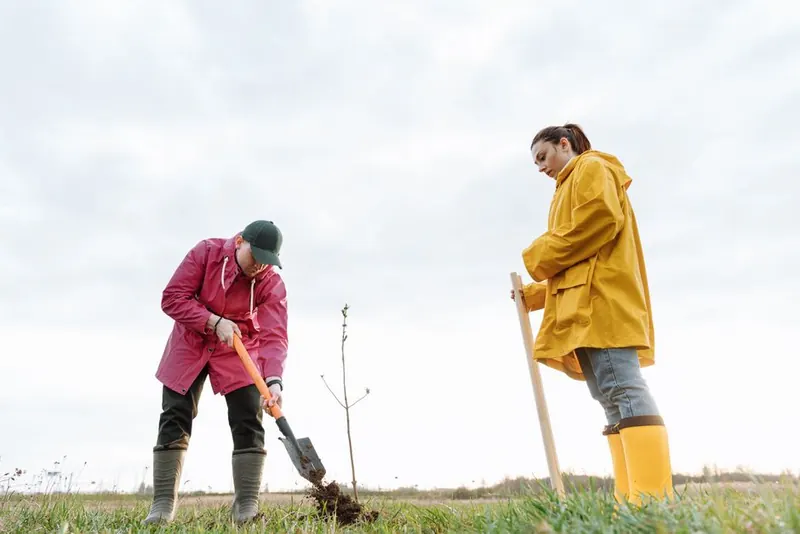
So how do we actually build near a tree without harming it or storing up trouble? The toolbox is bigger than most homeowners expect.
The starting point is respecting the root protection area - as a rule of thumb, a circle with a radius of twelve times the stem diameter. Inside that zone, the aim is to avoid excavation entirely. Where the drive must pass through it, the answer is a no-dig build-up: instead of excavating 250mm of rooted ground, the construction is raised on a load-spreading geocell grid laid over the existing level, filled with clean angular stone, with the resin-bound surface over that. Roots stay intact, undisturbed, watered and aired through the permeable build-up above them.
Layout does the rest. Because resin is trowelled rather than laid in units, the drive can curve away from a trunk, narrow past a root flare, or leave a generous planting pocket around the base without any of it looking like a compromise - an unpaved circle at the foot of the tree with resin sweeping around it reads as a design choice, because it is. A root barrier along the drive’s nearest edge can redirect future growth downward and away. And if you’re planting new rather than working around old, species choice on clay is nine tenths of the battle: a birch or rowan four metres from the drive will never trouble it, while a willow will find it from the other side of the garden.
Living Under A Tree: Leaves, Sap And Honest Maintenance

The last part of the picture isn’t structural at all - it’s the season-by-season reality of a surface under a canopy, and it deserves a straight answer rather than a sales one.
Autumn brings leaves, and leaves left to rot on any surface will tan-stain it - resin included. The fix is unglamorous: sweep or blow them off within a week or two of the big drop rather than letting them mulch down over winter. Limes, which line more than a few Old Town streets, add summer honeydew - the sticky film aphids rain down on parked cars - which a hose and a soft brush shifts easily if it isn’t left for months. Blossom, seeds and catkins mostly just blow away, and the odd bird dropping washes off resin more easily than off block paving because there are no joints to hold it.
The question we get asked about permeability: no, leaf litter doesn’t clog a resin surface in any lasting way. The voids sit through the full depth of the layer, not just at the top, and normal sweeping plus rain keeps them working. An occasional light pressure wash - wide fan, sensible distance - restores the drainage rate fully.
A tree above a driveway costs you a few hours of sweeping a year. What it gives back - shade, screening, the entire character of the street - is why you bought a house on that road in the first place. The two can live together; they just need the driveway designed by someone who’s thought about the tree from the first site visit. Get a free quote in Swindon and we’ll look at the drive and the tree together.
Frequently Asked Questions
Will tree roots crack a resin driveway?
They can, but resin bound surfacing resists root disturbance better than rigid alternatives. The surface has a small amount of flex, so gradual ground movement that would crack a concrete slab often produces no visible change in resin. A large root thickening directly beneath the surface will eventually lift anything laid over it, resin included - but because resin is laid as one continuous layer over a flexible base, the damage tends to arrive later, spread more gently, and repair more neatly than cracked concrete or rippled block paving.
Can I lay a resin driveway near a protected tree in Swindon?
Often yes, but the sequence matters. If the tree has a Tree Preservation Order, or stands in one of Swindon's conservation areas with a stem thicker than 75mm, you need Swindon Borough Council's written consent before doing anything that could damage it - and that includes excavating through its roots, not just cutting branches. Check the council's online protected tree map first, then design the driveway to keep excavation outside the root protection area. A no-dig build-up over the rooted zone usually solves the problem without touching a root.
Which trees cause the most driveway damage on clay soil?
The thirsty ones. On shrink-swell clay like Swindon's, the biggest risk isn't roots physically pushing - it's roots drinking. Willows, poplars, oaks and eucalyptus draw large volumes of moisture from clay in dry summers, shrinking the ground beneath anything nearby. The RHS specifically warns against willow and eucalyptus near structures on shrinkable clay. Smaller ornamental species - rowan, birch, crab apple, amelanchier - take far less water and sit much more comfortably beside a driveway.
Do I need permission to cut tree roots in Swindon?
If the tree is protected by a TPO or conservation area status, yes - wilful damage to a protected tree is an offence, and severing roots counts. Swindon Borough Council has more than 400 preservation orders covering thousands of trees, so it's worth checking before assuming yours is fair game. Even where a tree isn't protected, cutting major roots close to the trunk can destabilise it or kill it, and if it's a neighbour's tree you're liable for harm caused. Get an arborist's advice before any root is cut.