
2 June 2026
Resin Vs Block Paving: Which Is Better For Swindon Driveways?
If you’re choosing between resin and block paving for a driveway in Swindon, you’re not alone - it’s one of the most common questions we get asked on site visits. Both can look great, but they behave very differently once they’re down. Block paving has been the default choice for UK driveways for decades, but resin bound surfacing has grown enormously in popularity over the last 10-15 years, and now accounts for a significant share of new residential driveway installations across the South West. The honest answer is that the right choice depends on your budget, how much maintenance you’re prepared to do, and how your garden drains. Here’s how the two actually compare once you look past the showroom samples.
How They’re Built
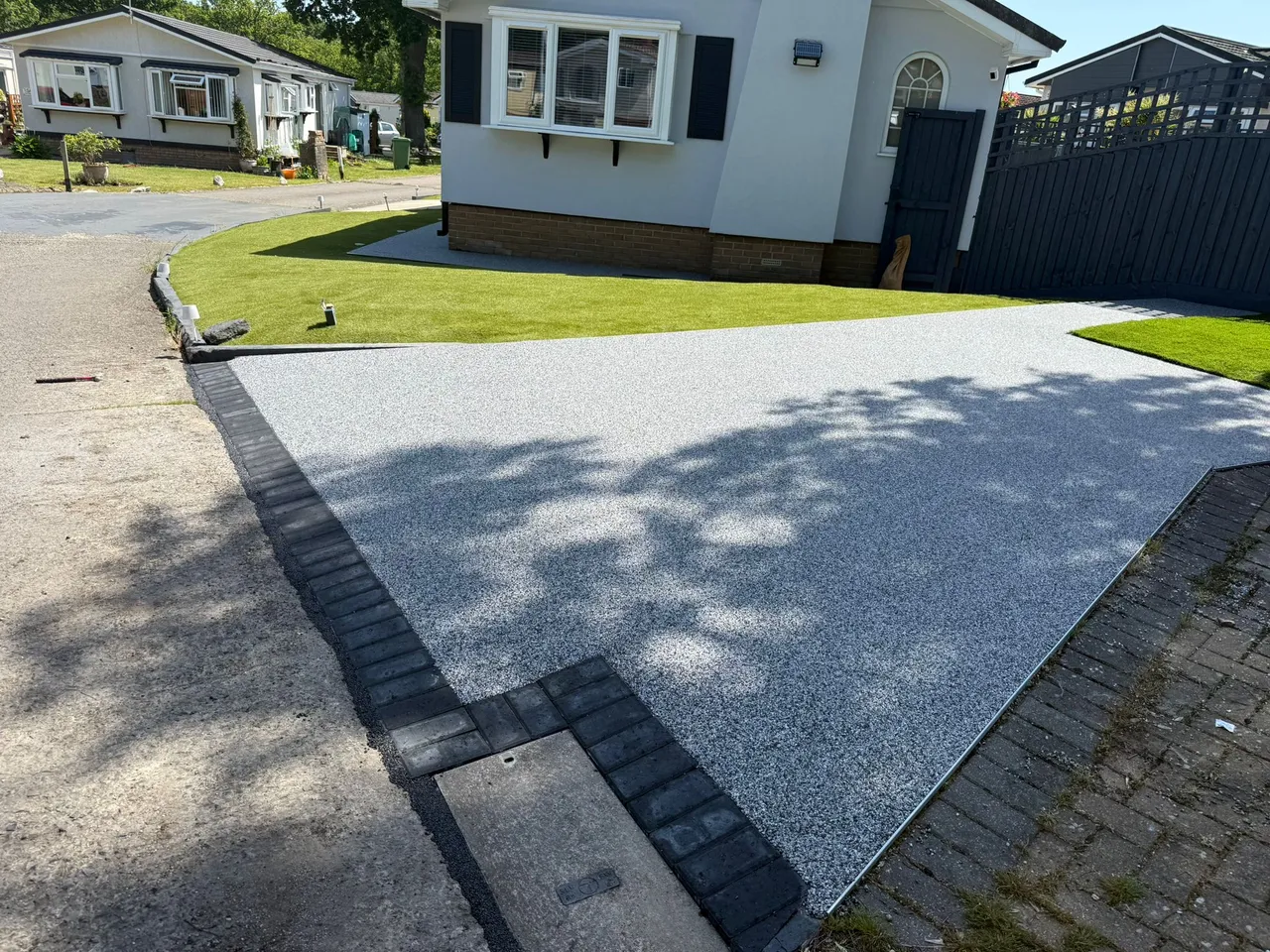
Resin bound driveways are a mix of natural aggregate stone bonded together with a clear resin, laid as a single seamless surface over a compacted permeable sub-base. There are no individual units - it’s poured and trowelled to a smooth, even finish, usually 15-18mm thick over the sub-base.
Block paving is made up of individual concrete or clay blocks, laid in a pattern onto a bed of sharp sand over a compacted sub-base, then a jointing sand is brushed into the gaps between blocks. The blocks themselves are tough, but the joints between them are where most of the long-term issues start.
Durability On Swindon’s Clay Soil
This is where the two surfaces diverge most. Block paving relies on every individual block staying in place relative to its neighbours. On Swindon’s clay-heavy ground, which expands and contracts with moisture more than sandier soils, that sub-base movement can cause blocks to sink, tilt or “ripple” over a few years - particularly along driveway edges or wheel tracks where the load is concentrated.
Resin bound surfacing, laid as one continuous bonded layer, doesn’t have that weak point. Provided the sub-base underneath has been properly compacted (we covered exactly what that involves in our recent post on resin driveway groundwork and drainage), the surface moves as a whole rather than block by block, and a correctly installed resin driveway should last 20-25 years without the gradual unevenness that block paving can develop.
What This Looks Like Day To Day
In practice, a block paved driveway that’s a few years old often has a slightly wavy surface if you look along it at a low angle, even if no individual block looks obviously wrong. Resin driveways of the same age tend to stay flat and level, because there’s nothing to shift independently.
Maintenance: Weeds, Moss And Cleaning
Block paving’s joints are its biggest ongoing maintenance burden. Jointing sand washes out gradually, weed seeds blow in and root in the gaps, and moss establishes in shaded areas - particularly common on driveways that face north or sit under trees, which describes a fair few properties around Swindon’s older, leafier streets. Keeping block paving looking sharp means regular weeding, occasional re-sanding of joints, and periodic sealing if you want to keep the colour from fading.
Resin bound surfacing has no joints, so there’s nowhere for weeds to take hold. Maintenance is mostly limited to an occasional sweep and a hose down, with a pressure wash every couple of years if needed to keep the surface looking fresh and draining well. For anyone who’d rather spend a Saturday doing something other than driveway weeding, this is usually the deciding factor.
Appearance And Design Options
Block paving offers a huge range of colours, patterns and laying styles - herringbone, basketweave, borders in a contrasting colour, and so on. It’s a genuinely versatile look, especially if you want a more traditional or period-appropriate finish for an older Swindon property.
Resin bound surfacing has come a long way too. It’s available in a wide range of aggregate blends from buff and cream through to charcoal and silver grey, and can incorporate borders, circular features or mixed designs - take a look at our resin driveway colours page for examples of what’s possible. It gives a smoother, more contemporary finish overall, which suits a lot of the newer builds going up around Wichelstowe and Redhouse, but it works on older properties too.
Cost Over Time
On a like-for-like basis, block paving is sometimes a little cheaper to install initially, especially for smaller areas. But it’s worth thinking about cost over the lifetime of the driveway rather than just the invoice on day one. Re-sanding joints every few years, occasional resealing, and the eventual cost of lifting and relaying sunken blocks all add up. Resin’s higher relative durability and lower maintenance needs often make it the better value option over a 15-20 year horizon, even if the initial quote is similar or slightly higher.
Weighing up resin against block paving for your own driveway? Get in touch for a free, no-obligation quote and we’ll talk through both options based on your garden, budget and what matters most to you.
Frequently Asked Questions
Is resin or block paving cheaper for a Swindon driveway?
Block paving is often slightly cheaper per square metre to supply and lay initially, but resin bound surfacing tends to work out more cost-effective over its lifetime because it needs far less maintenance - no annual weeding, re-sanding or re-sealing. For a typical Swindon driveway, both usually fall somewhere in the £80-£300 per square metre range depending on size, design and ground preparation.
Does resin crack like block paving can shift?
A resin bound driveway laid on a properly prepared, compacted sub-base shouldn't crack under normal use. Block paving doesn't crack in the same way, but individual blocks can sink or shift over time, especially on clay soils like Swindon's, leading to an uneven surface that needs lifting and relaying. Resin, being a single bonded surface, doesn't have individual units that can move independently.
Which is better for weeds - resin or block paving?
Resin bound surfacing is the clear winner here. Block paving has joints between each block, and even with jointing sand or polymeric sand, weeds and moss tend to find their way through over time, especially in shaded or damp spots. A resin bound surface has no joints for weeds to establish in, so it stays cleaner with far less effort.
Can I have resin laid over my existing block paving driveway?
Often, yes - if the existing block paving is structurally sound, level and free from significant movement, resin bound surfacing can sometimes be laid directly over it, saving the cost and disruption of a full dig-out. If the blocks are uneven, sunken or there's a history of drainage problems underneath, we'd usually recommend addressing that first so the new surface lasts.