
27 August 2026
Resin Driveways On A Slope: What Works On Swindon's Hillside Frontages
Swindon is not a flat town, whatever the view from the Great Western Way suggests. Between the retail parks on the valley floor and the Bath Road ridge above there is the best part of 40 metres of height, and the housing that climbs it - the Victorian terraces of Old Town, the Edwardian villas around Kingshill and Okus, the streets falling away towards Wroughton and Chiseldon - was laid out on ground that never pretended to be level. Roughly one enquiry in six that comes into this business involves a frontage with a meaningful fall on it, and every one of them raises the same three questions: will resin actually stay put, where does the water end up, and what does the slope add to the bill. Here are the answers, with the numbers that matter.
The Town Has Two Halves, And One Of Them Is On A Hill
Swindon grew twice, in two different places, at two different heights.
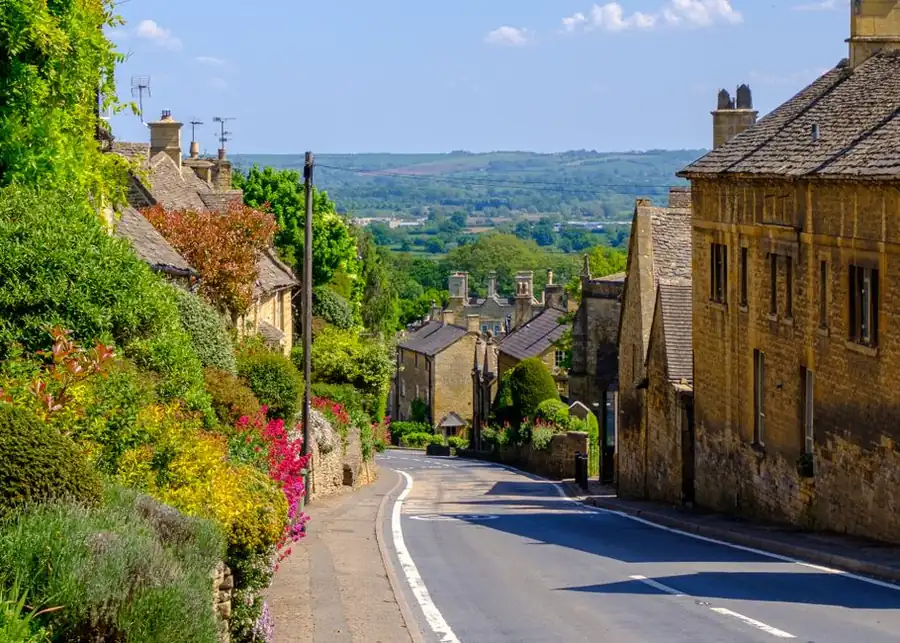
The original market town sat on top of a limestone hill - the stone that came out of Okus quarry built half of it - while the railway town of the 1840s was planted on the clay flats below, next to the works. Everything since has filled in between and spread outwards. The result is that where your house sits in Swindon tells you more about your driveway than the age of the property does. Stratton, Covingham, Toothill and Freshbrook are broadly level, and their driveway problems are the ones we cover in the piece on the clay under Swindon. Old Town, Kingshill, Okus, Prospect and the older streets running down towards the centre are a different job entirely.
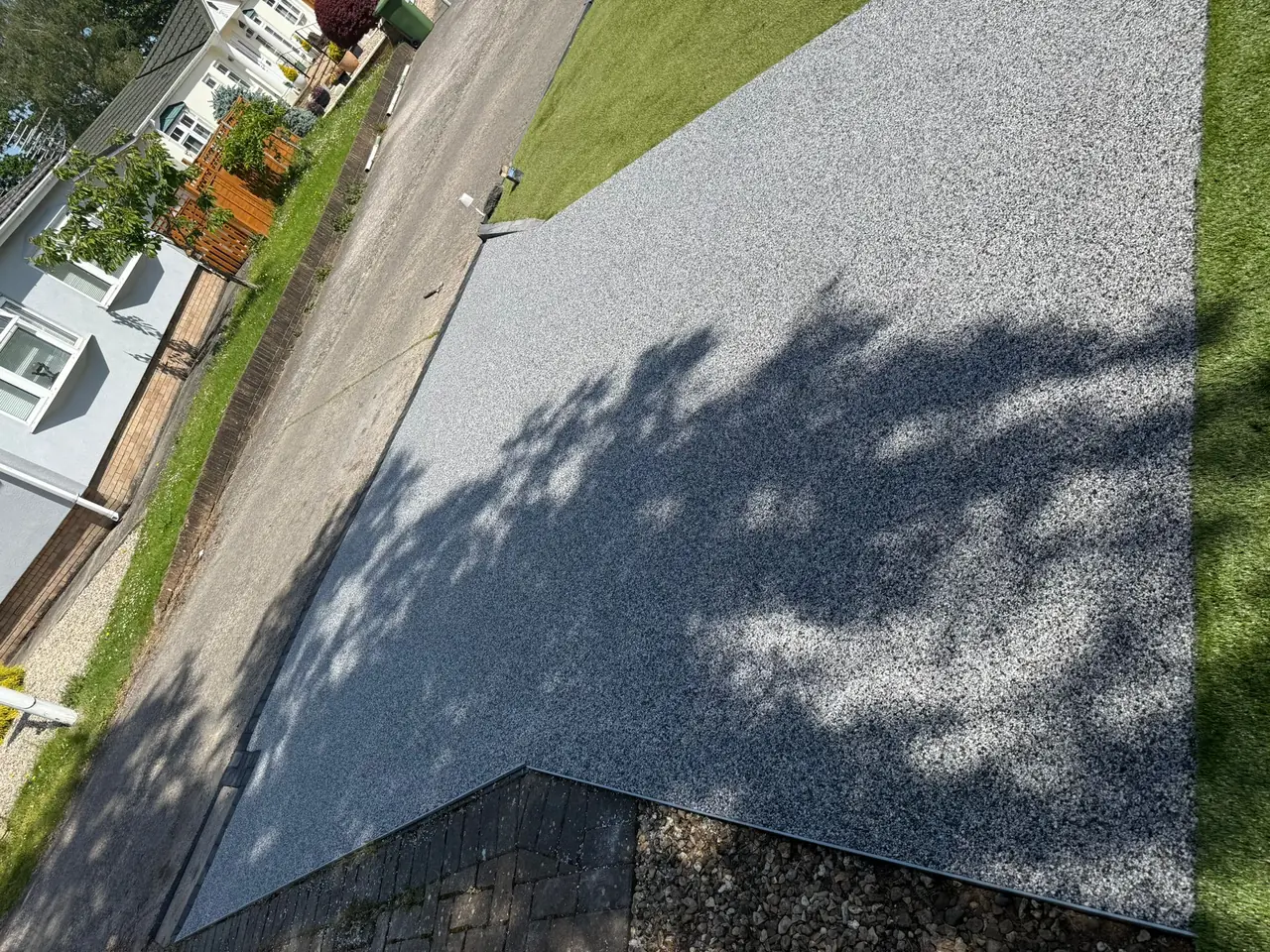
On those frontages the ground does not just tilt, it usually tilts twice - a shallow fall across the width of the plot and a much steeper one from the house down to the pavement. A resin bound driveway copes with this well, because it is mixed on site and trowelled out as one continuous piece rather than assembled from units that each need their own bed. There is no sand layer to migrate downhill and no joint pattern that opens as things settle. That is the honest advantage on a hill, and it is worth more than any of the marketing about looks.
Work Out Your Gradient Before Anyone Quotes
Nobody can price a slope from a description, and “quite steep” means nothing. Fifteen minutes with a spirit level settles it.
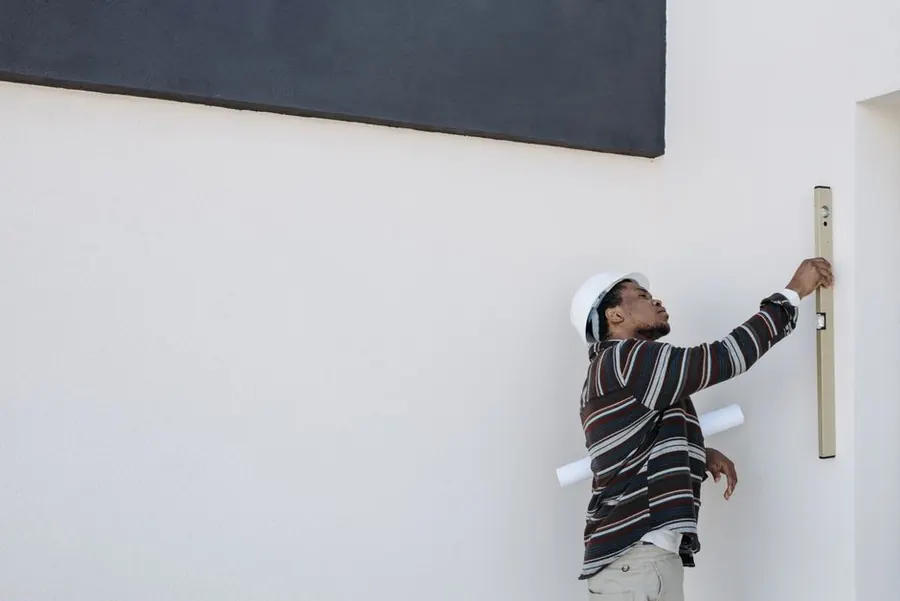
Take a straight length of timber, at least a metre, and lay it down the line of the fall. Put a spirit level on top, raise the downhill end until the bubble sits central, then measure the gap between the timber and the ground. That gap over that length is your gradient. Lift a one metre level by 100mm and you have a 1 in 10, which is the same thing as 10 percent. Lift it by 125mm and you are at 1 in 8. Anything under 50mm - 1 in 20 - barely counts as a slope at all and will be quoted as a flat job.
Do this at three points: right at the pavement, halfway up, and at the house. Swindon frontages are rarely uniform. The typical Old Town terrace has a gentle rise across most of the plot and then a short sharp drop in the last metre and a half before the footway, which is where the original steps and the retaining kerb were. That last metre and a half is what makes the job difficult, and quoting it accurately depends on someone having measured it. While you are out there with the tape, it is worth checking the depth and width of the whole frontage too - our guide to driveway sizes and layouts covers the figures the council works to.
The Point Where A Slope Stops Being A Slope
Every hillside drive has a threshold. Below it you are buying a surface. Above it you are buying groundworks with a surface on top, and the quote changes shape accordingly.

Up to about 1 in 10, resin behaves normally. The mix is laid as it would be anywhere, the falls take care of themselves, and the only real adjustment is working from the bottom up so nobody is standing on fresh material. Between 1 in 10 and 1 in 8 the resin ratio and the trowelling technique both tighten - too wet a mix on a 12 percent fall will creep downhill during the cure and leave you with a thin patch at the top and a lip at the bottom. Past 1 in 6, around 16 percent, the sensible answer is usually to stop fighting the hill and split the drive into two terraced levels with a step or a low wall between them.
Cars have their own opinion on this. Approach angles on ordinary family vehicles run around 15 degrees, and it is not the slope that grounds them - it is the transition at the top and bottom, where a sharp change of angle catches a front splitter or a towbar. Anything steeper than 1 in 8 wants a transition zone of a metre or so at each end where the gradient eases, and low cars want more. That easing has to be designed in at the excavation stage. It cannot be added afterwards with 15mm of surfacing.
Water Runs Downhill, And It Must Not Run Onto The Pavement
Ask most people where the water on their drive goes and they will point vaguely at the road. On a level frontage that vagueness rarely costs anything. On a hill it is the single thing most likely to get a driveway complained about, dug up or refused, because everything the surface sheds arrives at the bottom of the plot at once and the pavement is waiting for it.
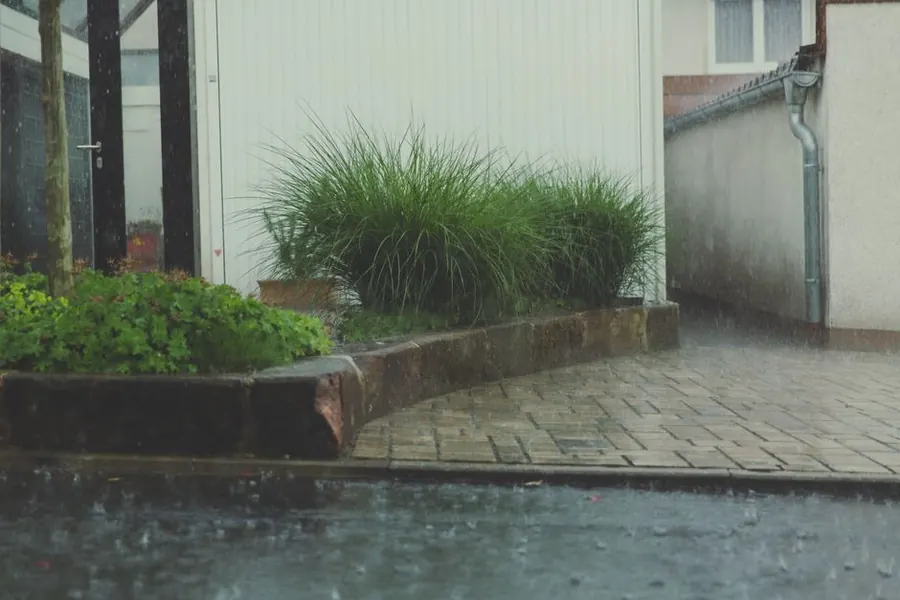
A driveway is not allowed to discharge its rainwater onto the public highway. The government’s guidance on permeable surfacing of front gardens is the document that sets this out, and it is why anything over five square metres of impermeable surfacing needs either planning permission or somewhere on the plot for the water to soak away. On a level frontage you can be casual about it. On a 1 in 8 you cannot, because gravity is doing its best to send every drop of it into the gutter.
Resin bound construction answers this by taking the water downwards instead of sideways. An open-graded permeable base under the surface gives the rain somewhere to go the moment it lands, so the volume travelling across the surface stays small even in a downpour. On steeper frontages that gets backed up with a drainage channel running across the foot of the drive, set slightly below the finished level, connected to a soakaway rather than to the road. Swindon Borough Council keeps its local flood risk information online, and it is worth ten minutes if your street is one of the ones that gets a puddle at the bottom every winter - a hillside drive above a known wet spot needs its outfall thought about properly, not assumed.
Laying Resin On A Fall Is A Different Job
The material is the same. The working method is not, and this is where installers separate themselves.
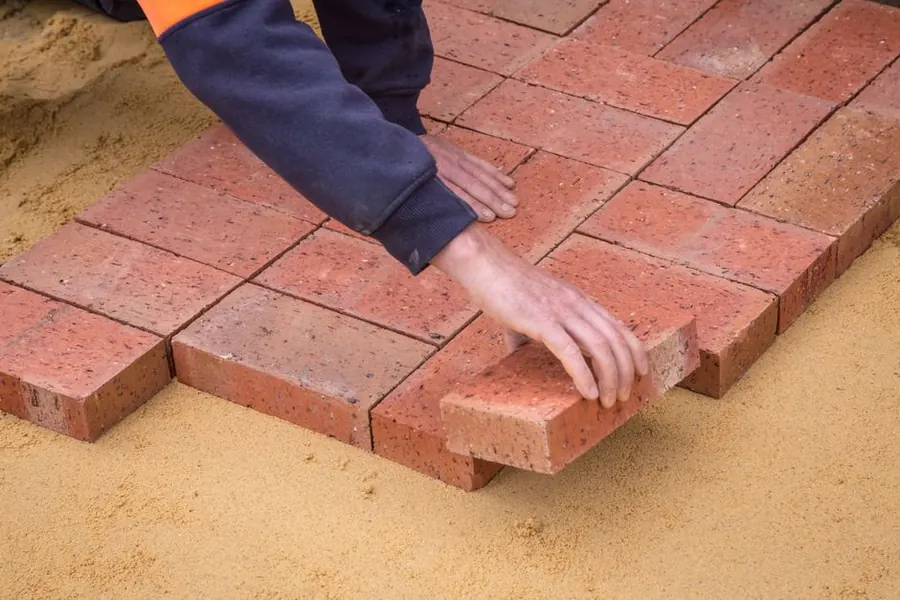
On a flat drive a gang can work across the area in whatever order suits them. On a slope the sequence is fixed: start at the lowest point and work up, so that finished material is never walked over and nothing is being pushed downhill by the trowel. Batches come out of the forced action mixer slightly drier than they would on the level, because the binder wants to migrate to the low side while it is still mobile, and a mix that looks perfect in the bucket can slump by the time it has cured on a 12 percent fall.
Aggregate choice shifts too. A rounded, small-gauge stone rolls more readily in a wet mix and gives less mechanical grip underfoot on a wet hill. Angular stone in the 2-5mm range locks together better both while it is being laid and afterwards when someone is walking down it in January. Edge restraint has to be in place and properly fixed before a single batch is mixed, because on a slope the perimeter is holding material as well as defining a shape.
Weather matters more than usual as well. Rain on a curing flat drive is a nuisance; rain on a curing slope will channel down the fall and cut visible tracks into the surface. Nobody sensible starts a sloping job with unsettled weather in the forecast for the next 24 hours.
Edges, Steps And Retaining On A Terraced Frontage
On a steep plot, a surprising share of the budget goes on things that are not the driveway at all. Walls, kerbs, a step. The bits holding everything else where you put it.
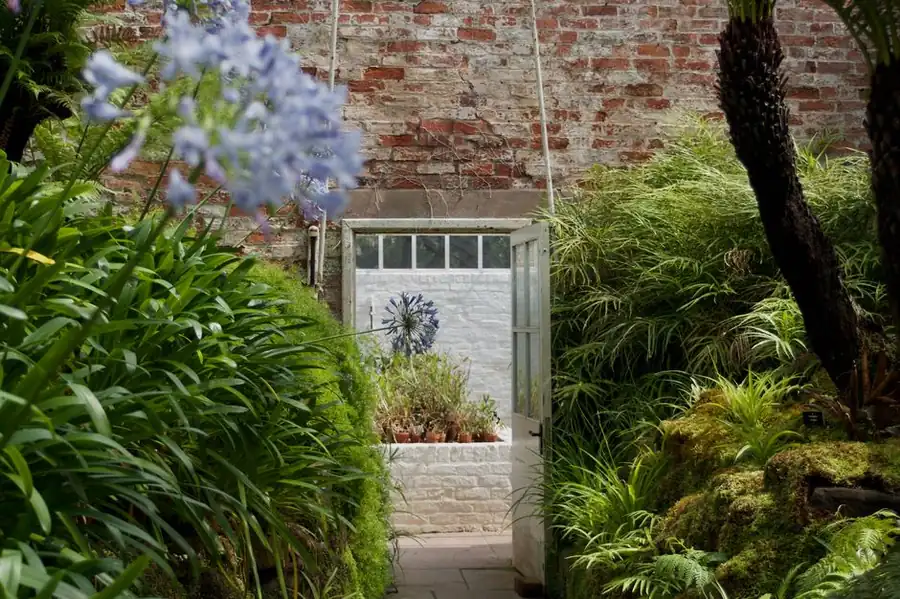
Most Old Town and Kingshill frontages already have some form of retaining structure - a low stone or brick wall at the pavement, a set of steps to the front door, sometimes a return wall against a neighbour where the two plots sit at different heights. Some of it is Victorian and has been quietly leaning for decades. It has to be assessed before the drive is designed, because a new surface is only as stable as what is holding its low edge, and a wall that has been coping with a garden will not necessarily cope with a compacted sub-base and a car.
Where a drive is terraced into two levels, the step between them is the detail worth spending on. A single riser of 150mm or so, faced in stone or block to match the house, reads as a deliberate design decision. Two or three shallow risers scattered across the width read as an accident. Aluminium edge restraint works well on the open sides and disappears visually, but at a change of level you want something with mass behind it.
Pedestrian access needs its own thought. Where the front door is served by the drive rather than a separate path, the ramped-approach gradients in Approved Document M of the Building Regulations are a sound benchmark even on a private job that nobody will inspect: gentler than 1 in 12, with a level landing at the top. Anyone pushing a buggy or a wheelie bin up the drive will notice the difference.
Frost On A Hill Behaves Differently
Swindon is inland and high enough to get proper frosts, not the half-hearted coastal sort, and the hillside streets meet them before anywhere else in town does. Anyone who has scraped a car on Bath Road in January while the retail park below is merely damp already knows this.
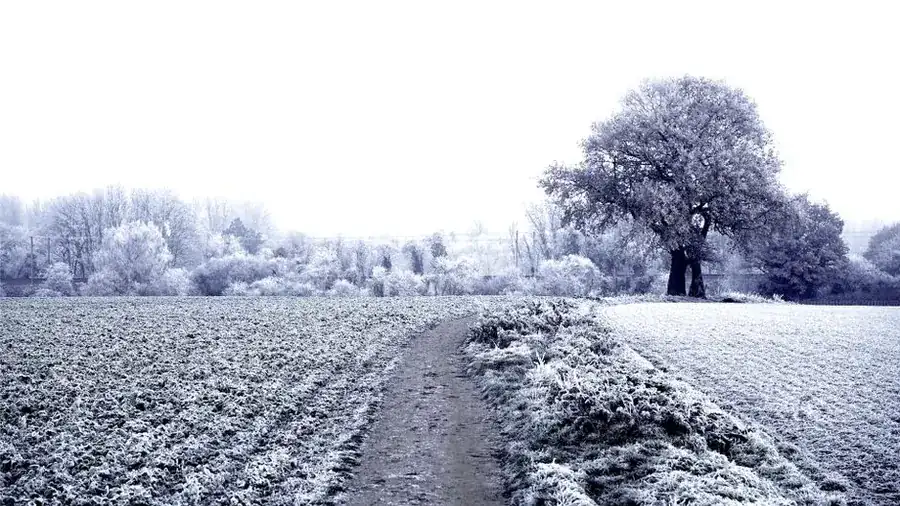
Cold air drains downhill and settles, so the bottom of a sloping drive frequently frosts before the top does, and thaws later. Add the fact that Old Town’s north-facing frontages can go most of a January day without direct sun and you get a strip at the foot of the drive that stays frozen while the rest of it has cleared. That strip is exactly where a car is braking on the way out and where somebody is stepping off the surface onto the pavement.
The fix is not a coating or a treatment. It is making sure there was never standing water there in the first place, which comes back to permeable construction and a channel that actually works. Water that has soaked away cannot freeze into a sheet. Resin bound surfacing helps on the material side too, since its texture comes from the exposed faces of angular stone rather than from a smooth cast finish, but no surface saves a drive that ponds at the bottom.
Grit if you want to. Rock salt does no harm to a cured resin surface. Just do not pile a snow shovel into it with a metal blade - a plastic one costs less than a repair.
What A Slope Actually Adds To The Price
A fall does not multiply the cost of a driveway. It adds specific, itemisable things to it, and you should be able to see them on the quote.
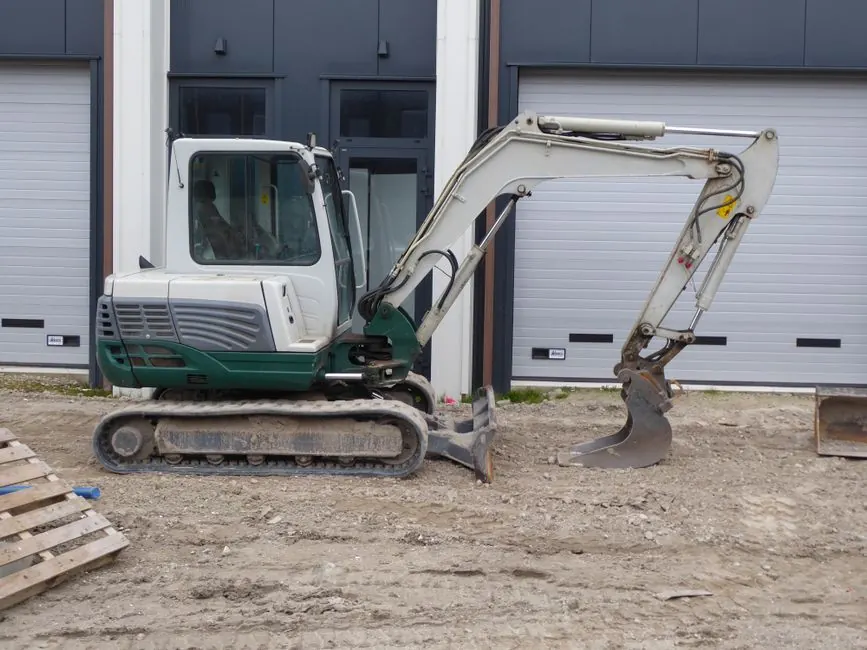
Excavation is the first one. Cutting a level or evenly graded formation out of a falling plot moves more material than digging out a flat one, and on a tight Old Town frontage with no side access that spoil is going out by barrow and grab lorry rather than by machine. Second is drainage: a channel, a connection and a soakaway that a flat drive might not have needed. Third is any retaining work, which is genuinely open-ended - a sound existing wall costs nothing, a failed one can cost more than the surfacing.
As a rough shape, expect a straightforward fall under 1 in 12 to sit within normal pricing, a 1 in 10 to 1 in 8 to add something in the region of 10 to 20 percent once the extra dig and drainage are counted, and a terraced two-level job to be priced as two smaller drives plus the structure between them. Our resin driveway cost page sets out the baseline figures those percentages apply to.
What you should not accept is a slope surcharge with no explanation attached to it. Ask what is being excavated, where the water is going and what is holding the bottom edge. An installer who has surveyed a hillside frontage properly will have all three answers ready before you ask.
If your frontage falls away and you would like a proper look at it rather than a guess, get a free quote for your Swindon driveway and we will come and measure the thing.
Frequently Asked Questions
Can a resin driveway be laid on a slope?
Yes, and it handles a fall better than most alternatives because it is trowelled in place rather than laid as separate units. There is no bedding sand to wash downhill and no joints to open up, which is where sloping block paving usually gives up. The practical ceiling is around 1 in 8, roughly 12 percent. Beyond that the mix has to be adjusted so it does not creep while it cures, and past about 1 in 6 most installers will want to terrace the drive into two levels instead of running one continuous ramp.
How do I measure the gradient of my driveway?
Lay a straight length of timber down the slope with a spirit level on top, lift the low end until the bubble centres, then measure the gap underneath. A one metre level lifted 100mm is a 1 in 10 fall, or 10 percent. Do it in two or three places rather than one, because most Swindon frontages are steeper near the pavement than they are near the house, and it is the steep section that dictates how the job is priced.
Where does the water go on a sloping resin driveway?
Into the surface, ideally. A properly built resin bound drive on an open-graded permeable base takes rainfall down through the surface and into the stone below, which is exactly what you want on a fall because water that never runs across the surface cannot run off the bottom of it. On steeper frontages that is usually backed up by a drainage channel across the foot of the drive before the pavement, so anything the surface does shed in a heavy downpour is caught rather than sent onto the highway.
Is a sloping resin driveway slippery in frost?
The surface itself has more grip than wet block paving or smooth concrete because it is made of angular stone with an open texture. The variable on a hill is not the material, it is where the water was sitting when the temperature dropped. Permeable construction helps a great deal here since standing water is what freezes into a sheet. Get the falls and the channel right and a hillside drive in Old Town behaves no worse in a February frost than a flat one in Stratton.