
27 September 2026
Resin Driveways In Chippenham: Ground Conditions, Cost And Which Council You Deal With
Chippenham sits about twenty miles west of Swindon. Close enough that plenty of driveway firms cover both towns, far enough that almost nothing else carries across. Different rock under the gardens. Different planning authority. Different rules on cutting a kerb. Roughly 37,000 people live here, and a fair number of them have spent an evening reading dropped kerb guidance that turned out to belong to a council with no say over their street. So this one is Chippenham-specific: what the ground does, where the water goes, who you actually apply to, and what the job tends to cost once somebody has dug a hole and had a look.
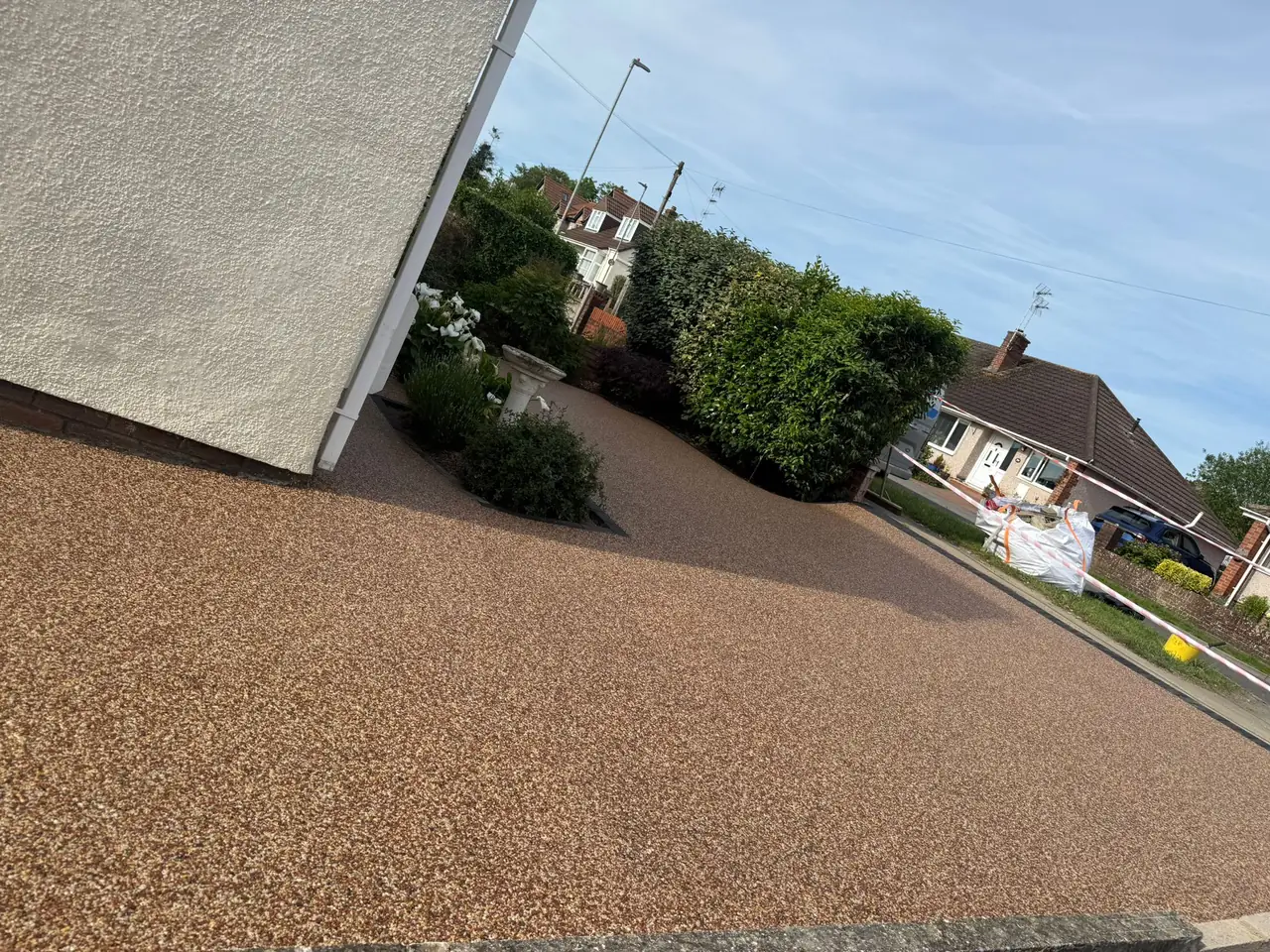
Two Towns, Two Councils, Twenty Miles Apart
Swindon is its own unitary authority. Chippenham isn’t. Chippenham sits inside Wiltshire Council, the unitary that covers everything from Salisbury to Malmesbury and looks after roughly half a million people. That one fact decides who handles your planning enquiry, who owns the footway outside your gate, who you pay to drop a kerb and whose drainage rules apply when the surface water has to go somewhere.
It matters more than it sounds, because search results don’t respect council boundaries. Ask a driveway question with a Wiltshire postcode attached and you can easily land on Swindon Borough Council’s pages, or on a national guide written around a London borough. Neither tells you what Wiltshire actually wants. We’re based in Swindon and travel over for resin bound driveway work in Chippenham most months, and the council question is the one homeowners most often have wrong before we arrive.
Permission, kerbs, drainage, protected trees, a skip on the highway. All Wiltshire.
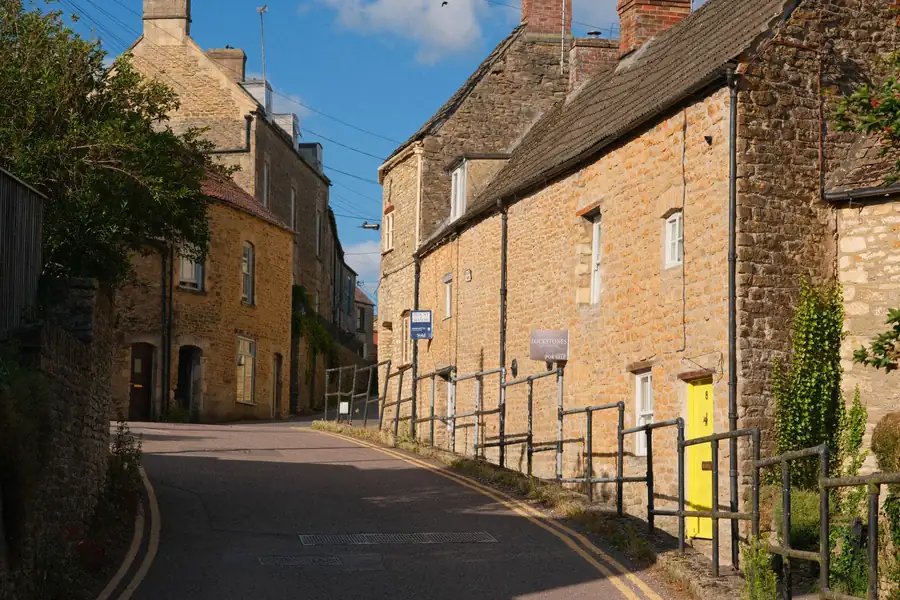
Kellaways, Cornbrash And Oxford Clay
Look at the older buildings around the town centre and you’re looking at the local geology stacked up in walls. The pale, slightly rubbly limestone in those frontages is Cornbrash, a thin but widespread bed running under this part of north Wiltshire. Above it sit the Kellaways beds - a sandy, fossil-rich sequence named after Kellaways, a hamlet barely three miles north of the town - and above those, the bottom of the Oxford Clay.
Chippenham is built across the join. The Cornbrash and the Kellaways sands behave reasonably well: they take water, they hold a compacted layer, they don’t move much. The Kellaways Clay Member and the Oxford Clay above it do the opposite. They hold water, swell when wet, shrink back in a dry July and put a slow seasonal shove into whatever is laid on top of them. Swindon’s problem is that it’s clay almost everywhere, which we went into at length in our piece on why the clay under Swindon breaks driveways. Chippenham’s problem is that it’s neither one thing nor the other.
That patchiness is the genuinely local risk, and it’s the reason a quote should never be given over the phone here. Two houses on the same road can sit on different material. Price the second from the first one’s dig and you’ll be wrong, sometimes by a couple of thousand pounds. If you want a rough idea of what’s beneath your own postcode before anyone turns up, the British Geological Survey’s Geology Viewer maps bedrock and superficial deposits across the whole country and is free to use. It won’t replace a spade. It will tell you which questions to ask.

The Sub-Base Is Where The Job Is Won
Resin is about 15mm of a driveway. Everything else is underneath it, and on Chippenham’s ground that underneath is where the money should go.
On the firmer Cornbrash ground a standard build usually does it: dig out to a clean formation, lay a geotextile separation layer, then 100 to 150mm of angular open-graded stone compacted in layers. Angular and clean both matter. Rounded pea shingle won’t lock together, and stone carrying fines clogs and stops draining, which cancels out the whole point of a permeable surface. Interpave, the trade body that publishes the UK guidance on permeable paving, is blunt about exactly that point for block systems, and the principle carries straight across to resin.
On the clay-heavier plots - the higher ground, and plenty of the postwar and later estates - you need more. Deeper excavation, a heavier geotextile, sometimes a capping layer before the sub-base proper. A thin build over soft clay will pump and settle inside a couple of winters no matter how good the resin sitting on it is. Edge restraints matter more here too, because without proper containment at the perimeter the sub-base spreads sideways under load and the surface follows it down.
None of this is exotic. It’s just dearer than the alternative, and it’s the first thing a cheap quote quietly takes out.
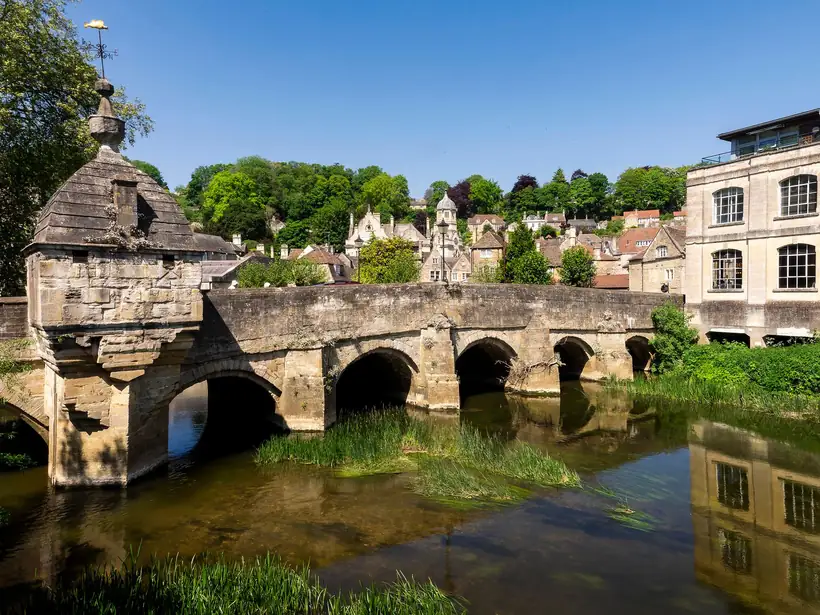
Water, The Avon, And Why Permeability Earns Its Keep
The Bristol Avon runs straight through the middle of Chippenham, and Monkton Park sits inside the loop of it. The town has a long, well-documented history of surface water trouble, and Wiltshire Council has done surface water management work for Chippenham specifically. Part of the reason is that groundwater in the shallow Cornbrash responds both to the river and to runoff arriving off the impermeable clay on the higher ground.
Which is why permeability is a stronger argument here than it is in most towns. A resin bound surface over an open-graded base doesn’t shed water onto the road. It takes it down into the stone and releases it slowly into the ground underneath. On a sloping plot draining towards the Avon, that’s the difference between adding to the peak flow and quietly holding some of it back. Where the clay below won’t take water fast enough, the base gets built as an attenuation layer with a controlled outfall instead: it stores the downpour and lets it go afterwards.
Not sure where your property stands? The Environment Agency’s long-term flood risk service for England gives you a surface water and river risk rating for your address in about a minute. Do it before you set the levels, not after.
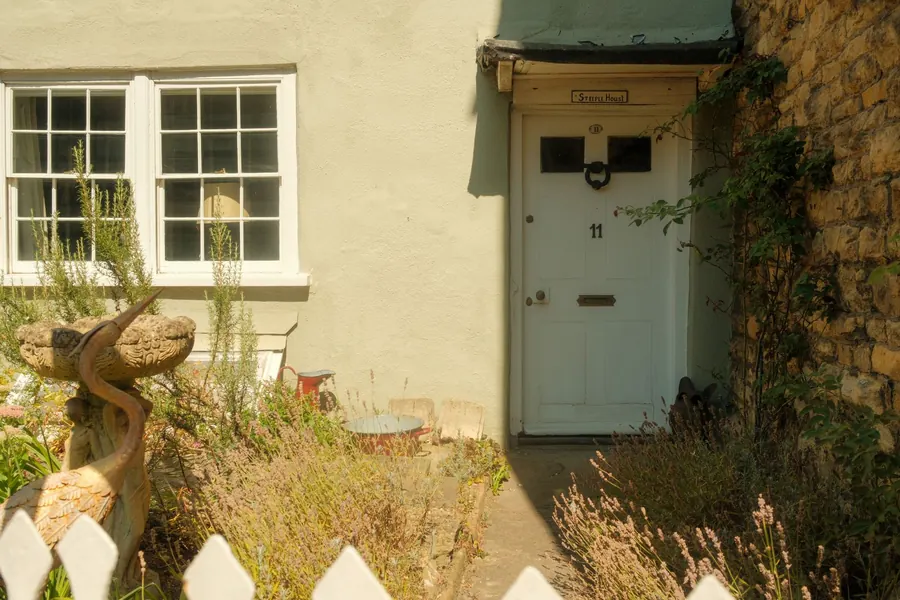
Stone In The Middle, Render On The Edges
Chippenham’s housing splits fairly cleanly, and each band asks something different of a driveway.
Around the town centre and the conservation area you’ve got older stone and brick. Narrow frontages, thresholds close to the pavement, original flagged paths, and in places listed status. Resin suits these because it’s laid to whatever level and shape already exists rather than forcing a grid onto it, and because buff and golden aggregates sit comfortably against Cornbrash stone. Permitted development rights are another matter inside a conservation area or on a listed property, though, and that conversation with Wiltshire Council’s conservation team needs to happen before anybody orders materials.
Then the postwar estates - Lowden, Frogwell, Redland and their neighbours - where the drives are usually original concrete or tarmac laid thin over whatever happened to be there in the 1950s and 60s. These are the ones most likely to have a soft, tired base that wants taking out rather than overlaying.
And then the newer developments: Cepen Park, Pewsham, Monkton Park and the more recent phases beyond them. Made-up ground is common, the levels were set by a housebuilder rather than for your benefit, and the plot may carry conditions restricting what you can do out front. Read your deeds and your planning conditions. It’s a five-minute job that occasionally saves an expensive one.
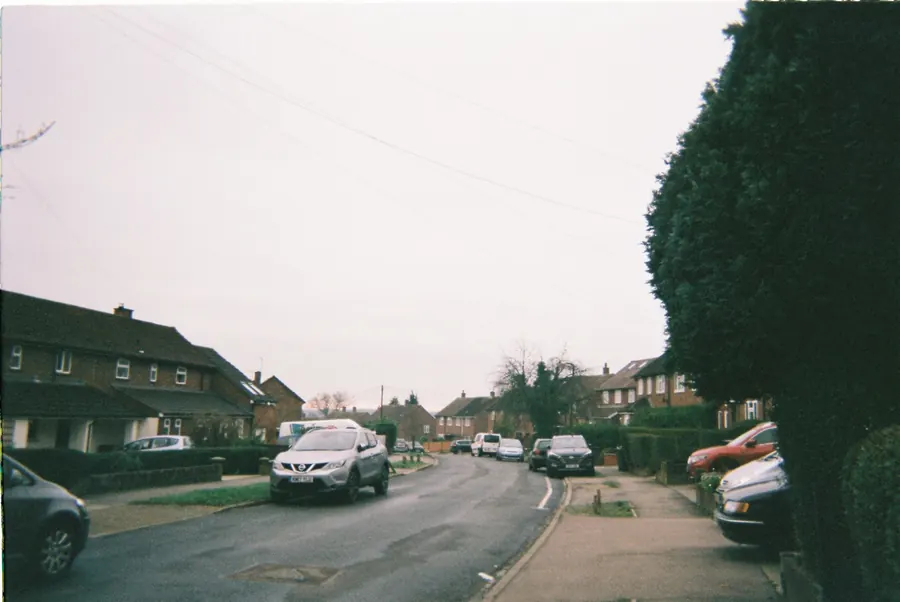
Dropped Kerbs Go Through Wiltshire Council
Converting a front garden, or widening an existing access? The kerb is a separate job with a separate authority, and in Chippenham that authority is Wiltshire Council’s highways team.
Wiltshire treats it as a Section 184 vehicle crossing licence. There’s an administrative charge for processing the application, currently in the region of £60, and the council quotes a turnaround of up to fifteen weeks where nothing complicates it. The licence buys permission only. The construction is a separate cost and has to be done by a contractor accredited to work on the public highway. Wiltshire also checks the planning position on your behalf as part of the application, which picks up the cases where a crossing needs permission in its own right. The Planning Portal’s guidance on dropped kerbs sets out the national framework sitting behind all of it.
Fifteen weeks is the number to plan around. Get the licence moving early and let the driveway follow it rather than the other way round. We ran through the same sequencing headache in our post on dropped kerbs and vehicle crossings, and the order of operations is the bit people get wrong whichever council they’re dealing with.
What It Actually Costs Here
The surface is the predictable bit. Resin bound over a properly prepared base generally works out around £110 to £150 per square metre in this part of Wiltshire, climbing towards £180 or so where the design gets complicated, the access is tight, or the aggregate specified is one of the pricier imported blends.
Whole-job numbers are more use to most people. A single-car Chippenham drive of roughly 25 square metres, on decent ground, with the old surface coming out, tends to sit around £3,000 to £4,500. A standard two-car frontage of about 40 square metres more often lands between £4,500 and £7,500. Larger detached plots, in-and-out arrangements and anything involving steps or retaining work go past that. A dropped kerb on top, licence and construction together, commonly adds £1,500 to £3,500 depending on width and what’s buried under the footway.
The variable is always the ground, which is why those are ranges and not a price. On the clay-heavier plots the dig is deeper, the muck-away is heavier and the stone bill climbs, and a driveway on that ground built to the cheaper spec is a false economy you’ll notice inside three or four winters. The travel from Swindon changes nothing, for what it’s worth. It’s a half-hour run down the A3102 and it has no business being on your quote. If you want to see the sort of work this describes, have a look at our Chippenham page.
Get a free quote for a resin driveway in Chippenham
Frequently Asked Questions
Which council do I deal with for a driveway in Chippenham?
Wiltshire Council. Chippenham falls inside the Wiltshire unitary authority, which handles planning, highways and drainage for the town. Swindon Borough Council is a completely separate unitary authority and has no say over anything in Chippenham, despite being only about twenty miles up the A3102. If you've been reading Swindon's dropped kerb policy or its planning guidance because it came up first in a search, none of it applies to you.
What is the ground like under Chippenham?
The town sits mostly on the Kellaways Formation and the Cornbrash, with the lower Oxford Clay coming in above them. The Kellaways beds are actually named after Kellaways, a hamlet a few miles north of the town. In practice that means a mix: patches of firm limestone rubble where the Cornbrash is near the surface, and heavy, water-holding clay on the higher ground and across much of the newer housing. Two streets in the same estate can behave very differently, which is why a proper dig test matters more here than a rule of thumb.
Do I need planning permission for a resin driveway in Chippenham?
Usually not, provided the surface is permeable or the water is directed to a border or soakaway inside your own boundary. A resin bound driveway laid over an open-graded permeable base falls within permitted development on that basis. The exceptions are worth checking: properties inside the Chippenham conservation area, listed buildings, and homes where permitted development rights have been removed by condition, particularly on some newer estates. Wiltshire Council's planning team is the authority that decides, and it's worth a call before you commit.
How much does a resin driveway cost in Chippenham?
As a guide, a typical two-car Chippenham driveway of around 40 square metres tends to land somewhere between £4,500 and £7,500 once groundwork is included, with larger or more awkward jobs running higher. The surface itself is a fairly predictable cost per square metre. What moves the number is what the digger finds - old concrete over soft clay, a services trench, or a level that needs building up to meet a threshold. Anyone quoting before they have seen the ground is guessing.