
4 October 2026
Resin Driveways In Cirencester: Limestone Underfoot, Gravel Out Front And Two Gloucestershire Councils
Drive fifteen miles up the A419 from Swindon and something changes under the tyres long before the “Welcome to Gloucestershire” sign. The heavy grey clay we fight with every week runs out, and the fields either side start turning up broken plates of pale limestone. Cirencester sits right at the bottom edge of that limestone country, on the last stretch of the Cotswold dip slope, and it shows in the houses, the walls and the driveways. A lot of the town’s 20,229 residents (2021 census) park on gravel, because that is what the Cotswolds has always done. When they want something tidier, a resin driveway in Cirencester is the obvious next step. The catch is that the ground and the paperwork both work differently to the jobs we do at home.
Resin Driveways In Cirencester Mean Crossing A County Line
The first thing to get straight is who is in charge, because it is not who most Swindon people assume. Cirencester is in Gloucestershire, and Gloucestershire still has two tiers of local government. Cotswold District Council handles planning: conservation areas, listed buildings, trees and any application you might need. Gloucestershire County Council looks after the roads and pavements, which means it decides on dropped kerbs.
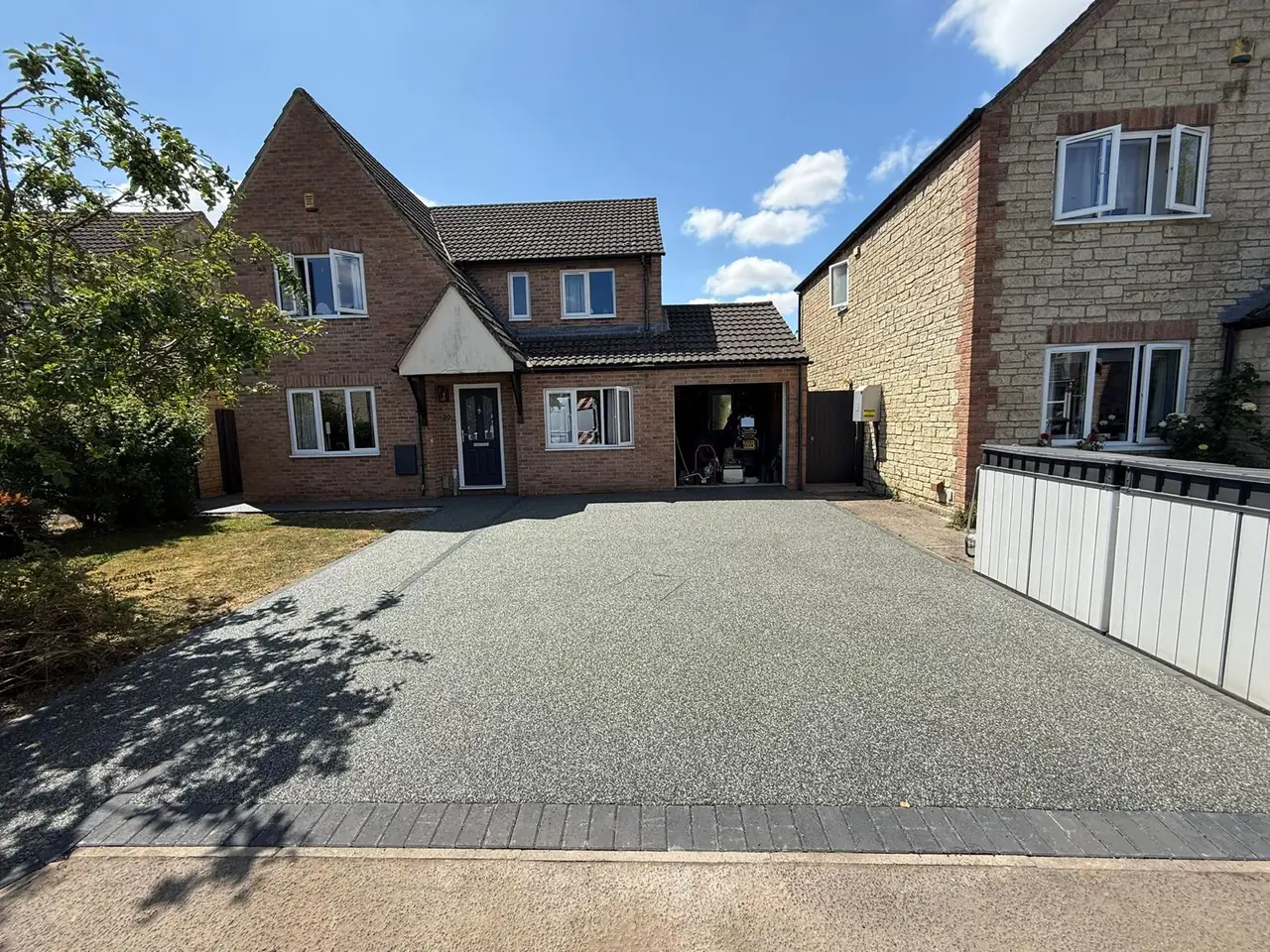
Compare that with Wiltshire, where one unitary council does both jobs, or Swindon, where the borough council does both. Ring the wrong office and you lose a week. We have had customers in Stratton spend a fortnight reading Swindon’s crossing rules before anyone pointed out they live in a different county.
The job itself is the same resin bound driveway we lay across Swindon: a dug-out formation, a compacted permeable base, edge restraints and a hand-trowelled layer of resin and aggregate. What changes is everything around it, starting with the rock. Our Cirencester area page lists the parts of town and the villages we cover, and the rest of this post walks through what is genuinely different about working here.
Where The Cotswold Dip Slope Runs Out
The Cotswolds tilt. The steep scarp faces west over Cheltenham and Stroud, and from there the limestone slopes gently down towards the south-east until it disappears under clay. Cirencester is near the bottom of that slope. Geologists put the boundary between the Cotswolds and the clay vale beyond at the junction of the Cornbrash limestone and the Kellaways Clay, and that line wanders irregularly just south of the town.
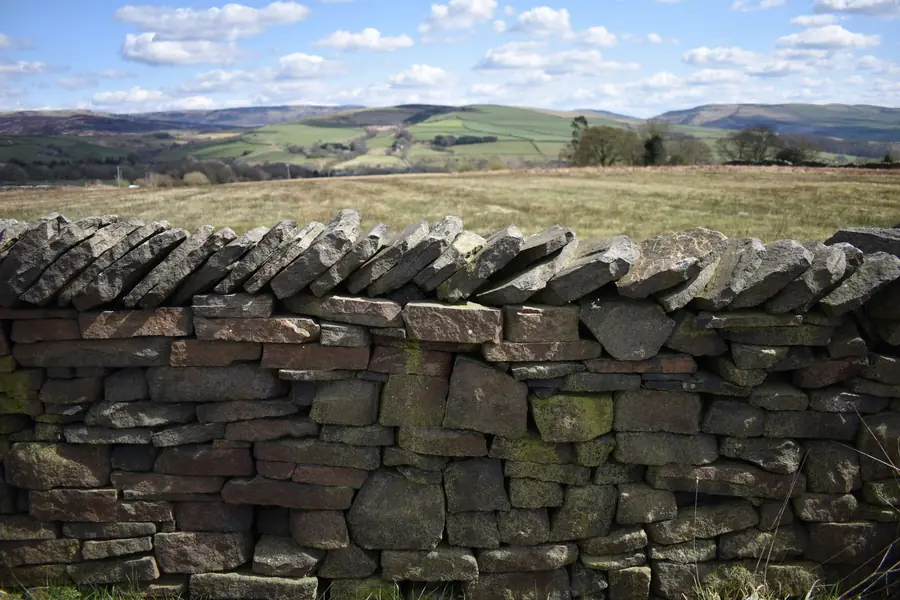
North of that line you are on Forest Marble and the Cornbrash, a mix of shelly limestones and clay beds. The Cornbrash weathers into a reddish-brown loamy soil packed with flat limestone fragments, which is the “brash” that farmers have been picking off these fields for centuries. The harder layers were quarried for road stone. Dig a driveway in Stratton, around the Beeches or on the older roads north of the centre and that is roughly what you find: a shallow topsoil, then broken stone, then firmer rock.
From our side of the job, brash is a mixed blessing.
- It drains far better than Swindon’s Oxford Clay, so water under the drive is much less of a problem.
- It does not shrink and swell through the seasons the way clay does, so the base stays where you put it.
- It is hard digging. Plates of limestone jam the bucket, and the formation level comes out lumpy, so we spend longer trimming and filling hollows before the sub-base goes in.
- Clay beds in the Forest Marble turn up in pockets. A drive that is all clean stone at one end can be sticky and wet at the other.
Head south towards Siddington and the Cotswold Water Park and you cross onto the Kellaways and Oxford Clay, with old gravel workings and a much higher water table. Jobs down there look more like our Swindon work again, and we price and build them accordingly.
Why So Many Cirencester Drives Are Gravel, And When To Leave Them That Way
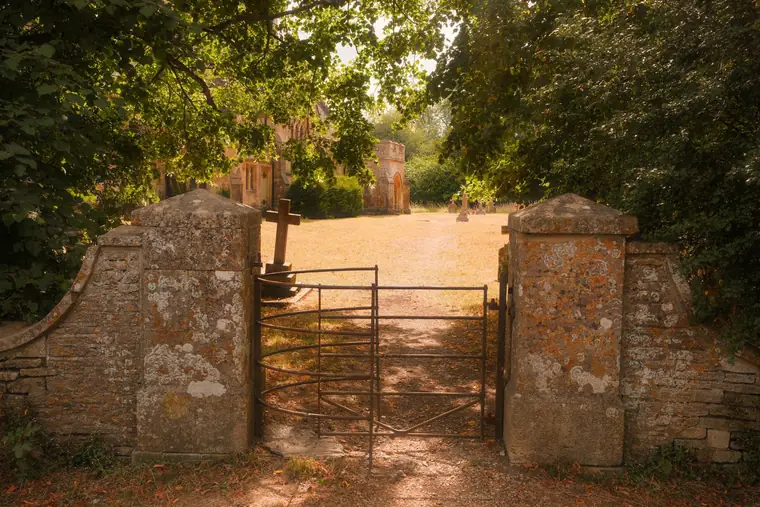
Gravel suits Cotswold stone. It crunches when someone pulls in, and for generations it was the cheapest thing you could put in front of a stone house. Walk the roads off Victoria Road, Cecily Hill or Gloucester Street and you will still see plenty of it, usually framed by stone gate piers and a low wall.
It also has habits people get sick of. Stones migrate onto the pavement and into the house. Weeds push through within a couple of years unless the membrane underneath is still intact, and on old Cotswold drives it rarely is. Tyres dig ruts at the turning point. Pushchairs, wheelie bins and anyone using a stick or a wheelchair struggle on deep shingle, and the local cats treat it as a litter tray.
A resin bound surface keeps the look of loose stone and binds every piece in place. With a warm buff or golden aggregate it reads as gravel from the road, but you can sweep it, roll a bin across it and leave it alone for years. Still, we do sometimes tell people to keep their gravel. On a long rural drive in one of the villages, resin can cost more than the drive is worth to you. On a listed house where the gravel is part of the setting, a conservation officer may prefer you to stay with it. Our guide to resin versus gravel driveways goes into the trade-offs in more detail.
One thing that never works is laying resin on top of existing gravel. The loose stone underneath moves, and the resin cracks with it.
Four Conservation Areas And No Article 4 Direction
Cirencester has four conservation areas: The Park on the north-west edge of the centre, the Town Centre, Gloucester Street and River Walk, and Cirencester South. Between them they take in most of the older streets. Cotswold District Council publishes boundary plans for each, and the Cotswold District Council conservation area maps are the quickest way to check whether your address falls inside one.
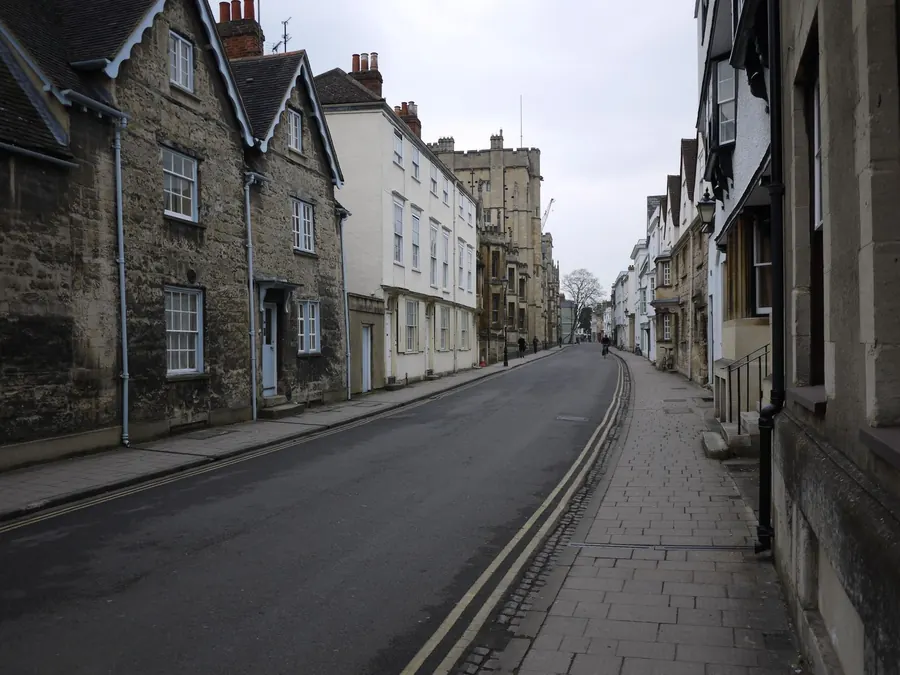
Being in a conservation area does not, on its own, stop a permeable resin drive on a house. National permitted development rules still let you surface a front garden with a porous material without applying. Some districts take those rights away street by street with an Article 4 direction, and Cotswold District Council has done exactly that in places like South Cerney, Tetbury and Bibury. At the time of writing, its published list of Article 4 directions does not include one covering Cirencester itself, but it is worth a quick look before you commit, as these lists do change.
What does need consent:
- Demolishing a front wall, railing or gate over one metre high beside the road, if the house is in a conservation area. Plenty of Cirencester frontages need a wider opening for cars, so this comes up a lot.
- Almost anything touching a listed building or structures within its curtilage, including old boundary walls and gate piers.
- Work near protected trees. Trees in a conservation area are protected in their own right, and digging through their roots needs care and sometimes notice to the council.
The Cotswolds National Landscape And Getting The Colour Right
The Cotswolds National Landscape, still often called the Cotswolds AONB, wraps around the town. Cirencester Park on the western side is inside it, and so are most of the villages we get called out to, from Bagendon to the Duntisbournes. The Cotswolds National Landscape website has the boundary and the board’s guidance on building in a way that fits the landscape.
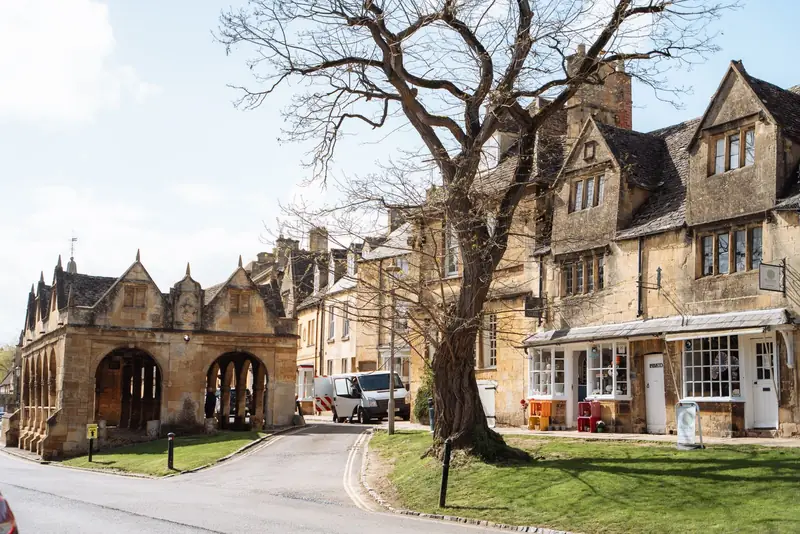
The designation does not add a planning hurdle for a permeable driveway on a house. Where it matters is taste. A bright white quartz or a jet-black aggregate against honey limestone looks wrong, and in a protected landscape the neighbours tend to say so. The colours that sit well here are the ones close to the walls: golden buffs, oatmeal blends, a soft cream mixed with a little brown. On the reconstituted stone of the newer estates, a slightly greyer blend often works better than a true gold, because that stone weathers cooler than the real thing.
We always bring sample boards to a site visit and hold them against the house rather than picking from a brochure. In Swindon, against red brick, people often go darker. In Cirencester the right answer is nearly always a few shades lighter and warmer.
Stratton, The Beeches, Watermoor And The Steadings
Outside the old centre, Cirencester is mostly 20th-century housing. Watermoor, the largest ward with 3,123 people at the 2021 census, mixes Victorian terraces with later estates. The Beeches and Stratton are mainly post-war and later family homes with integral garages and space for two cars. These are the plots where you find tired tarmac, block paving that has sunk at the gully, or gravel laid by a previous owner over a sheet of black plastic.
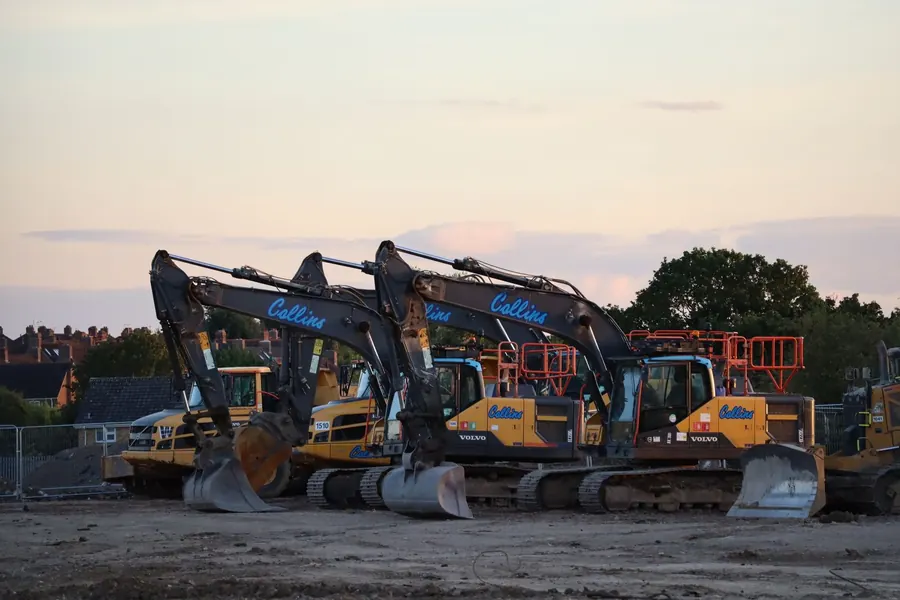
The big change is happening south of Chesterton. Cotswold District Council granted outline permission in April 2019 for the Steadings, a new neighbourhood of up to 2,350 homes being delivered by Bathurst Development. That land sits close to where the limestone gives way to clay, so on any new home there we want a trial hole before we quote. New-build plots also carry made ground around the house and fresh service trenches under the front garden, and both settle for a few years. If you have just moved in, it can pay to wait before replacing the developer’s drive.
On the established estates the build-up is straightforward. We take the old surface out, dig to about 150mm on good brash and deeper wherever clay or soft fill shows up, lay a geotextile where the ground needs it, then compact an open-graded stone base and fix the edges. Most of these frontages take three days from first dig to the resin going down, weather allowing.
Dropped Kerbs Go To Gloucestershire County Council
If your house has never had a vehicle crossing, or the existing one is too narrow, the kerb belongs to Gloucestershire County Council. Its process runs in two parts. Part 1 is a site suitability survey with a non-refundable £105 fee. Once that is approved, part 2 covers the works and certification, costs a further £205 and has to be signed by both you and your contractor. That makes £310 in total from April 2025, and extra site visits are charged at £125 each.
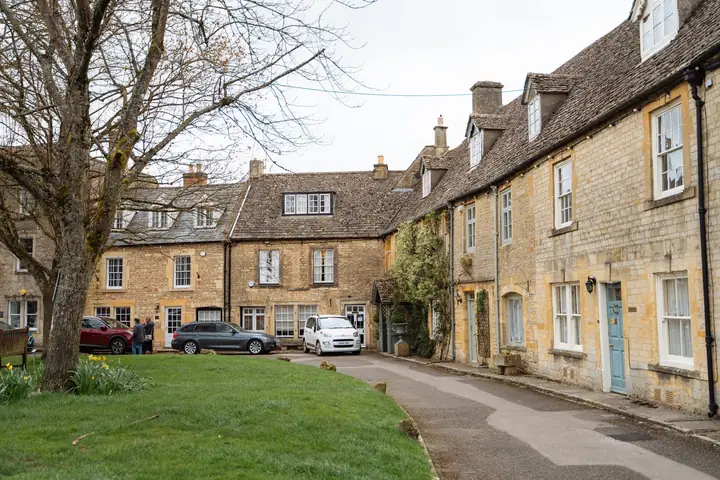
Before you submit part 2, the county wants you to check with the utility companies for pipes and cables under the footway. It also tells applicants to speak to the district council’s planning team first, because some crossings need planning permission as well as the county’s agreement. That is especially likely on a classified road, and around Cirencester several of the main routes in and out of town are classified. The Gloucestershire County Council vehicle dropped kerb page has the forms and the current fees.
Our advice is the same as anywhere else: get the crossing agreed before you book the driveway. We cover the Wiltshire version of this in our post on resin driveways in Royal Wootton Bassett, and it is a useful comparison if you are weighing up houses on both sides of the county line.
What A Resin Driveway In Cirencester Costs
The surface itself costs much the same here as in Swindon, roughly £100 to £150 per square metre laid over a proper base. What moves the total is the size of the area, how much digging the brash needs, whether there is clay underneath and how easily a dumper can reach the plot. Typical ranges from the work we quote around the town:
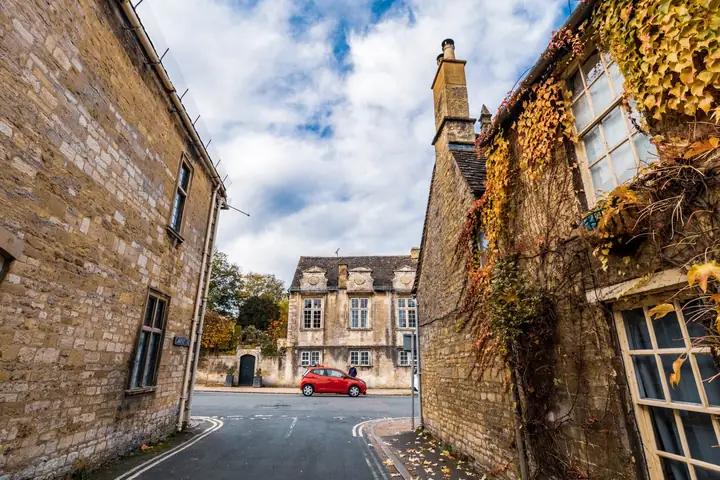
- An estate frontage in Stratton or The Beeches, about 35 square metres with the old tarmac removed: £4,000 to £5,500.
- A gravel drive on a stone house converted to resin, about 45 square metres: £5,000 to £7,000, depending on what the gravel was hiding.
- A small terrace frontage in Watermoor, 15 to 20 square metres with barrow access only: £2,800 to £3,800.
- A long village drive of 100 square metres or more: £11,000 and up, which is where keeping some gravel starts to make sense.
A dropped kerb, wall removal or new gate piers are priced separately. Clean limestone spoil is easier to get rid of than wet clay, which helps a little on the bigger digs.
We won’t quote a Cirencester drive from a photo, because the same street can be clean brash at one house and wet clay pockets at the next. A site visit is free, takes about twenty minutes, and lets us dig a small test hole if the ground looks uncertain.
Book a free resin driveway quote in Cirencester
Frequently Asked Questions
Who do I ask about a resin driveway in Cirencester, Cotswold District Council or Gloucestershire County Council?
It depends on which part of the job you mean. Cotswold District Council is the planning authority, so it deals with conservation areas, listed buildings and any planning application. Gloucestershire County Council is the highway authority, so a new or widened dropped kerb goes to the county, not the district. Swindon Borough Council and Wiltshire Council have no say over a Cirencester address.
Do I need planning permission for a resin driveway in a Cirencester conservation area?
Not usually for the driveway itself. A permeable resin bound surface on the front of a house is normally permitted development even inside one of Cirencester's four conservation areas, and Cotswold District Council's list of Article 4 directions does not currently include one for the town. Listed buildings are different, and taking down a front wall over a metre high next to the road in a conservation area needs permission. Check with the council's planning team if your house is listed or you are changing the boundary.
Can resin be laid straight over my existing gravel drive?
No. Resin bound stone needs a firm, bound base, and loose gravel will shift under it and crack the surface within months. The gravel has to come up, the ground underneath gets checked and dug to the right depth, and a compacted permeable sub-base goes in before the resin. On Cotswold brash the dig is often easier than on Swindon's clay, but it still has to be done.
How much does a resin driveway cost in Cirencester?
As a rough guide, a 35 square metre estate frontage in Stratton or The Beeches with the old tarmac removed comes in around £4,000 to £5,500. Converting a 45 square metre gravel drive on a stone house tends to land between £5,000 and £7,000. Small cottage frontages with barrow-only access start nearer £2,800, and long village drives over 100 square metres go past £11,000. A new dropped kerb is extra, with Gloucestershire County Council's application fee set at £310 from April 2025 before any construction cost.