
22 August 2026
Resin Driveways On Swindon's New-Build Estates: What The Developer Left You
Swindon has spent two decades as one of the fastest-growing towns in southern England. Wichelstowe alone is planned to reach several thousand homes over the next fifteen years, Tadpole Garden Village has gone from farmland to a small town on the northern edge, and Badbury Park, Redhouse and Priory Vale between them added thousands more. Which means an unusual number of Swindon households are living with a driveway they did not choose, laid by a contractor they never met, to a specification a developer wrote once and repeated across the whole estate. Two or three years in, the questions start: can this be resurfaced, should it be, and is now the right time? The answers depend far less on the surface you can see than on what happened to the ground underneath it while the house was going up.
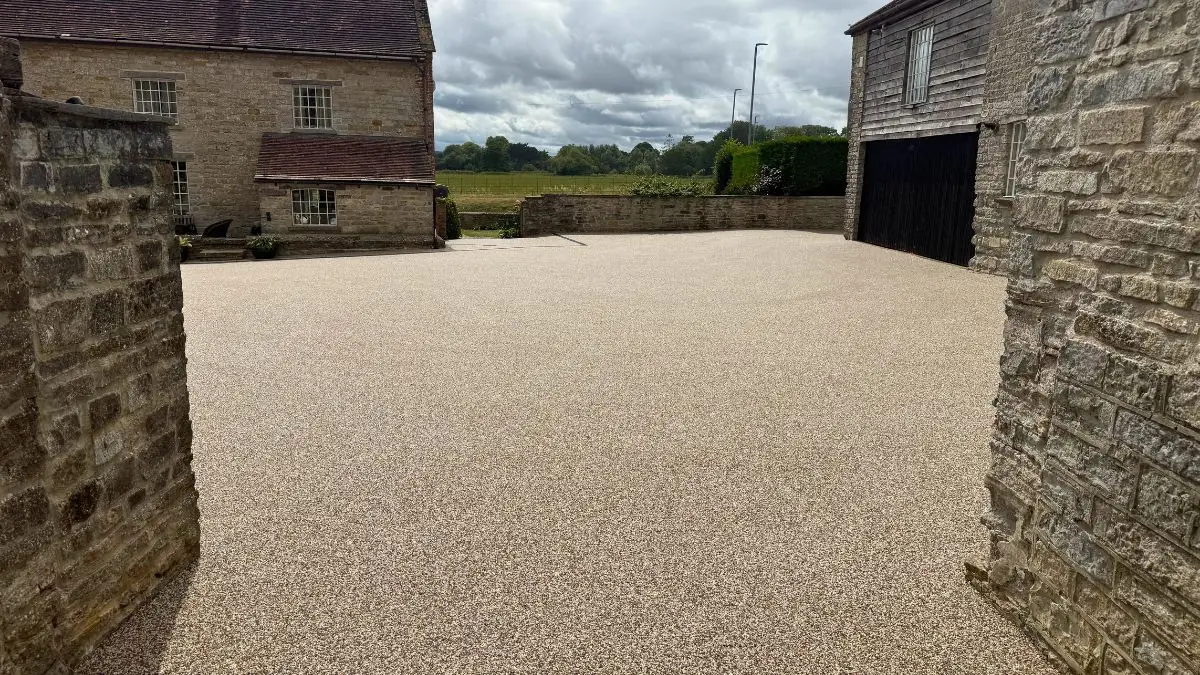
What You Actually Got With The Keys
A modest area of block paving, or occasionally tarmac, sized to the planning drawing rather than to your life. That is the standard offer, and it is built to a specification nobody wrote with you in mind.
It goes down at pace, in a sequence set by the build programme, often while heavy plant is still working on neighbouring plots. On many Swindon estates the parking bay is also shared frontage - a run of spaces serving several houses, with a boundary line you cannot see and cannot easily move.
None of that makes it bad work. It makes it minimum-spec work, aimed at handover rather than at year fifteen, which is a different brief from the one behind a resin bound driveway you commission yourself. The tell is usually consistency: block paving that already dips where the car sits, edge courses that have crept, or a surface that looks fine dry and forms a puddle in the same spot after every shower. Those are base symptoms, not surface ones, and they are the reason a straight swap of surface for surface can disappoint.
Made Ground, And Why The First Two Winters Matter
During construction, the ground around a house is stripped, trenched, backfilled and driven over repeatedly. What ends up under your driveway is rarely the original subsoil in its original state. It is a mixture of what was there, what was put back, and what got compacted by tracked plant along the way - and compaction achieved by a passing excavator is not the same as compaction achieved deliberately in layers. That material continues to settle, and the settlement is not even across the plot.
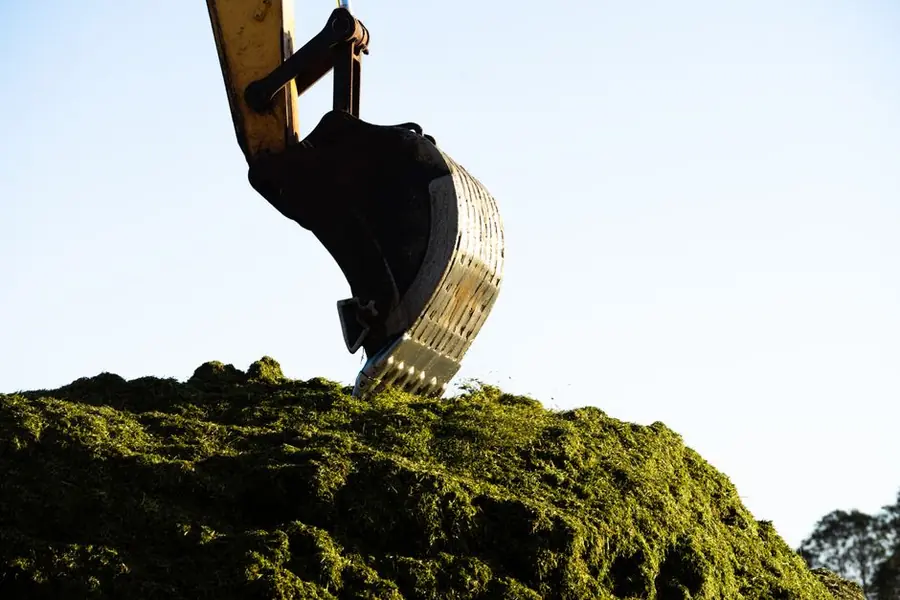
In Swindon there is a second factor stacked on top. The town sits largely on heavy clay that swells in wet winters and shrinks in dry summers, so the ground moves seasonally regardless of what was done to it during the build - the reason so many local driveways fail early is the subject of our piece on the clay under Swindon. Fresh made ground on moving clay is the most demanding combination the town offers.
So the answer is patience, which is never what anyone wants to hear. Let the plot go through at least one full winter, preferably two, before you resurface. Soft spots reveal themselves in that time, and a soft spot found before the work starts is a half-day of digging out and stone. Found afterwards, it is a dip in a new driveway.
Everything Buried Under A New Driveway
Old properties hide surprises under the front garden. New properties hide a lot more, and they hide them in straight lines.
Every service that reaches your house arrived recently and crossed the frontage to get there: water, gas, electricity, telecoms, often a duct that was laid empty for later. Foul and surface water drainage runs through the plot to an estate connection, usually with an inspection chamber somewhere near the boundary. On estates built with sustainable drainage, there may be a soakaway or an attenuation feature within the curtilage. All of it is shallower and more numerous than on a 1960s house.
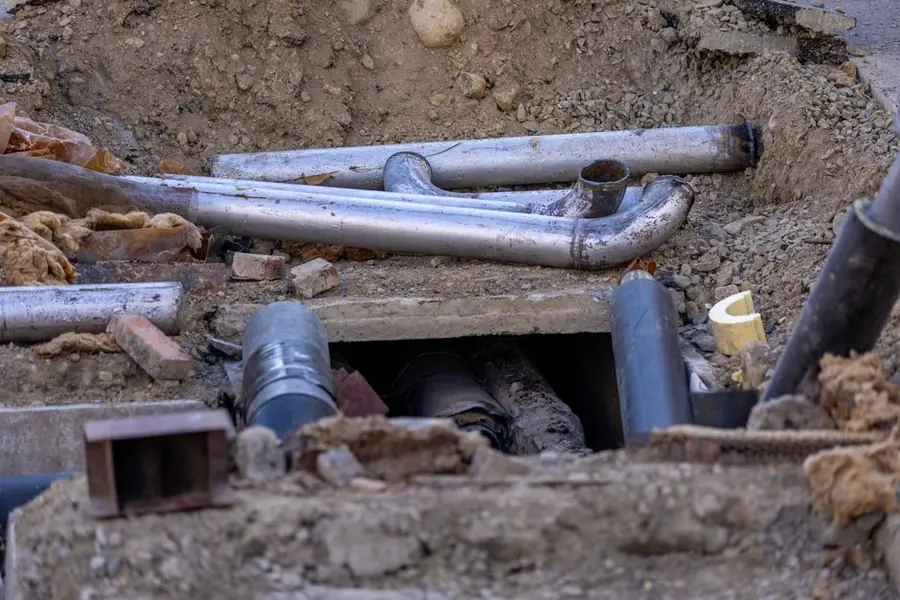
Two things follow. First, the drawings the developer gave you at completion are genuinely valuable - dig them out before anyone quotes, because they show where things run. Second, any inspection chamber under the driveway has to stay accessible, which means a recessed cover set into the finished surface rather than buried under it. That is routine when it is planned and awkward when it is discovered on the morning of the install.
It is also why excavation depth on a new-build wants care rather than enthusiasm. A driveway needs a proper depth of sub-base; a shallow service run needs not to be hit. Reconciling those two is a site-visit conversation, not a phone-quote one.
The Warranty Question Nobody Asks Early Enough
If your house is under ten years old, it almost certainly carries a warranty, and that changes the sensible order of events.
Under NHBC’s Buildmark cover, the builder is responsible for putting right defects you report during the first two years, with insurance cover for defined items running to ten. Cover is about the builder failing to meet NHBC’s requirements - it is not a general maintenance policy, and driveways sit at the edge of what it reaches, so your own policy documents are the authority rather than any summary.

It comes down to sequence. If the developer’s driveway is defective - sinking, ponding, blocks lifting - report it to the developer first, in writing, and give them the chance to put it right. NHBC’s guidance on the first two years sets out how that works. Once you have replaced the surface yourself, you have taken responsibility for it, and any argument about whether it was built correctly becomes academic.
So: if it is broken, claim. If it is sound but simply not what you want, that is a straightforward improvement and the warranty is not really in the picture. What you should not do is quietly replace something faulty at your own expense while the developer is still liable for it.
Read The Deeds Before You Book Anyone
Modern Swindon estates commonly carry restrictive covenants in the transfer document, and a good number are served by a management company looking after shared areas, landscaping and sometimes the estate’s drainage. Covenants can cover external alterations, what the frontage may be used for, boundary treatments and hard landscaping. Where frontage parking is shared or the visual scheme was a planning condition, there may be wording about surface appearance too.

Most of the time none of it stops you laying a new driveway. Occasionally it means asking first, and very occasionally it means a colour or a boundary detail needs to be agreed. The cost of checking is an hour with the transfer document your conveyancer gave you and, if a management company is named, one email. The cost of not checking is discovering the clause after the work is done.
Worth adding: if the parking bay in front of your house is shared frontage rather than solely yours, the boundary line matters enormously to what can be surfaced. Find out where it runs before anyone measures.
Estate Drainage Was Designed Without You In It
New Swindon estates are built with drainage strategies - where surface water goes, how much of it, and how quickly. Your driveway is a small part of that calculation, and it was counted at the developer’s specification, not yours.
Replacing a permeable surface with an impermeable one changes the sum. On a single plot the effect is small; across an estate where a few dozen households do the same thing over a decade, it is not, and it usually shows up as water somewhere it was not designed to go. There is also the planning position: an impermeable driveway over five square metres that does not drain to a permeable area needs planning permission, while a permeable one does not, whatever its size. The reasoning behind that rule is set out in the government’s guidance on permeable surfacing of front gardens.

Resin bound surfacing sits on the right side of this, which is a large part of why it suits new-build plots. Water passes through the surface into a free-draining sub-base and soaks away where it falls, so the estate’s drainage strategy still adds up and the planning exemption still applies. The catch, on Swindon clay, is that permeability is only real if the sub-base beneath it is genuinely free-draining. A permeable surface over a sealed or poorly built base is permeable in name only.
Overlay The Blocks, Or Start Again?
This is the question every new-build owner asks, usually hoping for the cheaper answer.
Resin can be laid over an existing hard surface where that surface is sound, stable and well drained, and it is a legitimate approach - we cover the general case in our guide to laying resin over concrete and tarmac. On a new-build, the honest answer is that it depends entirely on what the blocks are sitting on, and you cannot tell by looking at the blocks.
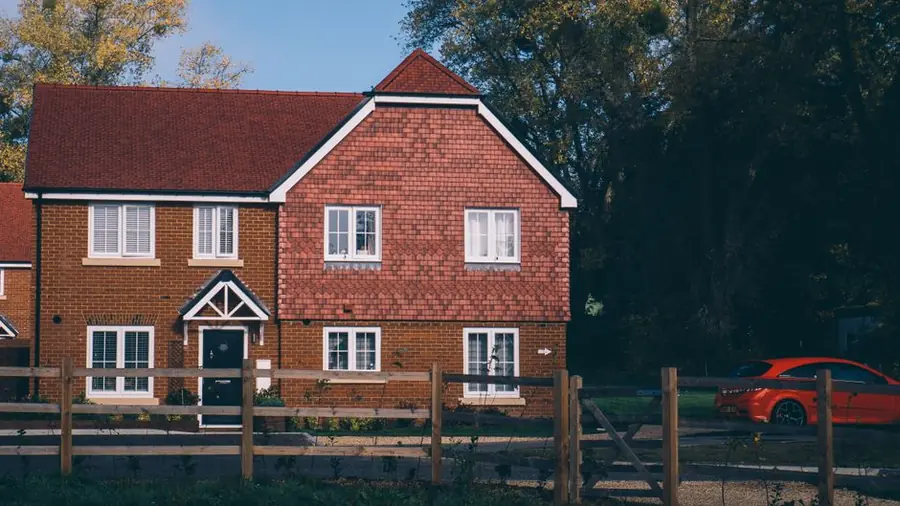
Developer block paving is often bedded on a thinner build-up than a bespoke driveway would get, over ground that was still settling when it went down. If that base is deep, well compacted and draining, an overlay can work well and saves both money and a skip. If it is shallow, uneven or sitting on soft made ground, an overlay simply carries the problem upwards - and the new surface takes the blame for it.
The only way to know is to open it up. Any installer who commits to an overlay on a new-build without lifting a section is guessing, and the guess is not theirs to lose.
Timing It Properly
Wait out at least one winter, and use the time.

Find the developer drawings and note where services and chambers run. Read the transfer document for covenants and check whether a management company is involved. Watch where water sits after heavy rain - the puddle that reappears in the same place is telling you where the base is weakest. If anything about the existing driveway looks like a defect rather than a preference, report it to the developer while they are still on the hook. Then get someone out who will lift a section, look at the base and quote on what is actually there.
Do it that way and a new-build driveway is one of the more straightforward jobs there is: the plot is level, the access is good and the frontage is a clean shape to work with. Rushed, it is one of the more disappointing, because everything that goes wrong was already in the ground before the surface went on.
If you are on one of Swindon’s newer estates and want to know whether your frontage is ready, book a free site visit. We will lift a section, tell you what the developer left underneath and quote in writing for either route - overlay or rebuild - based on what we find rather than what we hope.
Frequently Asked Questions
How long should I wait before replacing a new-build driveway in Swindon?
As a rule of thumb, give the plot at least one full winter and ideally two. New-build ground is a mix of undisturbed subsoil and material that was moved, backfilled and recompacted during construction, and it carries on settling for a while afterwards. On Swindon's clay that settlement is compounded by seasonal shrink and swell. Waiting lets any soft spots show themselves, so they can be dug out and made good rather than discovered under a brand new surface.
Will a new driveway affect my NHBC warranty?
Replacing a driveway surface does not void the warranty on your house, but it can complicate a claim relating to the thing you altered. NHBC Buildmark covers defined defects arising from the builder not meeting NHBC requirements, and in the first two years the builder is responsible for putting right defects you report to them. If the developer's driveway is faulty, report it and let them fix it - that is what the cover is for. Once you replace it yourself, that route closes for that item. Always check your own policy documents, and keep any drawings the developer gave you.
Can I lay resin over the block paving the developer put down?
Sometimes, but it is not the default answer on a new-build. Resin can be overlaid onto a sound, stable, well-drained base, and some developer block paving qualifies. Plenty does not, because it was laid on a thin bed over ground that had not finished settling. The honest way to decide is to lift a section and look at what is underneath rather than judging from the surface, which usually looks perfect. If the sub-base is shallow or the bedding is uneven, excavating and rebuilding is the option that lasts.
Do I need permission to change my driveway on a new Swindon estate?
Planning permission is unlikely if you are using a permeable surface, since permeable driveways of any size fall outside planning control. The one that catches new-build owners is the deeds. Many Swindon estates carry restrictive covenants and some are run by a management company, with clauses covering external alterations, frontage appearance and hard landscaping. Read your transfer document, and if a management company is named, ask them in writing before booking anything.