
18 September 2026
Resin Driveways For Swindon Landlords And HMOs
Swindon is a car town with a Victorian street plan in the middle of it, and that contradiction is where a lot of rental value sits. A licensed HMO in England needs five or more tenants from more than one household under the government’s definition of a large HMO, and five tenants rarely arrive with fewer than three cars between them. The rule that has governed front garden parking since October 2008 is a flat five square metres: beyond that, an impermeable surface needs planning permission and a permeable one does not. So the question for anyone holding property here is whether a resin drive is sensible capital on a let, or money spent on a tenant’s convenience. It depends on the street, the occupancy and the ground, and it is worth working through properly rather than guessing.
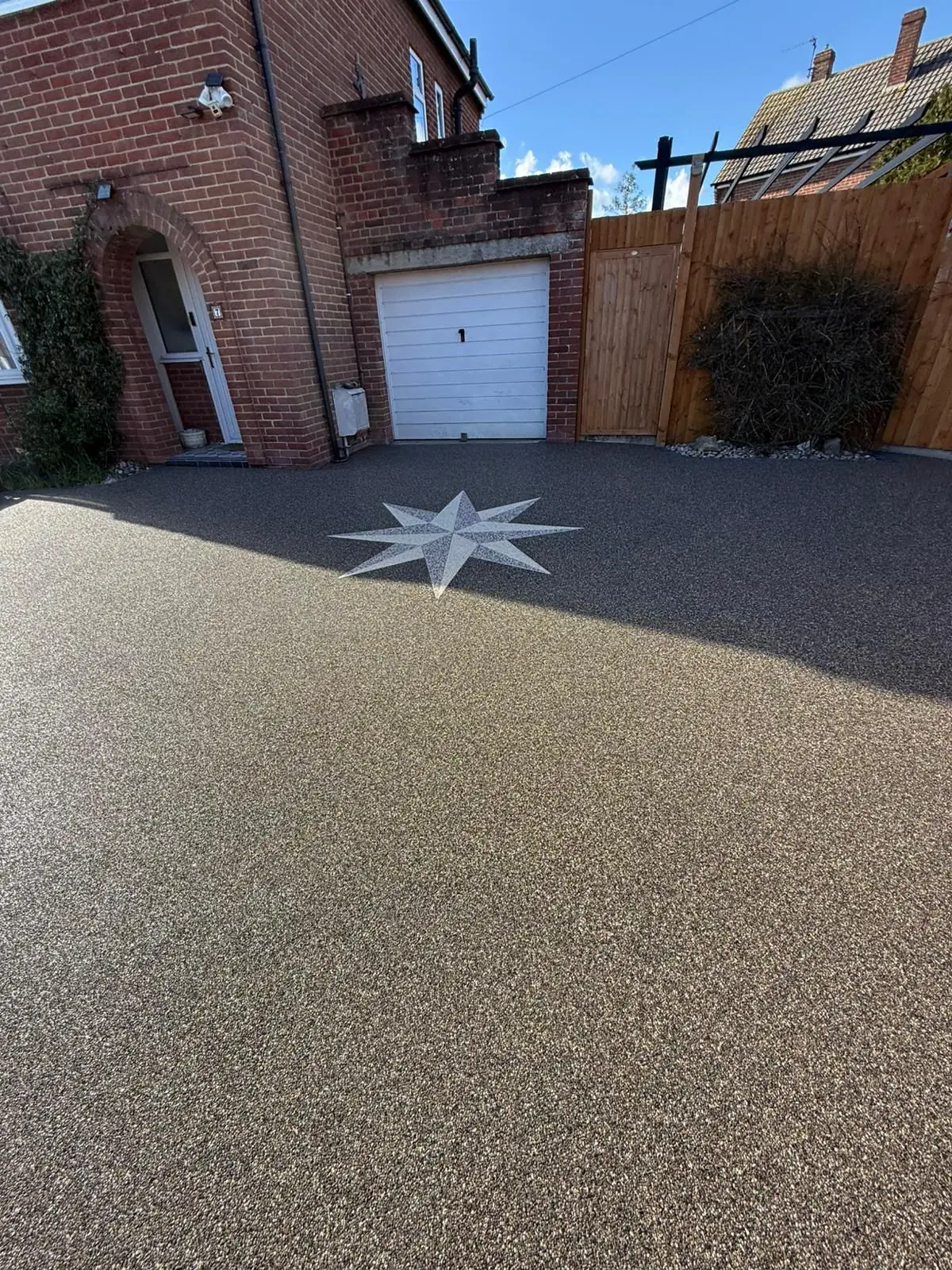
Parking Is The Filter, Not The Feature
Ask a letting agent in Swindon what gets a property shortlisted and parking comes up before decor. It is not a taste question. Someone working shifts at Great Western Hospital, or commuting out to Membury or Chippenham, filters listings by whether they can leave a car somewhere. If the answer is a residents’ permit and a walk, the property drops off the list before anyone reads the description.
That filter bites hardest in exactly the streets where housing is cheapest to buy and easiest to let. The GWR terraces around Rodbourne were built for men who walked to the Works, not for two-car households. Old Town’s stone-fronted streets have the same arithmetic with less room to solve it. Newer stock out at Priory Vale or Taw Hill usually came with a bay, but often a shared one, sized to a planning drawing rather than to the number of adults who now live there.
So the case for putting in a resin bound driveway on a let property is rarely about the finish. It is about moving the property from the pile people scroll past to the pile people book viewings for, and about the tenant who renews rather than moving somewhere they can park. Void weeks are the line on a landlord’s spreadsheet that actually hurts.
What Goes Wrong On A Let Driveway In Swindon
Every surface behaves differently when nobody living on it owns it. This is not a criticism of tenants, it is just what happens when the person using a thing is not the person who will pay to fix it.
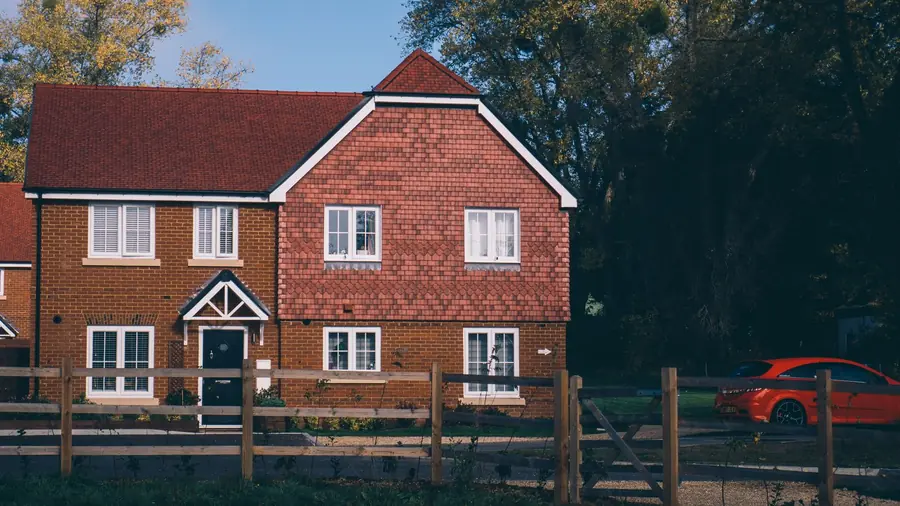
Gravel is the clearest example. It is cheap to lay and it is the single worst surface to hand to a rotating occupancy. Every reversing manoeuvre pushes stone towards the pavement, nobody rakes it back, and within eighteen months you are paying for a top-up and a complaint from next door. Block paving holds its shape but grows weeds in every joint, and weeding is not a job a tenant signed up for. Blocks are also liftable, which matters more than people expect: a pallet of matching setts has resale value and a missing course by the gate is a genuine landlord problem. Tarmac is stable but goes grey and tired, and a tired frontage shows up in viewing photographs.
Resin bound stone earns its place on a rental for an unglamorous reason. There is nothing loose to move, nothing jointed for weeds to colonise, and nothing modular to remove. The maintenance that does exist is brushing and an occasional wash, which is twenty minutes between tenancies rather than a contractor’s day rate. Boring is the point.
HMO Wear Is Not Family Wear
If the property is a licensed HMO, stop comparing it to a domestic drive. The loading is different in kind, not just in amount.

Five tenants means five arrival and departure patterns rather than two. Cars shuffle around each other, reverse into tight corners and turn on the spot, and turning under load shears a surface rather than simply compressing it. The entrance takes the worst of it. Every vehicle crosses the same two metres several times a day, so where a family drive might see four crossings daily, a five-bed HMO can see twenty.
Three things change in the specification as a result. The sub-base goes deeper and gets compacted in more layers, because the resin carpet only performs as well as the stone beneath it holds its level. The aggregate choice shifts towards a harder, more angular stone that interlocks rather than a rounded decorative one chosen for looks. And the edge restraints get taken seriously on both sides of the access rather than treated as a trim detail, since an unrestrained edge under repeated turning is the first thing to fret away.
None of that is exotic, but none of it happens unless you say what the property is. Swindon Borough Council publishes its HMO licensing requirements and register, so the property’s status is a matter of public record anyway. Tell your contractor at the site visit and ask for the sub-base depth in writing on the quote.
Permeability, The Front Garden And The Council
Converting lawn to parking is a well-trodden route in Swindon and the rules are simpler than the folklore suggests. The threshold is five square metres of new hard surface in a front garden. Above that, an impermeable surface needs planning permission and a permeable one is permitted development, which is the entire reason permeable construction became standard practice. The government’s guidance on permeable surfacing of front gardens sets out the approaches that qualify.
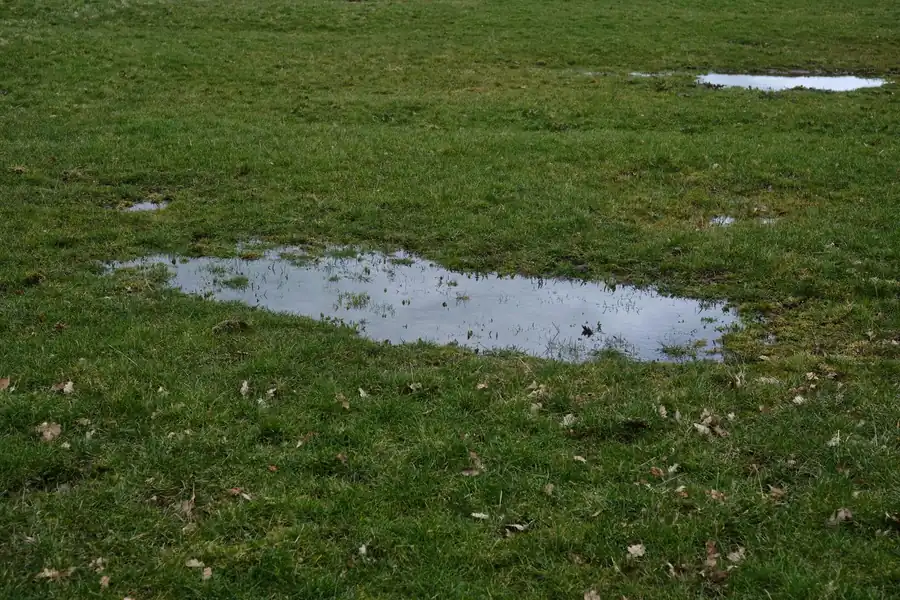
The catch in Swindon is not the paperwork, it is the ground. Permeable only means anything if the water has somewhere to go once it passes through, and much of the town sits on Oxford Clay and Kimmeridge Clay, which drains slowly and moves seasonally. On a clay frontage the permeable build-up has to be designed as a reservoir with a controlled outlet rather than assumed to soak away, or you get water sitting in the base doing damage you cannot see. We have written the full version of that job elsewhere, in the pieces on converting a front garden to a driveway and on the dropped kerb and vehicle crossing process, so it is worth reading those before you budget.
One point specific to landlords. The crossing over the footway is a highways matter and runs through the council on its own timeline, independent of the driveway work. Start that application early. A finished drive with no legal way onto it is an expensive thing to look at.
Tenant Damage, Deposits And Fair Wear And Tear
This is where landlord conversations usually get heated, and where the honest answer is procedural rather than moral.

A parking space that is used for parking will accumulate marks. Oil spotting under the engine bay, some darkening in the wheel tracks, a slightly rounded kerb edge where a wheel has clipped it a few hundred times. All of that is the ordinary consequence of the use you let them the property for, and a deposit deduction for it is unlikely to survive scrutiny. Damage is a different category: a dropped kerb chipped by something being driven at it, a solvent spill, a surface broken by a vehicle it was never built to carry.
The mechanism that settles it is the deposit scheme. If you and the tenant disagree, the free dispute resolution service your protection scheme offers issues a binding decision on the evidence in front of it. That last phrase is the whole game. Photograph the surface at check-in with a dated record, do the same at check-out, and if you are claiming, produce a contractor’s quote rather than your own number. Adjudicators also apply betterment: they will not fund a brand new drive out of a deduction for a patch repair. None of this is legal advice, and the scheme’s own guidance is the authority you should be working from.
Practically, it also helps to write the parking arrangement into the tenancy in plain terms. How many vehicles, no commercial vehicles above a stated weight, no vehicle maintenance on the surface. Those are ordinary clauses and they remove most of the ambiguity before it becomes a dispute.
EV Charging On A Let Property
Tenants with electric cars are now common enough in Swindon that this comes up at viewings, and it is worth thinking through before the drive goes in rather than after.

The physical part is easy if it is planned. A duct laid under the sub-base before the resin goes down costs very little and means a charge point can be added later without cutting the surface. Retrofitting a cable route through a finished drive means a saw cut and a visible repair, so the cheap moment to do it is during the groundwork. Ask for a spare duct even if you have no immediate plans.
The awkward part is metering, and it is more awkward in an HMO than in a single let. In a family let the charger sits on the house supply and the tenant pays for what they use through their own energy bill, which is clean. In a shared house where electricity is included in the rent, a tenant charging a car on your meter is a cost you did not price for. Landlords handle this in different ways, from a separately metered charge point to a straightforward clause excluding vehicle charging from an inclusive bill. Decide which before you advertise, not after the first bill arrives. Charge point installation itself is notifiable electrical work and belongs with a qualified installer, not with a general builder.
Resin Driveways, Repairs And Improvements Across A Ten-Year Hold
The money question splits into two, and only one of them has a clean answer.

The durable answer is about lifespan. A properly built resin drive on a correctly specified base is a fifteen to twenty year surface in normal domestic use, which means that across a typical ten-year hold you are looking at brushing, the odd wash, and possibly one small repair if something gets spilled or cracked. Compare that to gravel, which will want topping up more than once in the same period, or block paving, where the joints need attention and a sunken area will need lifting and relaying. On a property you do not live at, the value is as much in not being called out as in the surface itself. Our breakdown of twenty-year running costs for Swindon driveways works those figures through in detail.
The tax answer is genuinely not something to take from a website. HMRC distinguishes between repairs, which restore something to its former condition and are generally deductible against rental profit, and improvements, which are capital and generally are not, though capital expenditure can come into the picture when you dispose of the property. HMRC’s guidance on working out your rental income sets out the principle and the exceptions. Where a given driveway job falls depends on what was there before, what the invoice describes and how the property is held, and those are facts your accountant needs in front of them. Resurfacing a failed drive and creating parking where there was a lawn are not the same transaction, and treating them as though they were is how people end up amending returns.
For a landlord commissioning several drives across a portfolio, the sensible order is: get the ground surveyed, get the sub-base specified for the actual occupancy, get the duct in, and get the invoice worded accurately. Three of those four cost almost nothing and all four are much cheaper before the work starts than after.
Holding more than one property in Swindon and wondering what a sensible spec looks like across them? Get a free quote in Swindon and we will look at the ground, price the sub-base for the way the property is actually used, and tell you plainly where a drive is worth doing and where it is not.
Frequently Asked Questions
Does a driveway actually increase the rent on a Swindon rental?
It tends to affect how fast a property lets and how long tenants stay more than it moves the headline figure. On a street where parking is contested, a listing with a private space gets shortlisted by anyone who commutes by car, and void weeks are usually the expensive part of a landlord's year rather than a few pounds on the monthly rent. If you want a number to work with, compare the asking rents of currently advertised properties on the same street with and without off-street parking, then weigh that against the void period you are trying to avoid. Your letting agent will have a better read on your specific postcode than any national average.
Who pays if a tenant damages the driveway?
It depends on whether it is damage or wear, and the deposit scheme decides that if you and the tenant cannot agree. Oil spots, kerb-edge crumbling from repeated clipping and a dip where a heavy vehicle sat are all things that can arise from ordinary use of a parking space, which is what you let them the property for. Deliberate or negligent damage is different. What makes the difference at adjudication is evidence: a dated photographic inventory of the surface at check-in, the same shots at check-out, and a repair quote rather than an estimate of your own. Take the scheme's own guidance as the authority here, not this page.
Can I claim the cost of a new driveway against my rental income?
Possibly as a repair, probably not as a first-time installation, and the honest answer is that it depends on the facts and is not something to decide from a blog post. HMRC draws the line between repairing something that already exists and creating or improving something, with repairs generally deductible against rental profit and capital improvements generally not, though capital spending may come into the calculation when you eventually sell. Resurfacing a failed drive sits closer to the repair end than laying parking where there was only lawn. Get your accountant to look at the invoice wording and the state of what was there before, because that is where the answer lives.
Do I need planning permission to turn a Swindon front garden into parking?
Usually not, if the new surface is permeable. Since October 2008, laying more than five square metres of hard surface in a front garden has needed planning permission unless the surface is permeable or the water is directed to a permeable area within the boundary. Resin bound stone laid on an open-graded base is permeable by design, which is why it sits inside permitted development for most Swindon frontages. The crossing over the pavement is a separate matter and goes through Swindon Borough Council's highways team. Conservation areas and flats have their own rules, so check with the council before you commit.
Is a resin driveway strong enough for an HMO with five cars?
The resin layer is not the limiting factor, the sub-base is. Five tenants means more vehicles, more reversing, more turning on the spot and far more movement concentrated at the entrance than a family home ever generates. Specified for that load, with a deeper compacted sub-base, a harder-wearing aggregate and proper edge restraints on both sides of the access, a resin drive handles it. Specified as though it were a two-car household, it will show you exactly where the traffic goes within two or three years. Tell whoever quotes that the property is a licensed HMO, and ask them to price the sub-base accordingly.